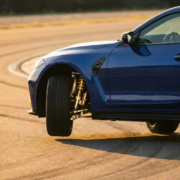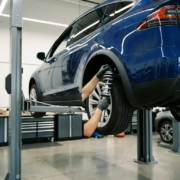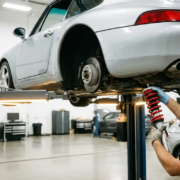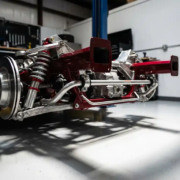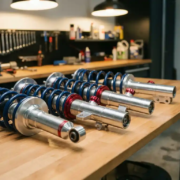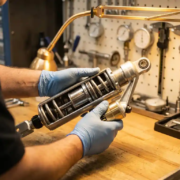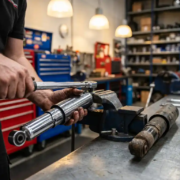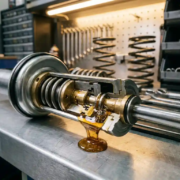
Progressive coil spring with variable pitch spacing compressed against asphalt road surface, chrome shock absorber and precision tools visible on metal workbench in workshop setting.

How do progressive springs improve ride quality on cars?

Progressive springs improve ride quality by automatically adjusting their spring rate based on compression distance, providing softer initial comfort for small bumps while maintaining firmer support for larger impacts. Unlike linear springs, which maintain a constant rate throughout their travel, progressive springs start soft and become progressively stiffer, delivering the best of both comfort and control in a single component.

This variable rate characteristic allows progressive springs to adapt seamlessly to different road conditions and driving situations. When properly tuned with matching shock absorbers, they create a suspension system that enhances both daily driving comfort and handling performance without compromise.

What makes progressive springs different from linear springs?

Progressive springs feature a variable spring rate that increases as the spring compresses, while linear springs maintain a constant rate throughout their entire compression range. This fundamental difference means progressive springs start soft for initial comfort but become firmer as they compress further, providing better bottoming resistance.

The variable rate characteristic comes from the spring’s construction. Progressive springs typically use coils with varying wire thickness, different coil spacing, or multiple coil diameters within the same spring. As the spring compresses, the coils with larger spacing or smaller wire diameter compress first, creating the initial soft rate. When these coils reach their solid height, the remaining active coils provide a much firmer rate.

Linear springs, by contrast, maintain consistent coil spacing and wire diameter throughout their length. This creates a predictable, constant force relationship where doubling the compression doubles the force required. While this predictability benefits certain racing applications, it forces engineers to compromise between comfort and performance for street use.

The progressive design eliminates this compromise by providing the exact spring characteristics needed at different compression points. Small road imperfections encounter the soft initial rate for comfort, while larger impacts or aggressive cornering forces engage the firmer rate for control and stability.

How do progressive springs adapt to different driving conditions?

Progressive springs automatically adjust their stiffness based on the magnitude of suspension movement, becoming softer for minor road irregularities and firmer for aggressive driving or heavy loading conditions. This self-adjusting behavior happens instantaneously without any driver input or electronic systems.

During normal city driving over small bumps and road imperfections, progressive springs operate in their soft initial range. This provides excellent isolation from road noise and vibration, creating a comfortable ride quality similar to luxury vehicle suspensions. The soft initial rate allows the suspension to respond quickly to minor inputs without transmitting harsh impacts to the cabin.

When encountering larger road irregularities like potholes or speed bumps, the springs compress further into their progressive range where the rate increases significantly. This firmer response prevents excessive suspension travel and maintains vehicle control during more demanding situations. The progressive nature ensures a smooth transition between the soft and firm characteristics.

Under aggressive driving conditions such as hard cornering, braking, or acceleration, body movement compresses the springs into their firmest range. Here, the high spring rate provides excellent body control and maintains proper suspension geometry for optimal tire contact and handling precision. The same springs that provided comfort during normal driving now deliver performance-oriented characteristics when needed most.

Why do progressive springs improve both comfort and handling?

Progressive springs improve both comfort and handling by eliminating the traditional compromise between these characteristics, allowing the suspension to be soft when comfort is needed and firm when performance is required. The variable rate design provides optimal spring characteristics for each specific driving situation automatically.

For comfort enhancement, the soft initial rate of progressive springs absorbs small road imperfections that would normally transmit through linear springs to the vehicle body. This creates a more refined ride quality, reducing driver fatigue and improving passenger comfort during daily driving. The springs effectively filter out road noise and vibration while maintaining proper wheel contact with the road surface.

The handling benefits emerge when the suspension encounters larger forces during cornering, braking, or acceleration. As the springs compress into their firmer range, they provide excellent body control and maintain proper suspension geometry. This prevents excessive body roll during cornering and maintains optimal tire contact patches for maximum grip and steering precision.

The key advantage lies in the seamless transition between these characteristics. Unlike adjustable suspension systems that require manual intervention, progressive springs automatically provide the appropriate response for each situation. This creates a suspension system that feels comfortable and refined during normal driving while delivering sports car-like handling when performance is demanded.

When combined with properly matched shock absorbers, progressive springs create synergy where improved handling actually enhances comfort rather than detracting from it. Better body control reduces unnecessary suspension movement, creating a more stable and predictable ride quality.

What are the disadvantages of progressive springs?

Progressive springs have a less predictable spring rate compared to linear springs, making precise suspension tuning more complex for professional racing applications. The variable rate characteristic can also create challenges in achieving perfect balance between front and rear suspension behavior across all driving conditions.

The complexity of progressive spring design makes them more expensive to manufacture than linear springs. The varying coil specifications and precise manufacturing tolerances required to achieve the correct progressive rate increase production costs. Additionally, replacement progressive springs often require more specific fitment data to ensure proper performance characteristics.

For professional motorsport applications, the variable rate can be disadvantageous when engineers need precise, predictable suspension behavior. Race car setup requires exact knowledge of spring rates at specific compression points, and the changing characteristics of progressive springs can complicate aerodynamic balance and handling predictability at the limit.

Progressive springs may also exhibit slightly different behavior when installed in different orientations or with varying preload settings. The effective spring rate can change based on the initial compression point, requiring careful consideration during installation and setup. This sensitivity to installation parameters can make achieving consistent results more challenging compared to linear springs.

Some progressive spring designs may produce subtle changes in ride height as the springs settle over time, particularly if the initial soft coils compress slightly under the vehicle’s static weight. This can require periodic ride height adjustments to maintain optimal suspension geometry.

How do you choose the right progressive spring setup?

Choosing the right progressive spring setup requires matching the spring’s rate progression to your vehicle’s weight distribution, intended use, and desired balance between comfort and performance. The initial soft rate should provide adequate comfort for daily driving, while the maximum rate must support the vehicle’s weight and handling requirements.

Start by determining your vehicle’s corner weights and current spring rates if known. Progressive springs should begin with an initial rate approximately 20-30% softer than equivalent linear springs for the same application. The progression should increase to a maximum rate that’s 40-60% higher than the initial rate, depending on your performance requirements.

Consider your primary driving conditions and priorities. For vehicles used primarily for comfortable street driving with occasional spirited driving, choose progressive springs with a gentler rate progression. For vehicles that see regular track use or aggressive driving, select springs with a more aggressive progression that reaches higher maximum rates.

Vehicle modifications significantly impact spring selection. Lowered vehicles require shorter springs with different progressive characteristics to maintain proper suspension travel. Added weight from audio systems, cargo, or passengers requires springs with higher initial and maximum rates to maintain proper ride height and handling balance.

Wheel and tire combinations also influence spring choice. Larger, heavier wheels with low-profile tires benefit from progressive springs with firmer initial rates to maintain proper suspension control. Lighter wheel setups can use springs with softer initial rates for improved comfort without sacrificing performance.

How Intrax Racing helps with progressive spring optimization

We specialize in creating custom progressive springs and shock absorber combinations that eliminate the traditional compromise between comfort and performance. Our nearly 50 years of motorsport experience allows us to engineer progressive spring setups that deliver optimal characteristics for your specific vehicle and driving requirements.

Our custom approach to progressive spring optimization includes:

  • Detailed analysis of your vehicle’s weight distribution, suspension geometry, and intended use
  • Custom calculation of progressive spring rates based on your comfort and performance priorities
  • Matching shock absorber valving specifically tuned to work with your progressive spring characteristics
  • Complete suspension packages that optimize both springs and dampers as a unified system
  • Ongoing support and adjustability to fine-tune your setup based on real-world feedback

Unlike off-the-shelf solutions that force compromises, our engineering team calculates every component specifically for your application. This ensures your progressive spring setup delivers the exact balance of comfort and performance you’re seeking. Contact us to discuss how we can optimize your suspension with custom progressive spring technology.

Related Articles

Mechanic's hands adjusting coilover suspension strut with specialized tool in professional garage workshop

How to adjust suspension for a lowered or lifted car?

Adjusting suspension for a lowered or lifted car requires recalculating spring rates, modifying damping settings, and addressing changes in suspension geometry to maintain proper handling and ride quality. The altered ride height fundamentally changes how your suspension components work together, demanding specific adjustments to spring stiffness, shock absorber valving, and alignment settings.

When you change your vehicle’s ride height, you’re not simply moving the car closer to or further from the ground. You’re altering the entire suspension system’s operating parameters, affecting everything from wheel alignment angles to suspension travel limits. Understanding these interconnected changes is essential for achieving the performance and comfort balance you’re seeking.

What happens to suspension geometry when you change ride height?

Changing ride height alters critical suspension angles, including camber, caster, and toe settings, which directly affects tire contact patches and handling characteristics. Lowering a car typically increases negative camber and may alter bump steer characteristics, while lifting creates opposite effects that can compromise cornering stability.

The suspension geometry changes occur because the control arms, tie rods, and other linkages operate at different angles than originally designed. When you modify suspension components, these angular changes become more pronounced. In a lowered vehicle, the control arms angle downward more steeply, often resulting in increased negative camber that can improve cornering grip but may cause uneven tire wear during straight-line driving.

For lifted vehicles, the opposite occurs. Control arms angle upward, reducing negative camber and potentially creating positive camber. This geometry change can lead to reduced cornering capability and altered steering response. The tie rod angles also change, affecting bump steer characteristics and steering feel over road irregularities.

Roll center height changes represent another critical factor. Lowering typically raises the roll center relative to the center of gravity, while lifting lowers it. These changes affect weight transfer characteristics during cornering, acceleration, and braking, fundamentally altering how the vehicle behaves dynamically.

How do you calculate proper spring rates for modified ride height?

Proper spring rate calculation for modified ride height involves analyzing the new suspension geometry, vehicle weight distribution, and intended use to determine optimal spring stiffness that maintains ride quality while supporting the altered load paths. The calculation must account for changed leverage ratios and suspension travel limitations.

Start by determining your vehicle’s corner weights and the new suspension geometry’s motion ratios. Motion ratio represents how much the wheel moves compared to spring compression. Lowering often increases this ratio, meaning you may need stiffer springs to achieve the same wheel rate. The formula involves measuring the distance from the pivot point to where the spring attaches versus the distance to the wheel center.

Consider your intended use when selecting spring rates. Street-driven lowered cars typically benefit from moderately increased spring rates, perhaps 20-30% stiffer than stock, to compensate for reduced suspension travel. Track-focused vehicles may require 50-100% stiffer springs. Lifted vehicles often need softer springs to maintain compliance over rough terrain while supporting any additional weight from modifications.

Progressive versus linear spring rates also matter. Progressive springs can provide comfort during normal driving while stiffening under load, making them excellent choices for vehicles that see varied driving conditions. Linear springs offer more predictable handling characteristics preferred in performance applications.

What damping adjustments are needed for lowered versus lifted cars?

Lowered cars typically require increased compression damping and modified rebound settings to control the stiffer springs and reduced suspension travel, while lifted cars often need softer compression damping with adjusted rebound to maintain tire contact over rough terrain. The damping adjustments must match the spring rate changes and altered suspension kinematics.

For lowered vehicles, the reduced suspension travel means the dampers must work more efficiently within a smaller operating window. Increased compression damping helps control bottoming out over bumps and prevents the suspension from packing down during aggressive driving. However, too much compression damping can make the ride harsh and reduce tire contact over road irregularities.

Rebound damping becomes equally critical in lowered applications. The stiffer springs want to extend quickly after compression, potentially causing the tire to lose contact with the road surface. Properly calibrated rebound damping controls this spring extension while maintaining tire contact for optimal grip and stability.

Lifted vehicles face different challenges. The increased suspension travel and often softer spring rates require damping that can control larger suspension movements without becoming overly stiff. Compression damping typically needs to be softer to allow the suspension to work through its increased travel range, while rebound damping must prevent excessive oscillation after large suspension movements.

How does suspension travel change affect shock absorber selection?

Modified ride height directly affects available suspension travel, requiring shock absorbers with appropriate stroke length and valving characteristics to work effectively within the new operating range. Lowered cars need shorter stroke dampers with compression-biased valving, while lifted vehicles require longer stroke units with valving optimized for increased travel.

Suspension travel consists of compression (jounce) and extension (rebound) movements from the static ride height. Lowering reduces compression travel while potentially increasing extension travel, depending on the modification method. This change requires dampers designed to work effectively with limited compression travel while controlling the increased extension range.

The stroke length becomes critical when selecting replacement dampers. A damper with insufficient stroke will bottom out mechanically, causing harsh impacts and potential component damage. Conversely, excessive stroke length may allow the suspension to over-extend, potentially damaging other components or creating handling issues.

Valving characteristics must match the new operating conditions. Lowered vehicles benefit from dampers with progressive compression valving that becomes firmer as the stroke approaches full compression. This prevents bottoming while maintaining compliance during normal driving. Custom valving can optimize the damper’s response throughout its reduced operating range.

What alignment settings work best for modified ride height vehicles?

Modified ride height vehicles require specific alignment settings that compensate for altered suspension geometry, typically involving adjusted camber curves, modified toe settings, and potentially different caster angles to maintain optimal tire contact and handling characteristics. The alignment must work with the new geometry rather than against it.

Camber adjustments become crucial for lowered vehicles that often gain excessive negative camber. While some negative camber improves cornering performance, too much causes premature inner tire wear and reduced straight-line stability. Adjustable camber plates or eccentric bolts allow fine-tuning to achieve optimal settings, typically between -1.5 and -2.5 degrees for performance-oriented lowered cars.

Toe settings require recalibration because the altered suspension geometry changes how the wheels respond to suspension movement. Lowered cars often benefit from slight toe-out in front to improve turn-in response, while maintaining near-zero toe in the rear for stability. Lifted vehicles typically require different toe settings to compensate for their altered geometry and maintain predictable handling.

Caster angles may need adjustment depending on the modification extent. Increased caster improves straight-line stability and steering feel but can make parking more difficult. The optimal caster setting depends on the vehicle’s intended use and the driver’s preferences for steering effort versus stability.

How do you fine-tune suspension for different driving conditions?

Fine-tuning modified suspension involves adjusting damping settings, spring preload, and anti-roll bar configurations to optimize performance for specific driving conditions, whether daily commuting, spirited driving, or track use. The adjustments should be methodical and documented to maintain consistent results.

Start with baseline settings that provide acceptable performance across all intended driving conditions, then make incremental adjustments for specific scenarios. For daily driving, prioritize comfort and compliance while maintaining adequate control. This typically means softer compression damping and moderate rebound settings that allow the suspension to absorb road irregularities effectively.

Performance driving requires firmer settings that prioritize control and responsiveness over comfort. Increase compression damping to reduce body roll and improve tire contact during aggressive cornering. Adjust rebound damping to control spring oscillations without making the suspension overly stiff. Anti-roll bar adjustments can fine-tune understeer and oversteer characteristics.

Track-specific tuning involves optimizing the suspension for the specific circuit characteristics. Smooth tracks allow firmer settings for maximum control, while bumpy circuits require more compliance to maintain tire contact. Document all changes and their effects to build a database of effective settings for different conditions.

How Intrax Racing helps with suspension adjustment for modified ride height

We specialize in creating custom suspension solutions specifically calculated for your modified ride height requirements, ensuring optimal performance whether you’ve lowered or lifted your vehicle. Our approach eliminates the guesswork and compromises found in off-the-shelf solutions.

Our custom suspension service addresses modified ride height challenges through:

  • Precise spring rate calculations based on your vehicle’s new geometry and intended use
  • Custom damper valving optimized for altered suspension travel and operating conditions
  • Stroke length adjustments to work perfectly within your modified suspension’s range
  • Complete system integration ensuring springs and dampers work together harmoniously
  • Ongoing support and adjustments as you refine your setup

Drawing from nearly 50 years of motorsport experience, we understand that modified ride height requires more than simply installing different springs and dampers. Every component must be engineered to work with your specific modifications, driving style, and performance goals. Contact us to discuss how we can create the perfect suspension solution for your modified vehicle.

Related Articles

Silver shock absorber with red adjustment knobs on aluminum workbench surrounded by suspension tuning tools and spring coils

How to improve car suspension for street and performance driving?

Car suspension improvement involves upgrading components like shock absorbers, springs, and anti-roll bars to enhance handling, comfort, and vehicle control for both street and performance driving. The key is selecting upgrades that match your driving style and vehicle use, whether you prioritize comfort for daily commuting or performance for spirited driving and track days.

Modern suspension technology allows drivers to achieve better handling without sacrificing ride quality when components are properly matched and tuned. Understanding which components to upgrade first and how different setups affect your driving experience helps you make informed decisions about suspension modifications that deliver real-world benefits.

What are the signs your suspension needs improvement?

Your suspension needs improvement when you experience excessive body roll during cornering, harsh impacts over bumps, poor steering response, or uneven tire wear patterns. These symptoms indicate that your current suspension components are no longer providing optimal control, comfort, or safety for your driving needs.

Several specific indicators signal suspension deficiencies. Excessive nose dive under braking suggests your shock absorbers cannot adequately control weight transfer, while significant body roll in corners indicates insufficient spring rates or worn anti-roll bars. If your vehicle feels disconnected from the road or requires constant steering corrections, your suspension may lack the precision needed for confident driving.

Ride quality issues also reveal suspension problems. Harsh impacts over road imperfections, where you feel every bump transmitted directly through the chassis, suggest overly stiff springs or worn shock absorbers. Conversely, a floating or bouncy sensation indicates insufficient damping control, allowing the vehicle to oscillate after hitting bumps.

Visual inspection can reveal additional problems. Uneven tire wear patterns, particularly excessive wear on the outer edges during cornering or cupping patterns, indicate suspension geometry issues or worn components. Oil leaks around shock absorber seals signal internal wear and reduced damping performance.

Which suspension components should you upgrade first?

Shock absorbers should typically be upgraded first because they control spring movement and directly affect both handling precision and ride comfort. Quality shock absorbers provide the foundation for suspension performance, making them the most impactful single upgrade for most vehicles.

Shock absorbers serve as the primary control mechanism for your suspension system. They manage spring oscillations, control body movement during acceleration and braking, and maintain tire contact with the road surface. When shock absorbers are properly matched to your vehicle and driving style, they transform how your car responds to steering inputs and road conditions.

Springs represent the second priority for most upgrades. Progressive rate springs or properly matched linear springs can reduce body roll while maintaining ride comfort when paired with appropriate shock absorbers. The combination of upgraded shocks and springs creates a synergistic effect, where improved handling comes without sacrificing daily driving comfort.

Anti-roll bars should be considered third, particularly for vehicles experiencing excessive body roll during cornering. These components reduce lateral weight transfer without affecting ride quality over straight-line bumps, making them effective for improving cornering stability while preserving comfort.

The upgrade sequence matters because shock absorbers affect every aspect of suspension performance. Installing new springs or anti-roll bars with worn shock absorbers often creates handling imbalances or harsh ride quality, as the dampers cannot properly control the modified spring rates.

What’s the difference between coilovers and separate springs and shocks?

Coilovers integrate the spring and shock absorber into a single unit with adjustable ride height, while separate springs and shocks are independent components that typically offer superior performance and customization options. Coilovers prioritize convenience and adjustability, whereas separate systems allow for precise component matching and optimization.

Coilover systems mount the spring directly around the shock absorber body, creating a compact unit that simplifies installation and provides built-in ride height adjustment through threaded collars. This design appeals to enthusiasts who want the ability to lower their vehicle and make periodic adjustments without specialized tools.

However, coilovers often involve compromises in component quality. The integrated design limits shock absorber diameter and internal volume, potentially reducing damping performance compared to separate, larger-diameter shock absorbers. The spring mounting position may also create suboptimal geometry for some applications.

Separate springs and shock absorbers allow engineers to optimize each component independently. Shock absorbers can be sized for maximum performance without spring mounting constraints, while springs can be positioned for ideal suspension geometry. This approach enables precise tuning of spring rates, damping characteristics, and ride height without the packaging limitations of integrated designs.

The adjustment capabilities also differ significantly. While coilovers offer convenient ride height adjustment, separate systems provide more sophisticated tuning options. Professional-grade separate shock absorbers often feature multiple adjustment parameters for compression, rebound, and sometimes low-speed versus high-speed damping characteristics.

How do you choose between comfort and performance suspension setups?

Choose suspension setups based on your primary vehicle use: comfort-oriented setups prioritize ride quality for daily driving, while performance setups emphasize handling precision and control. Modern suspension technology allows you to achieve both goals simultaneously when components are properly engineered and matched to your specific vehicle and driving requirements.

The traditional belief that better handling requires sacrificing comfort stems from poorly matched components rather than fundamental engineering limitations. When shock absorbers and springs are designed to work together, improved handling often comes with enhanced ride quality because the suspension better controls unwanted movement while absorbing road imperfections effectively.

Comfort-focused setups emphasize smooth ride quality over road irregularities while maintaining adequate body control. These systems typically feature progressive spring rates that provide a soft initial response for small bumps but stiffen progressively for larger impacts. Shock absorbers in comfort setups prioritize smooth operation and minimal harshness transmission.

Performance-oriented setups prioritize precise handling response and minimal body movement during dynamic driving. These systems feature more controlled spring rates and shock absorber tuning that emphasizes quick response to steering inputs and minimal weight transfer during acceleration, braking, and cornering.

The optimal approach considers your driving patterns and priorities. Daily commuters who occasionally enjoy spirited driving benefit from setups that lean toward comfort while providing adequate performance capabilities. Track day enthusiasts who drive their vehicles on public roads need systems that can handle performance demands while remaining civilized for street use.

Should you adjust suspension settings yourself or use a professional?

Basic adjustments like ride height can be performed by experienced DIY mechanics with proper tools and safety equipment, while complex damping adjustments and initial setup require professional expertise to ensure optimal performance and safety. The decision depends on your mechanical experience, available tools, and the complexity of adjustments needed.

Ride height adjustments represent the most accessible DIY suspension modification. These adjustments involve changing spring preload using adjustment collars, which requires basic mechanical skills and standard tools. However, proper technique is essential for safety and optimal results.

Before attempting ride height adjustments, ensure you understand the process completely. The vehicle must be positioned on level ground and properly supported to prevent movement during adjustment. When helper springs are installed, their preload must be set first before adjusting main spring preload. Marking adjustment collars helps track the number of turns made during the process.

Professional setup becomes essential for complex adjustments involving multiple damping parameters. Modern adjustable shock absorbers often feature separate controls for compression, rebound, low-speed, and high-speed damping. Optimizing these settings requires an understanding of suspension dynamics and the interaction between different adjustment parameters.

Safety considerations also favor professional installation and setup. Suspension components operate under significant loads and affect vehicle safety systems. Improper installation or adjustment can create dangerous handling characteristics or component failure. Professional technicians have the experience and equipment to ensure modifications are performed safely and effectively.

The investment in professional setup often pays dividends in performance and satisfaction. Experienced suspension specialists understand how different adjustments affect vehicle behavior and can optimize settings for your specific driving style and requirements.

How Intrax Racing helps with suspension improvement

We specialize in custom-built shock absorbers that eliminate the compromises inherent in standard suspension components. Our approach involves calculating and building each shock absorber specifically for your vehicle, driving style, and performance requirements, ensuring optimal results whether you prioritize comfort, performance, or the ideal balance between both.

Our custom suspension solutions provide several key advantages:

  • Precise engineering calculations based on your specific vehicle data, tire specifications, and intended use
  • Custom shock absorber and spring combinations that work synergistically rather than requiring compromises
  • Accommodation of extreme lowering requirements through adapted body length, stroke, and damping characteristics
  • Ongoing support with complete component history stored for future service and upgrades

Drawing from nearly 50 years of motorsport experience, we understand that every vehicle and driver combination is unique. Our engineering team analyzes your requirements and builds suspension components that deliver the specific characteristics you need, whether for daily comfort, weekend track performance, or the perfect balance of both.

Ready to experience suspension performance tailored specifically to your vehicle and driving style? Contact our engineering team to discuss your requirements and discover how custom suspension technology can transform your driving experience.

Related Articles

Mechanic's hands adjusting coilover suspension unit with precision tools on workshop bench, spring components and dials visible

How to adjust suspension for different driver weights in cars?

Suspension adjustment for different driver weights involves modifying spring rates, damper settings, and preload to maintain optimal vehicle balance and handling characteristics. Heavier drivers typically require stiffer springs and adjusted damping to compensate for the additional weight affecting the car’s center of gravity and suspension compression. The goal is to restore the vehicle’s intended handling dynamics regardless of who is behind the wheel.

Professional racing teams routinely make these adjustments when drivers change, as even a 20-30 pound difference can significantly impact lap times and vehicle behavior. Understanding how to properly adjust suspension components ensures consistent performance and safety across different driver weights.

Why does driver weight affect suspension performance?

Driver weight affects suspension performance by altering the vehicle’s center of gravity, changing weight distribution between axles, and modifying the amount of suspension compression under static and dynamic loads. This weight variation directly impacts how the springs and dampers respond during cornering, braking, and acceleration.

When a heavier driver sits in the car, the additional weight compresses the suspension more than the manufacturer’s baseline setup anticipates. This compression changes the suspension geometry, potentially reducing ground clearance and altering the angles at which the wheels contact the road. The result is modified handling characteristics that can affect everything from steering responsiveness to tire wear patterns.

The weight distribution also shifts with different driver weights. A heavier driver moves more weight toward the front of the vehicle in most cars, which can cause understeer tendencies and reduce rear-end stability during high-speed maneuvers. Conversely, a much lighter driver might experience oversteer characteristics as the rear suspension remains more extended than intended.

Dynamic weight transfer during cornering, braking, and acceleration becomes more pronounced with heavier drivers. The increased mass creates greater momentum that the suspension system must control, potentially overwhelming dampers that were calibrated for lighter loads. This can lead to excessive body roll, longer braking distances, and reduced overall vehicle control.

What suspension components need adjustment for different weights?

The primary suspension components requiring adjustment for different driver weights are spring rates, damper settings, and spring preload, with some applications also benefiting from anti-roll bar modifications. These components work together to maintain proper vehicle balance and handling characteristics regardless of driver weight variations.

Spring rates represent the most fundamental adjustment needed for weight differences. Springs must support the vehicle’s weight while maintaining proper ride height and suspension travel. Heavier drivers typically require stiffer springs to prevent excessive compression and maintain the intended suspension geometry. The custom suspension approach allows engineers to calculate precise spring rates based on the actual driver weight and vehicle specifications.

Damper settings control how quickly the suspension moves through its travel range. Heavier drivers create more momentum during weight transfer, requiring adjusted compression and rebound damping to maintain vehicle stability. Modern adjustable dampers allow fine-tuning of these settings to match the increased dynamic loads.

Spring preload adjustment changes the initial compression of the springs without altering the spring rate itself. By increasing preload for heavier drivers, the suspension maintains proper ride height while preserving the spring’s ability to compress and extend through its designed range. This adjustment is particularly important when helper springs are installed, as their preload must be set before adjusting the main springs.

Anti-roll bars may require adjustment or replacement for significant weight differences. These components control body roll during cornering, and heavier drivers create more lateral weight transfer that may overwhelm the existing anti-roll bar setup.

How do you calculate the right spring rate for your weight?

Calculating the correct spring rate involves determining the total sprung weight at each corner of the vehicle, then selecting springs that compress the suspension to the desired ride height while maintaining adequate travel for both compression and extension. The calculation considers driver weight, passenger weight, and any additional cargo or modifications.

Start by measuring the current ride height with the intended driver in the vehicle. Take measurements from the bottom edge of the wheel rim to the bottom of the wheel arch at all four corners, recording left and right side measurements separately for both front and rear axles. This establishes your baseline for comparison.

The basic spring rate calculation uses the formula: Required Spring Rate = (Corner Weight + Dynamic Load) ÷ Desired Compression Distance. Corner weight includes the vehicle’s weight at that specific wheel position plus the driver’s contribution to that corner. Dynamic load accounts for weight transfer during cornering and braking.

For example, if a corner supports 800 pounds with the driver and you want the suspension to settle 1.5 inches from full extension, you would need approximately a 533 lb/in spring rate. However, this simplified calculation doesn’t account for motion ratios, which vary depending on the suspension design and can significantly affect the actual spring rate needed.

Professional suspension designers also consider the vehicle’s intended use when calculating spring rates. Track-focused setups typically use stiffer springs to minimize body roll and maintain precise control, while street applications prioritize comfort with softer rates that still provide adequate support for the driver’s weight.

What damper settings work best for heavier drivers?

Heavier drivers typically require increased compression and rebound damping settings to control the greater momentum and weight transfer forces they create during driving. The optimal settings balance vehicle stability with ride comfort, preventing excessive suspension movement while maintaining tire contact with the road surface.

Compression damping should be increased to control the additional downward force when heavier drivers encounter bumps, dips, or weight transfer during braking. Higher compression damping prevents the suspension from compressing too quickly, which could cause the vehicle to bottom out or lose control over road irregularities. However, excessive compression damping can make the ride harsh and reduce tire grip over small bumps.

Rebound damping controls how quickly the suspension extends after compression. Heavier drivers create more stored energy in the springs during compression, requiring increased rebound damping to prevent the suspension from extending too rapidly. Proper rebound damping keeps the tires in contact with the road surface and prevents the vehicle from bouncing or oscillating after hitting bumps.

The ratio between compression and rebound damping typically favors rebound by a 2:1 or 3:1 ratio, meaning rebound damping should be two to three times stronger than compression damping. This ratio may need adjustment for significantly heavier drivers, as the increased weight can require a more balanced approach to maintain vehicle stability.

Fine-tuning damper settings requires testing and adjustment based on driving feel and vehicle behavior. Start with moderate increases in both compression and rebound damping, then adjust based on how the vehicle responds to different road conditions and driving situations. Professional suspension systems often include multiple adjustment ranges to accommodate different driver weights and preferences.

Should you use adjustable versus fixed suspension for weight changes?

Adjustable suspension systems provide superior flexibility for accommodating different driver weights compared to fixed systems, allowing real-time tuning of damping characteristics and ride height without component replacement. Fixed systems require physical component changes to optimize performance for different weights, making them less practical for vehicles with multiple drivers of varying weights.

Adjustable dampers offer the ability to modify compression and rebound settings to match different driver weights and driving conditions. This flexibility proves invaluable when the same vehicle is driven by people with significant weight differences or when the vehicle’s use varies between street driving and track applications. Many modern adjustable systems include multiple preset configurations that can be quickly selected based on the current driver.

Fixed suspension systems excel in applications where the driver weight remains consistent and the intended use is well-defined. When properly engineered for a specific driver weight and application, fixed systems can provide optimal performance without the complexity and potential reliability concerns of adjustable components. They also typically cost less initially and require less maintenance over time.

The decision between adjustable and fixed systems often depends on the vehicle’s intended use and driver variability. Race cars with multiple drivers benefit significantly from adjustable systems that can be quickly reconfigured between sessions. Street cars driven primarily by one person may perform better with fixed systems optimized specifically for that driver’s weight and preferences.

Hybrid approaches combine fixed spring rates calculated for the primary driver’s weight with adjustable damping to fine-tune the system’s response. This strategy provides most of the benefits of full adjustability while maintaining the simplicity and reliability advantages of fixed components where they are most effective.

How do professional teams adjust suspension for different drivers?

Professional racing teams use systematic data collection and testing protocols to optimize suspension settings for each driver, typically adjusting spring rates, damper settings, anti-roll bars, and ride heights based on driver weight, driving style, and performance feedback. Teams maintain detailed setup sheets for each driver and track combination to ensure consistent performance.

The adjustment process begins with baseline measurements of the driver’s weight and weight distribution in the racing position. Teams measure how the driver’s weight affects the vehicle’s corner weights and center of gravity, then calculate the required suspension changes to maintain optimal balance. This data forms the foundation for all subsequent adjustments.

Spring rate adjustments typically follow established formulas based on the weight difference between drivers. Teams often maintain sets of springs in different rates to accommodate driver changes quickly. The goal is to maintain consistent ride heights and suspension geometry regardless of who is driving, ensuring predictable handling characteristics.

Damper adjustments focus on maintaining consistent vehicle behavior during weight transfer events like braking and cornering. Heavier drivers require increased damping to control the greater momentum they create, while lighter drivers may need reduced damping to maintain tire contact and vehicle responsiveness. Professional teams use data acquisition systems to measure suspension movement and optimize these settings based on actual track performance.

Anti-roll bar adjustments help balance the vehicle’s handling characteristics for different driver weights. Heavier drivers typically require stiffer anti-roll bars to control increased body roll, while lighter drivers may benefit from softer settings that allow more suspension movement and better tire contact over uneven surfaces.

How Intrax Racing helps with suspension adjustment for driver weight

We specialize in creating custom suspension solutions that account for specific driver weights and vehicle requirements, ensuring optimal performance regardless of who is behind the wheel. Our nearly 50 years of motorsport experience, from Formula 1 to street applications, provides the expertise needed to calculate and build suspension systems tailored to individual needs.

Our Custom Made service addresses driver weight considerations through:

  • Precise calculations based on actual driver weight, vehicle specifications, and intended use
  • Custom spring rates and damper valving designed specifically for your weight and driving style
  • Adjustable systems that accommodate multiple drivers with different weights
  • Complete suspension packages that maintain the synergy between springs and dampers for optimal performance
  • Ongoing support and adjustments as your needs evolve

Every suspension system we build receives a unique identification number with complete specifications stored under your name, ensuring consistent service and the ability to make future adjustments or modifications. Whether you need a system for street driving, track days, or professional racing, our engineers calculate the ideal solution for your specific weight and performance requirements. Contact us to discuss how we can optimize your suspension for your exact driver weight and performance goals.

Related Articles

Close-up cross-section of car shock absorber and spring assembly showing piston rod, internal damping chambers, and machined components in automotive workshop

What is suspension travel on cars?

Suspension travel refers to the distance a wheel can move up and down as the suspension compresses and extends, typically measured in inches or millimeters. This vertical movement allows the suspension system to absorb road irregularities while maintaining tire contact with the road surface. The amount of travel directly impacts ride quality, handling characteristics, and the vehicle’s ability to cope with various driving conditions and road surfaces.

How does suspension travel affect ride quality?

Suspension travel directly determines how well your vehicle absorbs bumps, potholes, and road imperfections by allowing the wheels to move independently of the chassis. More travel generally provides better comfort over rough surfaces, while less travel can result in a harsher ride but improved handling precision.

When your suspension has adequate travel, the shock absorbers and springs can properly cushion impacts without reaching their limits. This prevents harsh jolts from transferring directly to the cabin, maintaining passenger comfort. However, the relationship between travel and ride quality isn’t simply about having more movement available.

The quality of the damping system plays an equally important role. A well-tuned shock absorber with moderate travel often provides superior ride quality compared to a poorly designed system with excessive travel. The damping characteristics must match the available travel to control wheel movement effectively throughout the suspension’s range of motion.

Road surface conditions also influence how suspension travel affects your driving experience. On smooth highways, minimal travel may be sufficient, but rough country roads or off-road terrain demand greater travel to maintain comfort and control. The suspension geometry changes throughout the travel range, affecting wheel alignment and tire contact patches.

What’s the difference between compression and rebound travel?

Compression travel is the distance the suspension moves upward when the wheel encounters a bump or load, while rebound travel is the distance it moves downward when the wheel drops into a depression or the load is removed. Most vehicles have different amounts of compression and rebound travel to optimize handling and comfort.

Compression travel typically accounts for 60-70% of total suspension travel in most passenger cars. This bias toward compression helps the suspension absorb impacts from bumps, potholes, and increased loading without bottoming out. When the suspension compresses, the spring stores energy, and the shock absorber controls the rate of compression to prevent harsh impacts.

Rebound travel, making up the remaining 30-40% of total travel, controls how quickly the suspension returns to its normal position after compression. Proper rebound control prevents the vehicle from bouncing excessively after hitting a bump and maintains tire contact when driving over crests or depressions in the road.

The balance between compression and rebound travel affects vehicle dynamics significantly. Too much compression travel without adequate rebound can cause the suspension to pack down during repeated impacts. Conversely, excessive rebound travel without proper damping control can lead to wheel hop and loss of traction.

How much suspension travel do different cars have?

Typical passenger cars have 3-5 inches of total suspension travel, sports cars usually have 2-4 inches, while SUVs and trucks can have 6-12 inches or more depending on their intended use. Off-road vehicles may have 15+ inches of travel to handle extreme terrain.

Compact and mid-size sedans generally feature 3-4 inches of total travel, balancing comfort with handling precision. This amount provides adequate bump absorption for normal road conditions while maintaining responsive steering and stable cornering characteristics. Luxury sedans may have slightly more travel to prioritize ride comfort.

Sports cars and performance vehicles typically limit travel to 2-3 inches to minimize body roll and maintain precise handling. The reduced travel keeps the suspension geometry more consistent throughout its range, improving predictability during aggressive driving. However, this comes at the cost of ride comfort over rough surfaces.

SUVs and pickup trucks require more travel to handle their higher center of gravity and varied loading conditions. Full-size trucks often have 6-8 inches of travel, while dedicated off-road vehicles can exceed 12 inches. This additional travel allows them to maintain traction and comfort over challenging terrain while carrying heavy loads.

Racing applications vary dramatically based on the discipline. Formula 1 cars have minimal travel (around 1-2 inches) for maximum aerodynamic consistency, while rally cars may have 8-10 inches to handle jumps and rough terrain at high speeds.

Why do race cars have limited suspension travel?

Race cars use limited suspension travel to maintain consistent aerodynamics, precise handling, and optimal tire contact patches throughout the suspension’s range of motion. Reduced travel minimizes changes in ride height, wheel camber, and downforce levels that could affect performance and predictability.

Aerodynamic efficiency requires maintaining specific ride heights and body angles to optimize airflow and downforce generation. Excessive suspension travel would cause significant variations in ground clearance and aerodynamic balance, reducing the effectiveness of wings, splitters, and diffusers. Even small changes in ride height can dramatically affect a race car’s aerodynamic performance.

Handling precision benefits from limited travel because it reduces geometry changes throughout the suspension’s range. When suspension travel is minimal, wheel camber, toe angles, and roll center heights remain more consistent, providing predictable handling characteristics that drivers can rely on during competition.

The controlled environment of race tracks also reduces the need for extensive travel. Unlike public roads with potholes and varying surfaces, race tracks provide relatively smooth, consistent surfaces that don’t require the suspension to absorb large impacts. This allows engineers to optimize the suspension for maximum performance rather than comfort or versatility.

Weight considerations also favor limited travel systems. Shorter shock absorbers, smaller springs, and reduced structural requirements help minimize unsprung weight, improving acceleration, braking, and handling responsiveness.

What happens when suspension travel is insufficient?

Insufficient suspension travel causes the suspension to bottom out frequently, resulting in harsh impacts, reduced traction, potential component damage, and poor ride quality. The vehicle cannot properly absorb road irregularities, leading to uncomfortable driving and increased wear on suspension components.

Bottoming out occurs when the suspension reaches the end of its compression travel and cannot absorb additional impacts. This creates metal-to-metal contact or compression of bump stops, transmitting harsh forces directly to the chassis and passengers. Repeated bottoming out can damage shock absorbers, springs, and mounting points.

Traction suffers when suspension travel is inadequate because the tires cannot maintain consistent contact with varying road surfaces. Over bumps and dips, insufficient travel may cause wheels to lose contact with the ground momentarily, reducing braking, acceleration, and cornering capabilities.

Component wear accelerates with insufficient travel as the suspension system operates at its limits more frequently. Shock absorbers work harder to control movement within the restricted range, springs may coil bind, and bushings experience increased stress from transmitted impacts.

Vehicle control becomes compromised in situations requiring suspension compliance. Emergency maneuvers, rough road conditions, and varying loads can overwhelm a suspension system with inadequate travel, potentially leading to dangerous handling characteristics or loss of control.

How Intrax Racing helps with suspension travel optimization

We specialize in custom-built suspension systems that optimize travel for your specific vehicle and driving requirements. Drawing from nearly 50 years of motorsport experience, our engineers calculate the ideal suspension travel and damping characteristics for each application, ensuring optimal performance whether you’re driving on the street or track.

Our approach to suspension travel optimization includes:

  • Analyzing your vehicle’s weight distribution, intended use, and performance goals
  • Calculating optimal compression and rebound travel ratios for your driving style
  • Custom-building shock absorbers with precise travel specifications
  • Matching spring rates and damping curves to the available travel range
  • Accommodating extreme lowering requirements while maintaining adequate travel

Every suspension system we build receives a unique identification number with complete specifications stored under your name for future service and upgrades. This ensures consistent performance and allows for precise adjustments as your requirements evolve. Contact us to discuss how we can optimize suspension travel for your specific vehicle and driving needs.

Related Articles

Engineer's hands adjusting a precision shock absorber mid-compression in automotive workshop, showing detailed internal damping mechanism and hydraulic chambers with chrome surfaces under warm lighting.

What is rising rate suspension and do you need it?

Rising-rate suspension represents a sophisticated approach to vehicle dynamics that adapts to different driving conditions by progressively increasing spring stiffness as compression increases. Unlike traditional linear suspension systems that maintain constant spring rates, rising-rate technology provides a variable response that can dramatically improve both comfort and performance. This advanced suspension technology has become increasingly popular among enthusiasts seeking the perfect balance between daily drivability and spirited driving capability.

Whether you need rising-rate suspension depends on your driving style, how you use your vehicle, and your performance expectations. With nearly five decades of experience in motorsport suspension development, we’ve seen how this technology can transform a vehicle’s character when properly implemented and tuned to specific requirements.

What is rising-rate suspension, and how does it work?

Rising-rate suspension is a system in which the spring rate progressively increases as the suspension compresses, providing softer initial compliance for comfort and firmer resistance under heavy loads or aggressive driving. The system achieves this variable response through specially designed springs or linkage mechanisms that alter the effective spring rate throughout the compression cycle.

The fundamental principle behind rising-rate suspension involves changing the mechanical advantage or spring geometry as the wheel moves through its travel. In coil-spring applications, this typically means using progressive-wound springs in which the coil spacing varies along the spring’s length. As the spring compresses, the closer-wound coils contact each other and become inactive, effectively shortening the spring and increasing its rate.

Alternative rising-rate designs include rocker-arm or bell-crank systems that change the leverage ratio between the wheel and spring as the suspension moves. These mechanisms can provide precise control over the rate progression and allow engineers to tailor suspension characteristics to specific performance requirements. The result is a suspension that remains compliant over small bumps while providing increased control during cornering, braking, or acceleration.

What’s the difference between rising-rate and linear-rate suspension?

Linear-rate suspension maintains a constant spring rate throughout its compression range, meaning the force required to compress the spring increases proportionally with displacement. Rising-rate suspension progressively increases in stiffness, requiring exponentially more force as compression increases and providing variable response characteristics.

Linear suspension systems offer predictable, consistent behavior that many drivers find intuitive. The spring rate remains constant whether you’re driving over small road imperfections or experiencing significant suspension compression during aggressive cornering. This consistency makes linear systems easier to tune and understand, particularly for racing applications where predictable behavior is crucial.

Rising-rate systems sacrifice some predictability for versatility. Their progressive nature means the suspension can provide excellent ride quality over minor surface irregularities while still controlling body roll and maintaining tire contact during more demanding driving situations. However, this complexity can make suspension tuning more challenging, as the effective spring rate changes throughout the suspension’s operating range.

What are the benefits of rising-rate suspension systems?

Rising-rate suspension improves ride comfort over small bumps while maintaining superior control during aggressive driving, effectively eliminating the traditional compromise between comfort and performance. Its progressive nature allows for better tire contact and reduced body roll without sacrificing everyday usability.

The primary advantage lies in the system’s ability to adapt automatically to different driving scenarios. During normal driving conditions, the softer initial spring rate provides excellent comfort by absorbing road imperfections and minor surface variations. This compliance translates to reduced driver fatigue and improved passenger comfort during daily commuting or long-distance travel.

Under more demanding conditions, the progressive rate increase provides several performance benefits:

  • Enhanced body control during cornering, reducing roll and maintaining optimal suspension geometry
  • Improved weight-transfer management during braking and acceleration
  • Better tire contact patch maintenance across varying load conditions
  • Reduced bottoming out under heavy compression while maintaining ride quality

For vehicles that see varied use, from daily driving to occasional track days, rising-rate suspension can provide an optimal balance that would be impossible to achieve with linear-rate systems alone.

How do you know if you need rising-rate suspension?

You may benefit from rising-rate suspension if you experience a harsh ride with your current performance springs, frequent bottoming out during spirited driving, or excessive body roll that compromises both comfort and handling. This technology is particularly beneficial for vehicles used in multiple scenarios that demand different suspension characteristics.

Several driving situations indicate that rising-rate suspension could significantly improve your vehicle’s performance and comfort. If you find yourself constantly adjusting your driving style to accommodate your suspension’s limitations, a progressive system might provide the solution you’re seeking.

Consider rising-rate suspension if you experience:

  • An uncomfortable ride on daily commutes but inadequate control during aggressive driving
  • Difficulty finding a spring rate that works for both street and track use
  • Suspension bottoming out under heavy braking or acceleration
  • Excessive body roll that affects both comfort and tire-wear patterns

Vehicles with significant weight variations—such as those used for both solo driving and carrying passengers or cargo—particularly benefit from rising-rate systems. The progressive nature automatically adapts to changing load conditions without requiring manual adjustments or compromising performance in either scenario.

What should you consider when choosing rising-rate suspension?

When choosing rising-rate suspension, consider your primary vehicle use, desired comfort level, performance requirements, and compatibility with existing suspension components. The progression rate, total available travel, and integration with your vehicle’s existing geometry are crucial factors that determine overall effectiveness.

The selection process requires careful analysis of your specific requirements and vehicle characteristics. Unlike linear systems, where spring-rate selection is relatively straightforward, rising-rate systems require you to consider the entire progression curve and how it matches your driving patterns.

Key Selection Criteria

Vehicle weight and distribution significantly influence rising-rate suspension performance. Heavier vehicles, or those with unusual weight distributions, may require different progression rates to achieve optimal results. Additionally, existing modifications such as anti-roll bars, strut tower braces, or chassis reinforcements can affect how rising-rate suspension integrates with your vehicle’s overall dynamics.

The intended use profile plays a crucial role in determining the appropriate progression characteristics. Street-focused applications typically benefit from gentler rate increases that prioritize comfort, while performance-oriented setups may require more aggressive progression to handle extreme loads. Custom spring solutions allow for precise tailoring of these characteristics to match specific requirements.

Compatibility with existing shock absorbers and suspension components must be carefully evaluated. The damping characteristics that work well with linear springs may not provide optimal control with progressive-rate systems, potentially requiring complementary adjustments to achieve the desired balance.

How Intrax Racing helps with rising-rate suspension solutions

We specialize in developing custom suspension solutions that optimize rising-rate technology for your specific vehicle and driving requirements. Our engineers analyze your vehicle’s characteristics, intended use, and personal preferences to determine the ideal progression curve and damping characteristics that deliver exceptional comfort and performance.

Our comprehensive approach to rising-rate suspension includes:

  • Detailed analysis of your vehicle’s weight distribution and suspension geometry
  • Custom calculation of optimal progression rates based on your driving patterns
  • Integration of progressive springs with precisely matched damping characteristics
  • Complete system testing and refinement to ensure optimal performance across all conditions

With nearly 50 years of experience in motorsport and street-suspension development, we understand how to harness rising-rate technology effectively. Every system we develop is built specifically for your vehicle and requirements, ensuring you receive the ideal balance of comfort and performance that mass-produced solutions cannot provide.

Ready to experience the benefits of properly engineered rising-rate suspension? Contact our engineering team to discuss how we can develop a custom solution tailored to your specific needs and driving style.

Related Articles

Sports car wheel with negative camber angle showing tilted tire contact patch on asphalt, chrome suspension and coilover springs visible

What is camber and why does it matter for handling?

When you look at a car from the front or rear, you might notice that the wheels don’t sit perfectly vertical. This angle is called camber, and it’s one of the most important aspects of wheel alignment, dramatically affecting how your car handles, corners, and wears its tires. Understanding camber angle helps you make informed decisions about your vehicle’s suspension setup and performance.

Whether you’re dealing with uneven tire wear, poor cornering performance, or considering suspension modifications, camber plays a crucial role in your driving experience. From everyday street driving to high-performance racing applications, getting the camber angle right can transform how your vehicle behaves on the road.

What is camber, and how does it affect your car?

Camber is the angle of your wheels when viewed from the front or rear of the vehicle, measured in degrees from perfectly vertical. When the top of the wheel tilts inward toward the car, it’s called negative camber. When it tilts outward, it’s positive camber. Zero camber means the wheel sits perfectly upright.

This wheel angle directly influences how your tire’s contact patch meets the road surface. Proper camber helps ensure optimal tire contact under different driving conditions, affecting everything from straight-line stability to cornering grip. The camber angle works in conjunction with other suspension-geometry elements to determine your vehicle’s handling characteristics.

Most street cars come from the factory with slight negative camber, typically between 0.5 and 2 degrees. This factory setting provides a balance among tire wear, handling performance, and ride comfort for typical driving conditions.

What’s the difference between positive and negative camber?

Positive camber tilts the top of the wheel away from the vehicle, while negative camber tilts the top of the wheel toward the vehicle’s centerline. Each type serves different purposes and creates distinct handling characteristics depending on the application.

Positive camber was more common in older vehicles and is still used in some specific applications. It can improve straight-line stability and reduce steering effort, making it suitable for heavy-duty trucks or vehicles that primarily travel on straight roads. However, positive camber reduces cornering grip because it decreases the tire’s contact patch during turns.

Negative camber is preferred for most modern performance applications because it maximizes tire contact during cornering. When a vehicle turns, the outside wheels experience body roll that naturally reduces their contact with the road. Negative camber compensates for this effect, keeping more of the tire’s tread in contact with the pavement during aggressive cornering maneuvers.

How does camber affect tire wear and handling?

Camber angle significantly impacts both tire wear patterns and vehicle handling performance. Excessive camber in either direction causes uneven tire wear, while proper camber settings optimize both tire life and grip characteristics for your specific driving needs.

Too much negative camber causes the inside edge of the tire to wear faster than the outside edge. Conversely, excessive positive camber accelerates wear on the outside edge. Both scenarios reduce tire life and can create safety concerns as the tire’s structural integrity becomes compromised.

From a handling perspective, camber affects cornering grip, steering response, and overall vehicle balance. Moderate negative camber improves cornering performance by maintaining tire contact during turns, but it can reduce straight-line grip and increase rolling resistance. The key is finding the optimal balance between cornering performance and tire longevity based on your driving style and vehicle use.

Professional suspension terminology includes specific measurements that help determine the ideal camber settings for different applications, ensuring both performance and tire wear remain within acceptable parameters.

Why do race cars use negative camber?

Race cars use aggressive negative camber settings, often between 3 and 8 degrees, to maximize the tire’s contact patch during high-speed cornering, when lateral forces are extreme. This aggressive setup prioritizes cornering grip over tire longevity, since race tires are designed for maximum performance rather than extended wear.

During racing conditions, vehicles experience significant body roll and lateral load transfer that would cause standard camber settings to lose tire contact. Negative camber compensates for these forces, keeping the tire’s contact patch flat against the track surface even under extreme cornering loads.

Racing applications also benefit from the increased steering response that negative camber provides. This setup allows drivers to maintain precise control during high-speed maneuvers where split-second adjustments are critical. However, this comes at the cost of increased tire wear and reduced straight-line performance—trade-offs that are acceptable in competitive racing environments.

How do you know if your camber is wrong?

Several symptoms indicate incorrect camber settings, including uneven tire wear patterns, poor handling characteristics, and steering issues. The most obvious sign is tire wear on one edge of the tread, which develops gradually over thousands of miles of driving.

Visual inspection can reveal camber problems when you notice significant differences in tire wear between the inner and outer edges of the tread. Additionally, your vehicle might pull to one side during straight-line driving, or you might experience reduced grip during cornering maneuvers.

Professional wheel-alignment measurements provide precise camber readings, but you can perform basic checks at home. Park on level ground and observe your wheels from a distance. Significant camber issues are often visible to the naked eye, appearing as wheels that lean noticeably inward or outward from vertical.

Other indicators include increased road noise from the tires, vibration through the steering wheel, or handling that feels unstable or unpredictable under normal driving conditions.

How Intrax Racing helps with camber optimization

We specialize in creating custom suspension solutions that optimize camber angles for your specific vehicle and driving requirements. Our engineers calculate the ideal camber settings based on your car’s specifications, intended use, and personal preferences, ensuring optimal performance without compromising tire wear.

Our comprehensive approach includes:

  • Custom shock absorber design that works with your desired camber settings
  • Suspension geometry analysis to ensure all alignment angles work together harmoniously
  • Performance testing to validate handling improvements and tire wear characteristics
  • Ongoing support for adjustments and fine-tuning as your driving needs evolve

Rather than settling for generic suspension components that force compromises, our custom solutions ensure your camber settings enhance both performance and comfort. Every suspension system we build receives a unique identification number, allowing us to provide continued support and modifications throughout your vehicle’s lifetime.

Ready to optimize your vehicle’s camber and overall suspension performance? Contact our suspension experts to discuss your specific requirements and discover how custom engineering can transform your driving experience.

Related Articles

Three coiled suspension springs with varying wire thicknesses on metal workbench, precision calipers measuring spring diameter

What spring rate do you actually need for your car?

Selecting the right spring rate for your car is one of the most critical decisions in suspension tuning. The spring rate determines how your vehicle responds to road surfaces, cornering forces, and weight transfer, directly affecting both handling performance and ride comfort. Understanding spring rates helps you make informed decisions about your suspension setup.

Many drivers struggle with spring rate selection because they rely on generic recommendations rather than considering their specific vehicle and driving needs. The ideal spring rate balances your car’s weight distribution, intended use, and personal preferences for comfort versus performance.

What is spring rate, and why does it matter for your car?

Spring rate measures how much force is required to compress a spring by one unit of distance, typically expressed in pounds per inch (lb/in) or kilograms per millimeter (kg/mm). A higher spring rate means the spring is stiffer and requires more force to compress, while a lower spring rate indicates a softer spring that compresses more easily.

Spring rate directly affects your vehicle’s handling characteristics and ride quality. Stiffer springs reduce body roll during cornering and provide better control over weight transfer, improving handling precision. However, they also transmit more road imperfections to the cabin, potentially reducing comfort. Softer springs improve ride comfort by absorbing road irregularities but may allow excessive body movement during aggressive driving.

Spring rate also influences your car’s natural frequency, which determines how quickly the vehicle settles after hitting a bump or during weight transfer. This frequency must match your shock absorbers’ damping characteristics to achieve optimal performance. When spring rate and damping work together properly, you can improve handling while maintaining comfort.

How do you calculate the right spring rate for your vehicle?

Calculating the correct spring rate requires considering your vehicle’s weight, desired ride frequency, and intended use. The basic calculation starts with determining the natural frequency you want to achieve, typically between 1.0 and 1.5 Hz for street cars and 1.5 to 3.0 Hz for track vehicles.

The formula involves your vehicle’s corner weight (total weight divided by four, adjusted for weight distribution) and your target frequency. A common starting point for street applications is to multiply your corner weight by 0.7 to 1.0 for the front springs and 0.6 to 0.9 for the rear springs. For example, if your front corner weight is 800 pounds, a spring rate between 560 and 800 lb/in would be appropriate for street use.

However, this calculation must account for additional factors, including your car’s motion ratio, which varies based on suspension geometry. The motion ratio determines how much the spring compresses relative to wheel travel. Modern vehicles often have motion ratios between 0.6 and 0.9, meaning the spring compresses less than the wheel moves, effectively multiplying the spring rate’s effect at the wheel.

What’s the difference between linear and progressive spring rates?

Linear springs maintain a constant spring rate throughout their compression range, meaning they require the same additional force for each increment of compression. Progressive springs have a variable spring rate that increases as the spring compresses, starting softer and becoming stiffer under greater loads.

Linear springs provide predictable, consistent handling characteristics because their response remains constant regardless of compression. This predictability makes them preferred for racing applications where consistent behavior is crucial. The linear response allows drivers to better anticipate how the car will react to steering inputs and road conditions.

Progressive springs offer advantages for street driving by providing a softer initial rate for comfort over small bumps while becoming stiffer under heavier loads, such as cornering or braking. This design helps maintain ride quality during normal driving while providing additional support when needed. The variable rate can help control excessive suspension travel without requiring extremely stiff springs for normal driving conditions.

Should you choose stiffer or softer springs for better handling?

Stiffer springs generally improve handling by reducing body roll, minimizing weight transfer, and providing better control over suspension movement during cornering and braking. However, the optimal spring stiffness depends on your driving style, road conditions, and comfort requirements rather than simply choosing the stiffest option available.

Excessively stiff springs can actually hurt handling by reducing tire contact with the road surface over uneven pavement. When springs are too stiff, the wheels cannot follow road contours effectively, leading to reduced grip and unpredictable handling. The key is finding a balance: springs stiff enough to control body movement, yet compliant enough to maintain tire contact.

For street driving, moderately stiffer springs than stock often provide the best compromise between improved handling and maintained comfort. Track-focused applications can benefit from significantly stiffer springs, but only when paired with appropriate shock absorbers and when comfort is less important than maximum performance. The spring rate must also match your tires’ capabilities and suspension geometry to achieve optimal results.

How does vehicle weight affect spring rate selection?

Vehicle weight directly determines the minimum spring rate required to support the car and achieve proper ride height. Heavier vehicles need stiffer springs to prevent excessive compression and maintain appropriate suspension geometry, while lighter vehicles can use softer springs for the same performance characteristics.

Weight distribution between the front and rear axles also influences spring rate selection. Most vehicles carry more weight over the front axle due to engine placement, requiring different spring rates front to rear. Front-to-rear weight distribution typically ranges from 50/50 in well-balanced sports cars to 60/40 or more in front-heavy vehicles, necessitating proportionally different spring rates.

Changes in vehicle weight, such as adding heavy audio equipment or removing interior components, require spring rate adjustments to maintain optimal performance. Even passenger weight can affect spring rate requirements, which is why custom suspension solutions consider the vehicle’s typical loading conditions. Weight changes also affect the vehicle’s center of gravity, potentially requiring different spring rate ratios between the front and rear to maintain proper balance.

How Intrax Racing helps with spring rate selection

We provide comprehensive spring rate analysis and custom spring solutions tailored to your specific vehicle and driving requirements. Our engineers calculate optimal spring rates based on your car’s weight distribution, suspension geometry, intended use, and personal preferences for comfort versus performance.

Our custom approach includes:

  • Detailed vehicle analysis, including weight distribution and motion ratios
  • Calculation of optimal spring rates for your specific driving style and use case
  • Custom spring manufacturing to exact specifications
  • Integration with properly matched shock absorber damping
  • Complete suspension packages that work together as a system

Rather than settling for generic spring rates that represent compromises across multiple applications, we build suspension systems specifically engineered for your vehicle and requirements. Contact us to discuss how we can develop the ideal spring rate solution for your car.

Related Articles

High-performance tire cross-section showing detailed contact patch on asphalt with precision suspension component in background under golden hour lighting

How does suspension affect tyre contact patch?

The relationship between suspension and the tyre contact patch is fundamental to vehicle performance, safety, and handling. Your suspension system directly controls how much of your tyre’s surface area maintains contact with the road, affecting everything from grip levels to braking distances. Understanding this connection helps explain why quality suspension tuning can transform how your car feels and performs on both street and track.

Modern suspension systems must balance multiple competing demands while maintaining optimal tyre contact. When suspension geometry is properly calibrated, it maximizes the contact patch under various driving conditions, ensuring consistent grip and predictable handling.

What is a tyre contact patch and why does it matter?

A tyre contact patch is the area of the tyre tread that physically touches the road surface at any given moment. This contact area, typically about the size of your hand for passenger cars, is the only connection between your vehicle and the road, making it critical for acceleration, braking, cornering, and overall vehicle control.

The size and shape of the contact patch directly influence your vehicle’s grip levels and handling characteristics. A larger, more evenly distributed contact patch provides better traction for acceleration and shorter braking distances. The contact patch also affects tyre wear patterns, with uneven contact leading to premature or irregular wear that reduces tyre life and performance.

Several factors determine contact patch characteristics, including tyre pressure, vehicle weight distribution, suspension geometry, and dynamic loading conditions. When these elements work together optimally, the contact patch remains stable and maximizes the available grip from your tyres across different driving scenarios.

How does suspension geometry affect the tyre contact patch?

Suspension geometry controls the tyre contact patch by determining the angle at which the tyre meets the road surface. Key geometric factors include camber angle, toe settings, and caster angle, all of which influence how evenly the tyre tread contacts the road and how this contact changes during vehicle movement.

Camber angle has the most direct impact on contact patch distribution. Negative camber tilts the top of the wheel inward, which can improve cornering grip by maintaining better contact during body roll. However, excessive negative camber reduces the contact patch during straight-line driving, potentially compromising braking performance and causing uneven tyre wear on the inner edge.

Toe settings affect how the tyre rolls and contacts the road surface. Incorrect toe alignment creates scrubbing forces that reduce the effective contact patch and cause rapid tyre wear. Proper toe alignment ensures the tyre rolls straight and maintains optimal contact with the road surface.

Suspension geometry changes dynamically as the vehicle moves through its travel range. Well-designed suspension systems maintain favourable geometry throughout suspension travel, preserving good contact patch characteristics even when the suspension is compressed or extended during driving.

What happens to the contact patch during cornering and braking?

During cornering and braking, dynamic forces transfer vehicle weight and alter tyre contact patch distribution. Weight transfer reduces the contact patch on unloaded wheels while increasing it on loaded wheels, creating an imbalance that affects overall grip and vehicle stability.

When cornering, lateral forces cause the vehicle body to roll, transferring weight to the outside wheels. This weight transfer increases the contact patch on the outside tyres while reducing it on the inside tyres. The suspension system must manage this transfer to maintain adequate contact on all wheels and prevent the inside wheels from losing grip entirely.

During braking, weight transfers forward, increasing the contact patch on the front tyres while reducing it on the rear. This forward weight transfer is why front brakes typically handle more braking force than rear brakes. However, excessive weight transfer can overload the front contact patch or cause the rear wheels to lose contact and lock up.

Acceleration creates the opposite effect, transferring weight rearward and increasing the rear contact patch while reducing the front. This weight transfer helps rear-wheel-drive vehicles put power down effectively but can cause front-wheel-drive vehicles to lose traction at the driven wheels.

How do shock absorbers control the tyre contact patch?

Shock absorbers control the tyre contact patch by managing wheel movement and maintaining consistent tyre-to-road contact during dynamic driving conditions. They dampen oscillations that would otherwise cause the wheel to bounce or lose contact with the road surface, ensuring the contact patch remains stable and effective.

When a wheel encounters a road irregularity, the spring compresses or extends to absorb the impact. Without proper damping control, the spring would continue oscillating, causing the wheel to bounce and repeatedly lose contact with the road. Quality shock absorbers prevent these oscillations, keeping the tyre firmly planted and maintaining consistent contact patch pressure.

Damping characteristics directly affect how quickly the suspension responds to changing conditions. Properly tuned damping allows the suspension to react quickly to road inputs while preventing excessive movement that would disrupt the contact patch. This balance is crucial for maintaining grip during rapid direction changes or over uneven surfaces.

The relationship between spring rates and damping also influences contact patch control. Springs support the vehicle weight and determine how the suspension moves, while dampers control the speed and character of that movement. When these components work together harmoniously, they maintain optimal contact patch characteristics across all driving conditions.

How Intrax Racing helps with suspension optimization

We help optimize your vehicle’s tyre contact patch through our custom suspension solutions, which are specifically calculated for your vehicle and driving requirements. Our approach ensures that your suspension geometry and damping characteristics work together to maximize contact patch effectiveness across all driving conditions.

Our custom suspension optimization includes:

  • Precise geometry calculations based on your vehicle specifications and intended use
  • Custom damping curves that maintain optimal contact patch control
  • Spring rate selection that balances comfort with performance requirements
  • Integration of all suspension components for maximum effectiveness

With nearly 50 years of motorsport experience, we understand how suspension affects the tyre contact patch at the highest levels of performance. Every custom shock absorber we build is designed to maintain optimal contact patch characteristics, whether you’re driving on the street, enjoying track days, or competing in motorsport. Contact us to discuss how we can optimize your suspension for maximum tyre contact patch effectiveness.

Related Articles

Race car positioned on four digital corner weight scales in professional garage with bright lighting and concrete floors

What is corner weighting and do you need it?

Corner weighting is a critical suspension-tuning technique that can dramatically transform your car’s handling. While many drivers focus on obvious modifications like tires or brakes, the way weight is distributed across your vehicle’s four corners plays a fundamental role in how predictably and safely your car behaves on the road or track.

Understanding corner weighting becomes essential when you’re serious about optimizing your vehicle’s performance—whether for spirited street driving, track days, or competitive motorsport. This precision tuning method can mean the difference between a car that feels balanced and confident through corners and one that exhibits unpredictable handling traits.

What is corner weighting and how does it work?

Corner weighting is the process of measuring and adjusting the weight distribution at each of your vehicle’s four wheels to achieve optimal balance and handling. This technique involves placing scales under each wheel to determine how much weight each corner supports, then making suspension adjustments to redistribute weight as needed.

The process works by using adjustable suspension components to change how weight is carried across the chassis. When you adjust springs and dampers, you’re essentially changing the vehicle’s stance and how forces are distributed during acceleration, braking, and cornering. Professional corner weighting typically targets specific weight-distribution percentages based on the vehicle’s intended use.

Most performance applications target a cross-weight percentage between 50% and 52%, meaning the combined weight of the front-left and rear-right wheels should equal the combined weight of the front-right and rear-left wheels. This diagonal balance helps ensure consistent handling when turning both left and right.

Why is corner weighting important for car handling?

Corner weighting directly affects your vehicle’s predictability, safety, and performance by ensuring balanced weight transfer during dynamic driving situations. Proper weight distribution eliminates handling inconsistencies that can make a car feel unstable or unpredictable through corners.

When corner weights are unbalanced, your vehicle may exhibit several problematic behaviors. The car might pull to one side under braking, feel loose or tight in corners depending on the direction of the turn, or show inconsistent grip levels between left and right turns. These characteristics not only reduce performance but can also create safety concerns during emergency maneuvers.

Balanced corner weights ensure that each tire carries an optimal load, maximizing the contact patch and the grip available from your tires. This becomes particularly crucial when using high-performance tires or competing in motorsport, where every fraction of available grip translates directly into lap-time improvements and increased safety margins.

When do you need corner weighting done?

Corner weighting becomes necessary whenever you’ve made significant suspension modifications, experienced handling issues, or are preparing a vehicle for competitive use. Most street cars benefit from corner weighting after installing adjustable suspension systems or making substantial changes to ride height.

Several specific scenarios warrant professional corner weighting. If you’ve recently installed coilover suspension, lowered your vehicle significantly, or added weight-altering modifications like a roll cage or racing seats, corner weighting helps restore optimal balance. Additionally, if your car exhibits directional handling differences or unusual tire-wear patterns, improper corner weights might be the underlying cause.

Motorsport applications almost always require corner weighting as part of a comprehensive setup process. Race cars, track-day vehicles, and high-performance street cars operating near their limits depend on precise weight distribution to achieve consistent, predictable handling that allows drivers to push confidently toward the vehicle’s performance envelope.

What’s the difference between corner weighting and wheel alignment?

Corner weighting focuses on weight distribution across the vehicle’s four corners, while wheel alignment adjusts the angles at which the wheels contact the road surface. These are complementary but distinct suspension-tuning processes that address different aspects of vehicle dynamics.

Wheel alignment involves adjusting camber, caster, and toe angles to optimize tire contact patches and steering characteristics. This process helps ensure that tires wear evenly and that the vehicle tracks straight without pulling to either side. Alignment primarily affects tire longevity, straight-line stability, and steering response.

Corner weighting, conversely, addresses how the vehicle’s mass is distributed and how weight transfers during dynamic situations. While alignment optimizes how tires meet the road, corner weighting optimizes how much load each tire carries. Both processes work together to create a well-balanced, predictable vehicle that maximizes tire performance and handling consistency.

How much does corner weighting cost and is it worth it?

Corner-weighting costs vary significantly based on your location, the complexity of your suspension system, and whether additional adjustments are needed. The investment is worthwhile when you consider the improvements in handling predictability, safety, and tire performance that proper weight distribution provides.

The value proposition extends beyond immediate performance gains. Properly balanced corner weights help ensure even tire wear, potentially extending tire life and reducing long-term costs. For vehicles used in motorsport or aggressive driving applications, corner weighting can help prevent costly incidents caused by unpredictable handling.

Consider corner weighting essential rather than optional if you’ve invested in performance suspension components. Without proper setup, even the highest-quality adjustable suspension systems cannot deliver their full potential. The cost of corner weighting typically represents a small fraction of most suspension upgrades while unlocking the full performance benefit of your investment.

How Intrax Racing helps with corner weighting optimization

We understand that achieving perfect corner balance requires more than adjustable components—it demands suspension systems designed for precise adjustability and supported by professional setup expertise. Our custom-built shock absorbers provide the fine-tuning capabilities necessary for optimal corner-weighting results.

Our approach to corner-weighting optimization includes:

  • Custom shock absorbers calculated specifically for your vehicle’s weight distribution and intended use
  • Precise adjustment capabilities that allow for fine-tuning weight distribution
  • Professional consultation to determine optimal corner-weight targets for your application
  • Ongoing support to maintain and adjust your setup as needed

Whether you’re preparing a track car, optimizing a street-performance vehicle, or building a competitive race car, our expertise in suspension dynamics ensures your corner-weighting efforts deliver maximum results. Contact us to discuss how our custom suspension solutions can help you achieve the perfectly balanced setup your vehicle deserves.

Related Articles