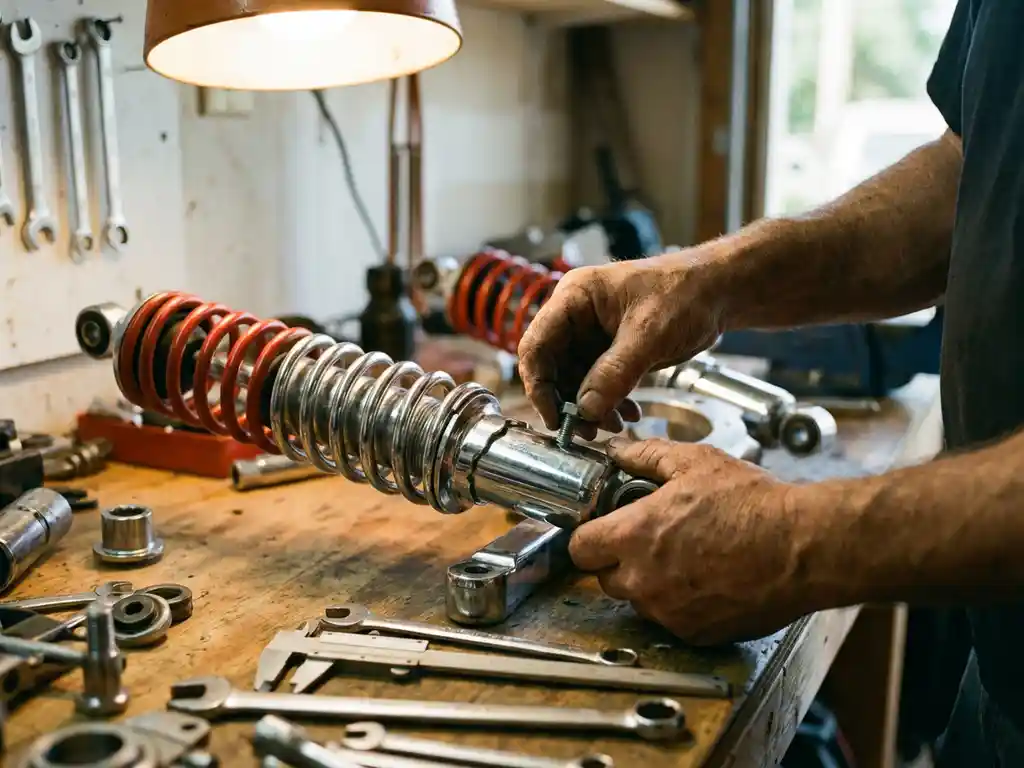
Building custom suspension typically takes 4–8 weeks from initial consultation to delivery. The timeline depends on vehicle specifications, performance requirements, and engineering complexity. Street applications usually require less development time than professional racing systems, while completely bespoke engineering solutions take longer than modified standard designs.
What factors determine how long custom suspension takes to build?
Several key variables influence custom suspension production timelines, with engineering complexity being the primary factor. Vehicle specifications, intended use, and required testing protocols all significantly impact development duration.
Vehicle-specific factors play a crucial role in determining build time. Rare or modified vehicles require additional research and custom mounting solutions. Modern cars with electronic stability systems need careful integration considerations, while classic vehicles may require completely custom brackets and fittings.
Performance requirements directly affect manufacturing complexity. Street-focused systems with comfort priorities follow established engineering principles. Track-oriented applications demand extensive testing and validation. Professional racing specifications require comprehensive development, including wind tunnel testing and regulatory compliance verification.
Quality control procedures add essential time to the manufacturing process. Each custom damper undergoes individual testing and calibration. Multiple validation stages ensure performance meets specifications before delivery. This thorough approach prevents issues and guarantees customer satisfaction.
How does the custom suspension development process actually work?
The custom suspension development process follows a structured six-stage approach: consultation, data collection, engineering design, component manufacturing, assembly, and final testing. Each stage requires specific timeframes to ensure optimal results.
Initial consultation involves understanding your vehicle, driving style, and performance goals. Engineers collect detailed vehicle specifications, including weight distribution, existing suspension geometry, and intended use. This foundation stage typically requires 1–2 weeks for comprehensive data gathering.
Engineering design transforms requirements into technical specifications. Computer modelling determines optimal spring rates, damping characteristics, and geometric considerations. Design validation through simulation ensures performance targets will be met. This critical phase usually spans 2–3 weeks, depending on complexity.
Component manufacturing begins once designs are finalised. Custom springs are wound to exact specifications, while damper bodies are machined and assembled. Quality materials and precision manufacturing require 2–3 weeks for completion.
Final assembly and testing validate performance against design targets. Each system undergoes comprehensive testing, including compression, rebound, and temperature cycling. Documentation and setup instructions are prepared to guide installation.
Browse Products
Shock absorbers, springs, camber plates, air jacks and more. Explore the full range.
Custom Suspension
Every shock absorber built to your exact car, discipline and driving style. Nothing off the shelf.
Get in Touch
Have a question or a specific project? Our engineers are ready to help, no obligation.
What’s the difference between building suspension for street cars versus racing applications?
Street suspension development typically requires 4–6 weeks, while professional racing applications often need 8–12 weeks due to additional testing and regulatory requirements.
Street-focused systems prioritise comfort alongside performance. Development follows established engineering principles with proven spring rates and damping curves. Testing involves road simulation and durability validation. Regulatory requirements are minimal, focusing primarily on safety standards.
Racing suspension demands extensive development and validation. Performance requirements are extreme, requiring custom valving and exotic materials. Wind tunnel testing and track validation add significant time. Regulatory compliance for specific racing series requires detailed documentation and certification processes.
Manufacturing complexity differs substantially between applications. Street systems use proven materials and manufacturing processes. Racing applications often require specialised components, including titanium springs, aerospace-grade materials, and advanced coatings. These materials require longer procurement times and specialised manufacturing techniques.
Testing protocols vary dramatically between street and racing applications. Street systems undergo standard durability testing and road simulation. Racing suspension requires extensive track testing, data logging, and performance validation across varying conditions.
Why does custom suspension take longer than off-the-shelf options?
Custom suspension requires individual engineering, manufacturing, and testing for each application, while mass-produced components follow standardised specifications. This bespoke approach delivers superior results but requires additional development time.
Mass-produced suspension components represent compromises designed to work across multiple vehicle variants and driving conditions. Manufacturers optimise for cost and broad compatibility rather than specific performance targets. Standard components can be manufactured in large quantities and stored as inventory.
Bespoke suspension engineering eliminates these compromises through vehicle-specific optimisation. Engineers calculate precise spring rates, damping characteristics, and geometric considerations for your exact requirements. This individual attention requires dedicated engineering time and custom manufacturing processes.
Manufacturing processes differ fundamentally between standard and custom approaches. Mass production uses automated systems and standardised components. Custom manufacturing involves individual component selection, precise machining, and hand assembly. Each damper receives individual attention and calibration.
Quality assurance for custom systems involves comprehensive individual testing. Every component undergoes validation against specific performance targets. This thorough approach ensures optimal performance but requires additional time compared to batch testing of standard components.
How Intrax Racing helps with custom suspension development
We specialise in creating bespoke suspension solutions that eliminate the compromises inherent in standard systems. Our approach combines decades of motorsport experience with individual attention to your specific requirements.
Our comprehensive development process includes:
- Detailed consultation to understand your vehicle and performance goals
- Custom engineering calculations specific to your application
- Individual component manufacturing and hand assembly
- Comprehensive testing and validation before delivery
- Complete setup documentation and ongoing support
When standard suspension compromises aren’t acceptable for your application, our custom development process delivers precisely what you need. Every system is built specifically for your vehicle and requirements, ensuring optimal performance and satisfaction. Get in touch to discuss your custom suspension requirements and timeline.
Browse Products
Shock absorbers, springs, camber plates, air jacks and more. Explore the full range.
Custom Suspension
Every shock absorber built to your exact car, discipline and driving style. Nothing off the shelf.
Get in Touch
Have a question or a specific project? Our engineers are ready to help, no obligation.