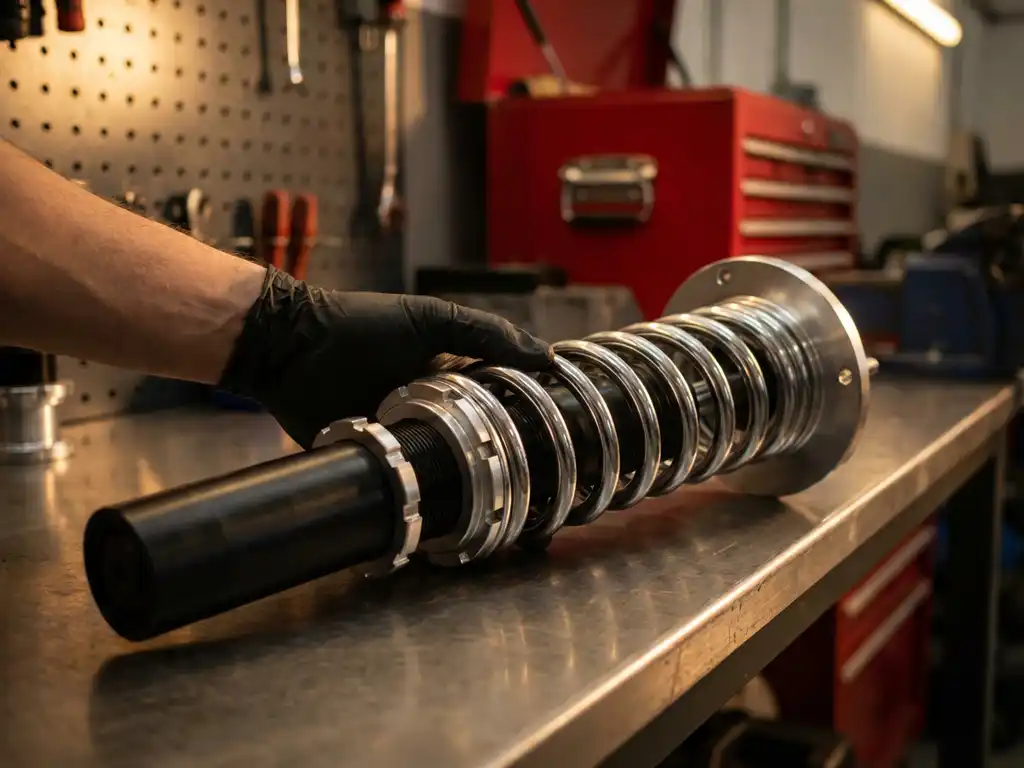
Springs and dampers must always be upgraded together because they function as a matched suspension system. When you replace only one component, you create a mismatch between spring rates and damper valving that compromises handling, comfort, and safety. Properly matched systems ensure optimal vehicle dynamics, prevent premature wear, and deliver consistent performance across all driving conditions.
What happens when you upgrade springs without replacing dampers?
Upgrading springs without replacing dampers creates a fundamental mismatch between the new spring rates and the existing damper valving, resulting in poor handling characteristics and compromised vehicle dynamics. The old dampers cannot properly control the oscillations from stiffer or softer springs, leading to unpredictable suspension behaviour that affects both performance and safety.
When coil springs are replaced with different rates, the existing shock absorbers lack the appropriate valving to manage the new spring characteristics. Stiffer springs paired with soft dampers create excessive bouncing and poor body control, while softer springs with firm dampers result in harsh ride quality and inadequate suspension travel.
This mismatch creates several immediate problems:
- Oscillation issues where the suspension continues bouncing after hitting bumps
- Reduced tyre contact with the road surface during cornering and braking
- Inconsistent handling that makes the vehicle difficult to predict
- Accelerated wear on both suspension components and tyres
- Compromised comfort with either excessive harshness or a wallowing motion
The suspension system loses its ability to maintain proper wheel control, directly impacting vehicle safety and driving enjoyment. These issues become more pronounced under dynamic driving conditions where precise suspension control is essential.
Why do springs and dampers work as a matched system?
Springs and dampers complement each other in a carefully engineered relationship in which springs handle load support and dampers control oscillation. The damping ratios must match the spring rates to achieve an optimal suspension frequency response, ensuring the system works harmoniously to manage vehicle motion effectively across different driving scenarios.
The technical relationship between these components centres on suspension frequency and damping coefficients. Springs determine the natural frequency at which the vehicle oscillates, while dampers control how quickly these oscillations settle. When properly matched, this creates a well-damped system that responds predictably to road inputs.
Understanding suspension terminology helps explain why this relationship matters. The damper’s compression and rebound valving must correspond to the spring’s stiffness to achieve the correct damping ratio. Too little damping allows excessive oscillation, while too much damping prevents the suspension from responding properly to road irregularities.
Key technical considerations include:
- Spring rate compatibility with damper valving characteristics
- Compression and rebound damping balanced for specific spring frequencies
- Load-dependent damping that works with spring compression rates
- Temperature stability across the operating range of both components
This matched approach ensures the suspension system maintains consistent behaviour whether navigating motorway undulations, tackling country roads, or managing emergency manoeuvres. The synergy between properly paired components delivers both improved handling precision and sustained comfort.
Browse Products
Shock absorbers, springs, camber plates, air jacks and more. Explore the full range.
Custom Suspension
Every shock absorber built to your exact car, discipline and driving style. Nothing off the shelf.
Get in Touch
Have a question or a specific project? Our engineers are ready to help, no obligation.
How does upgrading both components improve vehicle performance?
Upgrading both springs and dampers simultaneously delivers comprehensive performance improvements, including enhanced handling precision, better road contact, improved comfort, reduced body roll, and more predictable vehicle behaviour. Matched systems maintain consistent performance across varying driving conditions, providing drivers with confidence and control in all situations.
The performance benefits extend beyond simple handling improvements. When the suspension system components work in harmony, the vehicle maintains better tyre contact with the road surface, improving grip for acceleration, braking, and cornering. This enhanced contact patch utilisation translates directly into shorter stopping distances and more precise steering response.
Comfort improvements occur because properly matched components eliminate the harsh impacts or excessive body movement that characterise mismatched systems. The suspension can respond appropriately to both small road imperfections and larger undulations, filtering unwanted motion while maintaining vehicle control.
Specific performance advantages include:
- Reduced body roll during cornering without sacrificing ride comfort
- Improved stability under braking with less nose dive
- Better traction during acceleration
- Enhanced steering feedback and road feel
- Consistent performance regardless of load or driving conditions
- Reduced fatigue on longer journeys due to improved comfort
The matched-system approach ensures these benefits work together rather than competing against each other. Drivers experience the full potential of their suspension upgrade without the compromises that come from mixing old and new components.
What are the risks of mixing old and new suspension components?
Mixing old and new suspension components creates safety and performance risks, including uneven wear patterns, compromised braking performance, increased maintenance costs, and potential damage to other suspension elements. These issues affect vehicle reliability, warranty coverage, and long-term ownership costs while potentially compromising driver and passenger safety.
The most significant concern involves unpredictable handling characteristics that can compromise safety during emergency manoeuvres. When one corner of the vehicle responds differently due to mismatched components, the driver loses the ability to predict how the car will behave, particularly during sudden steering inputs or emergency braking.
Financial implications extend beyond the initial component cost. Mismatched systems accelerate wear on tyres, bushings, and other suspension elements, leading to more frequent replacements and higher maintenance expenses. The false economy of partial upgrades often results in greater long-term costs than investing in a complete system from the outset.
Specific risks include:
- Uneven tyre wear patterns that require premature replacement
- Accelerated wear on suspension bushings and mounting points
- Potential voiding of component warranties due to improper application
- Increased stress on chassis mounting points
- Compromised emergency handling capabilities
- Higher likelihood of component failure under stress
Professional suspension specialists understand these risks and design complete systems to avoid them entirely. The integrated approach eliminates compatibility concerns while ensuring optimal performance and longevity.
How Intrax Racing helps with suspension upgrades
At Intrax Racing, we understand that proper suspension performance requires perfectly matched springs and dampers working as a unified system. Our approach eliminates the guesswork and compatibility issues that plague mixed-component installations, ensuring you receive optimal performance, comfort, and reliability from your suspension upgrade.
Our custom-made suspension solutions provide:
- Precisely matched spring rates and damper valving for your specific vehicle
- Custom tuning based on your driving style and performance requirements
- Complete system integration that eliminates compatibility concerns
- Professional consultation to determine the optimal setup for your needs
- Comprehensive warranty coverage for complete peace of mind
Rather than risk the compromises and potential problems of partial upgrades, we deliver complete suspension solutions that maximise both performance and comfort. Our decades of motorsport experience ensure your suspension system performs flawlessly whether you are navigating daily commutes or exploring your vehicle’s dynamic capabilities.
Ready to experience the difference that properly matched suspension components can make? Get in touch with our suspension specialists to discuss your specific requirements and discover how we can transform your vehicle’s performance and comfort.
Browse Products
Shock absorbers, springs, camber plates, air jacks and more. Explore the full range.
Custom Suspension
Every shock absorber built to your exact car, discipline and driving style. Nothing off the shelf.
Get in Touch
Have a question or a specific project? Our engineers are ready to help, no obligation.
Related Articles
- How do you prepare your suspension before a track day?
- What causes excessive tyre wear after fitting coilovers?
- What is the difference between suspension tuning and suspension replacing?
- How do you set up a BMW E46 for track days?
- Can you install coilovers yourself or do you need a mechanic?
- Can you adjust ride height on coilovers?