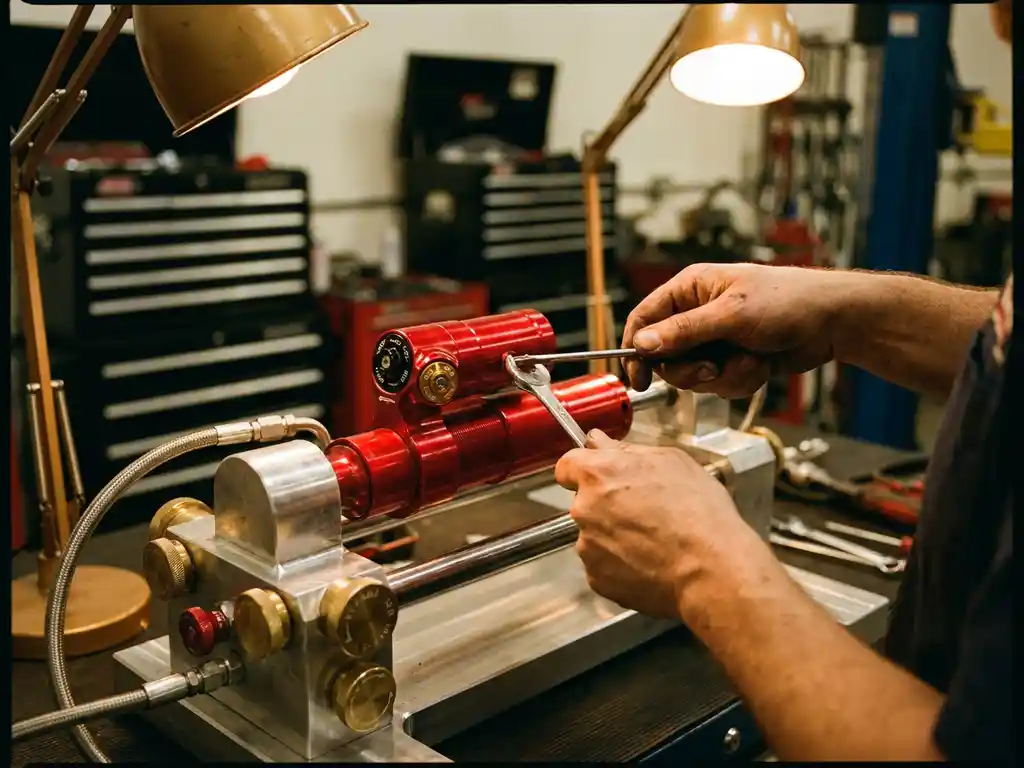
Adjusting suspension settings on custom suspension involves modifying damper controls like rebound and compression, adjusting ride height through spring preload, and fine-tuning based on your specific driving conditions and vehicle setup. Custom suspension systems provide multiple adjustment points that allow precise calibration for your exact needs, driving style, and vehicle modifications.
Unlike standard suspension systems that use fixed settings designed for broad compatibility, custom suspension gives you control over every aspect of your vehicle’s handling characteristics. The adjustment process requires understanding which settings affect different aspects of your ride and knowing when to modify specific components for optimal performance.
What tools do you need to adjust custom suspension settings?
Adjusting custom suspension settings requires basic hand tools including adjustable wrenches, socket sets, measuring tape, and marking tools for tracking adjustments. Most custom suspension systems use standard adjustment mechanisms that work with common workshop equipment.
Essential tools for suspension adjustment include:
- Adjustable wrenches or specific spanner tools for damper adjustments
- Socket set for removing wheels and accessing adjustment points
- Measuring tape for ride height measurements
- Permanent marker for marking adjustment collar positions
- Vehicle jack and jack stands for safe lifting
- Thread lubricant for smooth adjustments
Before beginning any adjustments, ensure you have adequate working space and proper safety equipment. The vehicle should be positioned on level ground with sufficient room to access all adjustment points. Having the right tools prevents damage to adjustment mechanisms and ensures precise modifications to your suspension setup.
How do rebound and compression settings affect your ride?
Rebound controls how quickly your suspension extends after compression, while compression settings determine how the suspension responds when compressed during impacts or cornering. These adjustments directly influence ride comfort, handling precision, and vehicle stability across different driving conditions.
Rebound Adjustment Effects
Rebound damping affects how your vehicle recovers from bumps, dips, and cornering forces. Slower rebound settings provide more controlled wheel movement but can make the ride feel sluggish over consecutive bumps. Faster rebound allows quicker recovery but may cause the vehicle to feel bouncy or unstable if set too light.
Proper rebound adjustment ensures your tires maintain contact with the road surface while providing appropriate feedback through the steering wheel. When rebound is correctly calibrated to your driving style and road conditions, you experience improved traction and predictable handling characteristics.
Compression Setting Impact
Compression damping controls initial impact absorption and body movement during acceleration, braking, and cornering. Stiffer compression settings reduce body roll and provide more precise handling feedback, while softer settings improve comfort over rough surfaces but may allow excessive body movement.
The key to effective compression tuning lies in balancing impact absorption with vehicle control. Custom suspension allows you to optimize this balance for your specific use case, whether prioritizing comfort for daily driving or precision for track performance.
Browse Products
Shock absorbers, springs, camber plates, air jacks and more. Explore the full range.
Custom Suspension
Every shock absorber built to your exact car, discipline and driving style. Nothing off the shelf.
Get in Touch
Have a question or a specific project? Our engineers are ready to help, no obligation.
What’s the difference between adjusting street and track suspension?
Street suspension adjustments prioritize comfort, compliance, and versatility across varying road conditions, while track adjustments focus on maximum grip, precise handling, and consistent performance under high-stress driving conditions. The adjustment approach differs significantly between these applications.
For street use, suspension settings must accommodate diverse scenarios including highway cruising, city driving, parking lot navigation, and occasional spirited driving. This requires softer damping settings that absorb road imperfections while maintaining adequate body control. Ride height is typically set higher to clear speed bumps and driveways, and adjustments lean toward comfort without sacrificing safety.
Track-focused adjustments prioritize performance over comfort, with stiffer damping settings that provide immediate response to steering inputs and minimize body movement during aggressive cornering. Lower ride heights improve aerodynamics and lower the center of gravity, while compression and rebound settings are tuned for consistent lap times rather than bump absorption.
The beauty of custom suspension lies in its adaptability. Many systems allow you to switch between street and track settings relatively quickly, giving you the best of both worlds without compromising either application’s effectiveness.
How do you find your baseline suspension settings?
Finding baseline suspension settings starts with manufacturer recommendations based on your vehicle specifications, intended use, and modifications, then requires systematic testing and adjustment to match your personal preferences and driving style. The baseline serves as your starting point for fine-tuning.
Begin by gathering essential information about your vehicle including weight, tire specifications, and any modifications that affect suspension geometry. Professional suspension manufacturers use this data to calculate initial settings that provide a solid foundation for further adjustments.
The baseline establishment process involves:
- Setting initial ride height based on your intended use and clearance requirements
- Configuring damper settings to manufacturer specifications for your vehicle type
- Testing the setup through varied driving conditions
- Recording your impressions and any handling characteristics that need improvement
- Making incremental adjustments while documenting changes
Remember that baseline settings are not final settings. They provide a known starting point from which you can make informed adjustments based on real-world performance and personal preferences. Keep detailed records of all changes to track what works and what doesn’t for your specific application.
When should you adjust ride height versus damper settings?
Adjust ride height when addressing ground clearance issues, achieving the desired vehicle stance, or correcting suspension geometry problems, while damper adjustments address handling characteristics like body roll, bump compliance, and steering response. Each type of adjustment serves different purposes and affects distinct aspects of vehicle behavior.
Ride height adjustments are necessary when your vehicle sits too high or too low for your intended use. Increasing spring preload raises the vehicle, while reducing preload lowers it. When helper springs are installed, their preload must be set first before adjusting the main spring. Correctly setting ride height affects balance, handling, appearance, and driving comfort.
Before making ride height adjustments, measure current height by taking vertical measurements from the bottom edge of the wheel rim to the bottom of the wheel arch. Record measurements separately for left and right sides, and repeat for both front and rear axles. This documentation helps track changes and ensures symmetrical adjustments.
Damper adjustments become necessary when ride height is correct but handling characteristics need refinement. If your vehicle sits at the proper height but feels too soft in corners, too harsh over bumps, or exhibits unwanted body movement, damper tuning addresses these issues without changing vehicle stance.
The adjustment process requires specific preparation including jacking the vehicle at chassis points so wheels are fully extended, removing wheels if necessary for working space, and marking adjustment collars to track the number of turns made. Clean and lubricate threads before adjustment to prevent binding or damage during the process.
How Intrax Racing helps with custom suspension adjustment
We provide comprehensive support for custom suspension adjustment through our engineering expertise and personalized calibration service. Our nearly 50 years of motorsport experience enables us to calculate and build suspension systems that are precisely matched to your vehicle, driving style, and performance requirements.
Our custom suspension adjustment support includes:
- Initial setup calculations based on your specific vehicle data and intended use
- Detailed adjustment instructions tailored to your suspension configuration
- Technical support for fine-tuning and optimization
- Complete documentation of your custom settings for future reference
- Ongoing consultation for setup modifications as your needs evolve
Every custom suspension system we build receives a unique identification number with complete history stored under your name, ensuring we can provide continued support and answer questions about your specific setup. Whether you’re transitioning from street to track use or simply want to optimize your current settings, our engineering team provides the expertise needed to achieve your suspension goals.
Ready to optimize your suspension setup? Contact our technical team to discuss your specific adjustment needs and discover how our custom approach can transform your driving experience.
Browse Products
Shock absorbers, springs, camber plates, air jacks and more. Explore the full range.
Custom Suspension
Every shock absorber built to your exact car, discipline and driving style. Nothing off the shelf.
Get in Touch
Have a question or a specific project? Our engineers are ready to help, no obligation.