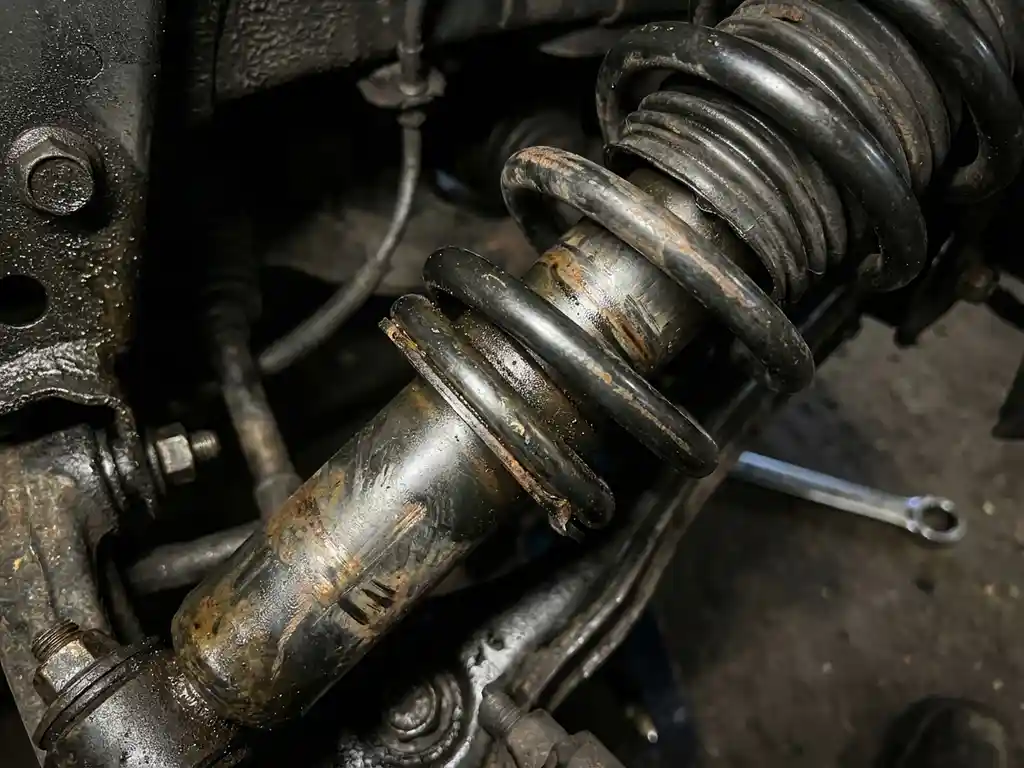
Lowering springs can damage your shock absorbers when spring rates and shock valving aren’t properly matched. The shortened suspension travel and altered geometry force shocks to work harder, potentially causing premature wear, oil leaks, and handling issues. Understanding the mechanical relationship between springs and shocks helps prevent costly damage and ensures optimal performance.
What actually happens to your shocks when you install lowering springs?
Installing lowering springs fundamentally alters the mechanical relationship between your suspension components, creating new stress points that can damage shock absorbers. The shortened suspension travel forces shocks to operate in a compressed range they weren’t originally designed for, while the altered suspension geometry changes load distribution throughout the system.
The primary issue occurs when spring rates and shock valving become mismatched. Factory shock absorbers are calibrated to work with specific spring rates and travel distances. Lowering springs typically have higher spring rates to maintain proper ride height, but your original shocks still have the same damping characteristics designed for softer, longer-travel springs.
During compression and rebound cycles, this mismatch creates several problems. The shock absorber must work harder to control the stiffer spring, generating more heat and internal pressure. The reduced travel means the shock spends more time in its mid-stroke position, where it may not have optimal damping characteristics. Additionally, the shock may bottom out more frequently, causing internal damage to seals and valving components.
The altered suspension geometry also affects how forces transfer through the suspension system. Changed camber and caster angles can create uneven loading on shock absorber mounts and internal components, accelerating wear patterns that wouldn’t occur with properly matched suspension components.
How do you know if lowering springs are damaging your shock absorbers?
Several warning signs indicate that lowering springs are causing damage to your shock absorbers. Listen for unusual noises like knocking, clunking, or squeaking during suspension movement, particularly over bumps or during parking manoeuvres. These sounds often indicate internal shock damage or worn mounting components.
Handling changes provide clear evidence of shock deterioration. You might notice increased body roll during cornering, excessive bouncing after hitting bumps, or a general feeling that the car doesn’t settle properly after suspension movement. The vehicle may feel less stable at motorway speeds or exhibit poor damping control during rapid direction changes.
Uneven tyre wear patterns reveal suspension problems that often stem from damaged shocks. Look for cupping, scalloping, or irregular wear across the tyre surface. Inside or outside edge wear can indicate that damaged shocks aren’t controlling wheel movement properly, allowing excessive camber changes during suspension travel.
Visual inspection points include checking for oil leaks around shock absorber bodies, which indicate seal failure. Examine shock absorber mounts for excessive wear or movement, and look for any obvious physical damage to shock bodies or mounting hardware. During regular maintenance, pay attention to how the suspension feels when the vehicle is lifted – excessive free movement or lack of resistance suggests internal shock damage.
Browse Products
Shock absorbers, springs, camber plates, air jacks and more. Explore the full range.
Custom Suspension
Every shock absorber built to your exact car, discipline and driving style. Nothing off the shelf.
Get in Touch
Have a question or a specific project? Our engineers are ready to help, no obligation.
What’s the difference between using lowering springs with stock shocks versus performance shocks?
Factory shock absorbers respond poorly to lowering springs because they’re designed with specific valving for original equipment spring rates and travel distances. Stock shocks use compromise settings that must work across various driving conditions, temperatures, and load scenarios, making them inherently unsuitable for modified suspension setups.
The valving differences between stock and performance shocks are significant. Factory shocks typically have softer low-speed compression damping and rebound settings optimised for comfort with standard springs. When paired with stiffer lowering springs, this creates an unbalanced system where the shock cannot properly control spring oscillations, leading to poor handling and premature component wear.
Performance shocks designed for lowered vehicles feature matched valving characteristics that complement higher spring rates. These shocks have firmer low-speed damping to control body movement while maintaining appropriate high-speed damping for bump compliance. The internal components are also built to withstand the increased forces generated by stiffer suspension setups.
Durability considerations favour performance shocks significantly. Stock shocks operating with lowering springs typically fail within 20,000–40,000 miles due to constant overwork and heat generation. Performance shocks designed for modified applications can last 80,000+ miles because they’re engineered to handle the increased demands.
For street driving, properly matched performance shocks actually improve ride quality compared to stock shocks with lowering springs. The balanced system provides better bump absorption while maintaining superior handling characteristics. In motorsport applications, the difference becomes even more pronounced, with custom-matched shock and spring combinations delivering predictable, consistent performance under extreme conditions.
When should you replace your shocks after installing lowering springs?
Replace your shock absorbers immediately when installing lowering springs for optimal performance and component longevity. Continuing to use factory shocks with lowering springs creates an unbalanced system that will damage both components and compromise vehicle safety and handling characteristics.
If you’ve already installed lowering springs with stock shocks, replacement timing depends on several factors. High-mileage shocks (over 60,000 miles) should be replaced immediately, as they lack the strength to handle increased spring rates. Newer stock shocks might survive 12–18 months, but performance will be compromised throughout this period.
Driving conditions significantly affect replacement schedules. Aggressive driving, track use, or frequent motorway travel accelerates shock wear when using mismatched components. Urban driving with frequent stop-and-go traffic also increases wear due to constant suspension movement. Conversely, gentle driving on smooth roads might extend the lifespan slightly, but won’t prevent eventual failure.
Spring specifications influence replacement urgency. Lowering springs with significant rate increases (more than 25% stiffer than stock) require immediate shock replacement. Moderate lowering springs might allow short-term use of stock shocks, but performance and longevity suffer considerably.
Decision criteria for upgrading should prioritise safety and performance over cost savings. Signs that immediate replacement is necessary include any oil leakage, unusual noises, handling degradation, or uneven tyre wear. Even without obvious symptoms, replacing stock shocks when installing lowering springs prevents future problems and ensures the suspension system works as intended.
How Intrax Racing helps with suspension matching
We specialise in creating perfectly matched shock absorber and spring combinations that eliminate the problems associated with mismatched suspension components. Rather than forcing you to compromise with off-the-shelf solutions, we build custom shock absorbers specifically calculated for your vehicle and driving requirements.
Our approach includes:
- Custom valving calculations based on your specific spring rates and vehicle weight
- Suspension geometry analysis to optimise damping characteristics for your lowered setup
- Performance testing to ensure shock and spring combinations work in harmony
- Long-term durability engineering that prevents premature component failure
When shock absorbers and springs are developed together rather than mixed and matched, the result is improved handling with maintained comfort – not a compromise between the two. Contact us to discuss how custom-matched suspension components can transform your vehicle’s performance while ensuring component longevity.
Browse Products
Shock absorbers, springs, camber plates, air jacks and more. Explore the full range.
Custom Suspension
Every shock absorber built to your exact car, discipline and driving style. Nothing off the shelf.
Get in Touch
Have a question or a specific project? Our engineers are ready to help, no obligation.