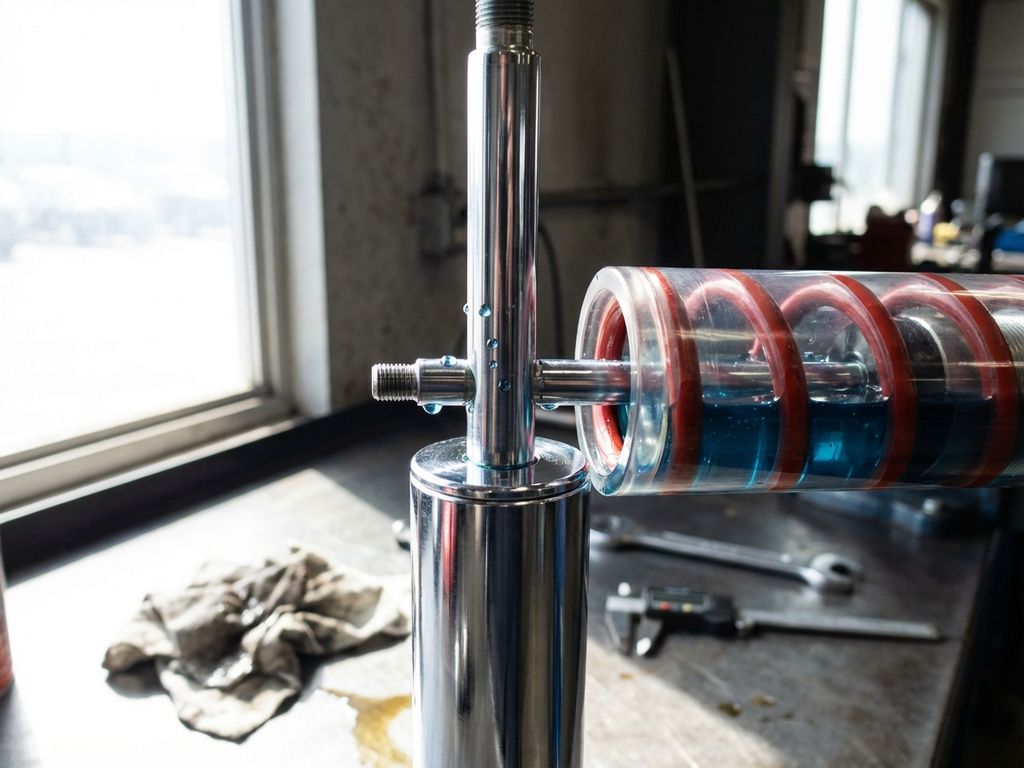
Shock absorbers are essential vehicle components that control spring movement and provide stability while driving. They work by converting kinetic energy from road impacts into heat through hydraulic fluid or gas pressure systems. This damping action prevents excessive bouncing, improves handling, and maintains tyre contact with the road surface for optimal safety and performance.
What are shock absorbers and how do they work?
Shock absorbers are hydraulic or gas filled damping devices that control the oscillation of your vehicle’s springs. Their primary function is to convert the kinetic energy from road impacts and spring movement into heat energy, which then dissipates harmlessly into the atmosphere.
The basic mechanism involves a piston moving through hydraulic fluid within a sealed cylinder. When your wheel encounters a bump, the spring compresses and the shock absorber’s piston moves through the fluid, creating resistance. This resistance controls how quickly the spring can extend and compress, preventing the uncontrolled bouncing that would occur without proper damping.
Modern automotive shocks use sophisticated valve systems that adjust damping force based on piston speed. During slow movements such as cornering, the valves provide less resistance for comfort. During rapid movements caused by hitting potholes, they increase resistance to maintain vehicle control. This variable damping ensures your suspension system responds appropriately to different driving conditions while maintaining optimal suspension performance. Springs and shock absorbers work as a system, changing one component without matching the other limits the overall performance potential.
What’s the difference between shocks and struts?
Shocks and struts both provide damping, but struts serve as both damping devices and structural suspension components, while shock absorbers focus purely on controlling spring oscillation. Struts replace part of the suspension framework and support the vehicle’s weight directly.
Structurally, shock absorbers mount between the chassis and suspension components using bushings and brackets. They work alongside separate springs and do not bear the vehicle’s weight. Struts integrate the damping mechanism with a structural housing that replaces the upper suspension mounting point, making them load bearing components.
The mounting differences affect replacement complexity and cost. Replacing shock absorbers typically involves unbolting them from their mounting points. Strut replacement often requires spring compression tools and alignment checks, since struts affect wheel positioning. Understanding your vehicle’s setup helps determine maintenance requirements and explains why strut equipped vehicles may have different handling characteristics compared with traditional shock and spring combinations.
Browse Products
Shock absorbers, springs, camber plates, air jacks and more. Explore the full range.
Custom Suspension
Every shock absorber built to your exact car, discipline and driving style. Nothing off the shelf.
Get in Touch
Have a question or a specific project? Our engineers are ready to help, no obligation.
How do you know when your shocks need replacement?
Common signs of worn shock absorbers include excessive bouncing after hitting bumps, uneven tyre wear patterns, poor handling during cornering, and the vehicle bottoming out over normal road irregularities. Visual inspection may reveal leaking hydraulic fluid or damaged mounting components.
The bounce test provides a simple assessment method. Push down firmly on each corner of your vehicle and release. If the car bounces more than once before settling, the shocks at that corner likely need replacement. Healthy shock absorbers should stop the bouncing motion within one oscillation.
Tyre wear patterns offer additional clues about shock condition. Cupping or scalloping wear indicates the tyre is not maintaining consistent road contact due to inadequate damping. While driving, you might notice increased stopping distances, vehicle instability during lane changes, or a generally uncomfortable ride quality. These symptoms often develop gradually, making regular inspection important for maintaining vehicle safety and performance standards.
What are the different types of shock absorbers available?
The main shock absorber types include twin tube, monotube, gas charged, adjustable, and electronic variants, each offering different construction methods and performance characteristics. Twin tube designs use an inner working cylinder within an outer reservoir, while monotube shocks contain all components in a single cylinder.
Twin tube shocks are common in standard vehicles due to their cost effectiveness and adequate performance for normal driving. However, factory suspension is always a compromise, designed to work adequately for all drivers, climates, and conditions, but optimized for none. Monotube designs offer superior heat dissipation and more consistent damping, making them popular for performance applications. Gas charged versions use nitrogen pressure to prevent fluid foaming and maintain damping consistency under demanding conditions.
Adjustable shock absorbers allow damping force modification to suit different driving preferences or conditions. Electronic systems automatically adjust damping in real time based on road conditions and driving inputs. These advanced systems can transform a vehicle’s character from comfortable cruising to sport focused handling within milliseconds. The choice between types depends on your vehicle application, driving style, and performance requirements.
Why are quality shocks important for vehicle safety and performance?
Quality shock absorbers directly affect braking distance, tyre contact with the road surface, vehicle stability, and overall driving safety. Properly functioning dampers maintain optimal tyre grip during acceleration, braking, and cornering by preventing wheel hop and maintaining consistent contact pressure.
During emergency braking, worn shocks can increase stopping distances significantly as the tyres lose contact with the road surface. This control of weight transfer becomes critical during evasive manoeuvres, where maintaining grip determines whether you can successfully avoid obstacles. Quality damping also prevents dangerous vehicle instability during crosswinds or sudden steering inputs.
Beyond safety considerations, proper shock absorber function affects comfort, component longevity, and overall driving enjoyment. Quality dampers reduce vibration transmission to the chassis, protecting other suspension components and interior elements from excessive wear. They maintain proper wheel alignment geometry during suspension movement, ensuring even tyre wear and predictable handling characteristics that enhance driver confidence.
How Intrax Racing helps with custom shock solutions
At Intrax Racing, we specialise in creating bespoke shock absorber solutions tailored to your specific vehicle and driving requirements. Factory suspension is a compromise, designed to work for all drivers, climates, and conditions, optimized for none. Custom suspension allows you to tailor the car precisely to the driver’s preferences and the demands of your chosen discipline.
Our motorsport derived expertise ensures optimal performance whether you need:
- Custom damping curves designed for your exact vehicle weight and suspension geometry
- Adjustable systems allowing fine tuning for different driving conditions and preferences
- Performance upgrades that maintain comfort while improving handling characteristics
- Professional consultation to determine the ideal shock specification for your application
Our nearly 50 years of suspension engineering experience enable us to deliver solutions that perfectly balance performance, comfort, and reliability. Each shock absorber is individually built to your specifications, ensuring optimal integration with your existing suspension components and springs. Springs and shock absorbers work as a system, changing one without matching the other limits results. This is why Intrax delivers complete, matched custom setups rather than individual components.
Ready to experience the difference that properly engineered shock absorbers can make to your vehicle’s performance and safety? Get in touch with our technical team to discuss your specific requirements and discover how custom made solutions can transform your driving experience.
Browse Products
Shock absorbers, springs, camber plates, air jacks and more. Explore the full range.
Custom Suspension
Every shock absorber built to your exact car, discipline and driving style. Nothing off the shelf.
Get in Touch
Have a question or a specific project? Our engineers are ready to help, no obligation.