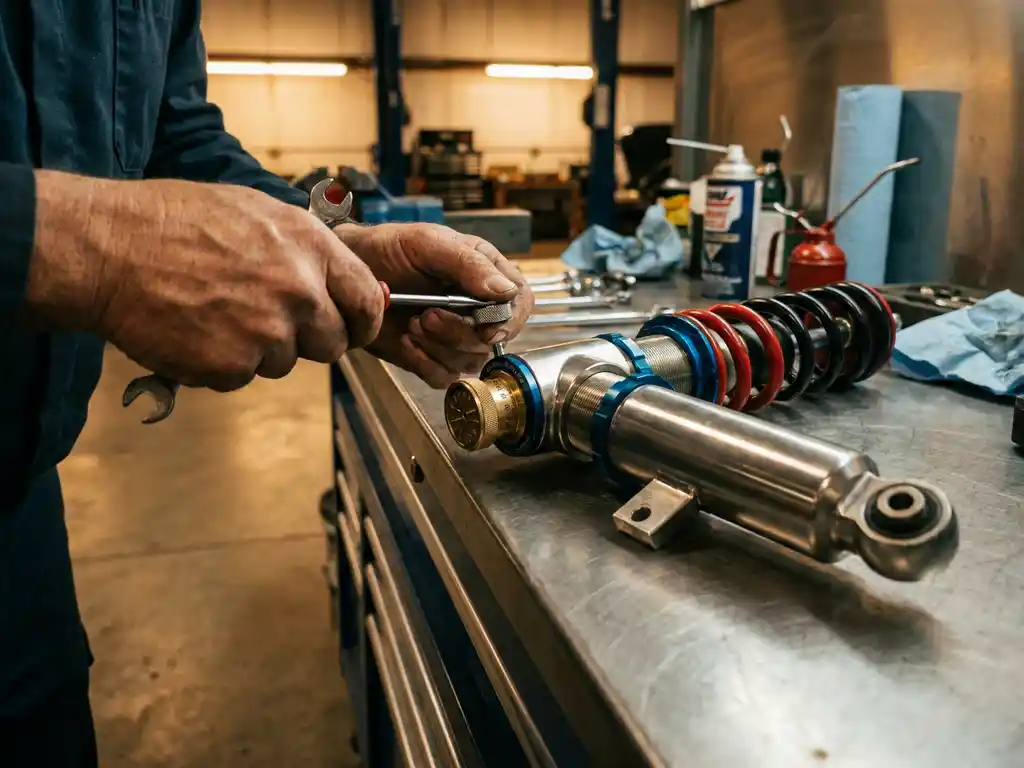
The best suspension settings for performance driving depend on your specific vehicle, driving style, and intended use, but generally involve stiffer damping, appropriate spring rates matched to vehicle weight, and anti-roll bar configurations that balance grip and handling response. Professional suspension tuning considers multiple interconnected variables that work together to optimize cornering performance, braking stability, and overall vehicle dynamics.
Getting suspension settings right requires understanding how each component affects vehicle behavior and how they interact with each other. The most effective approach involves methodical adjustment based on driving feedback and specific track or road conditions.
How do damper settings affect cornering performance?
Damper settings directly control how quickly your suspension compresses and rebounds during cornering, with stiffer compression damping reducing body roll and faster rebound damping helping maintain tire contact with the road surface. Proper damper tuning allows the suspension to respond appropriately to weight transfer while keeping the vehicle stable through corners.
The compression damping setting controls how the suspension reacts when the vehicle leans into a corner. Increased compression damping slows down the initial body roll, giving the driver more precise feedback about grip levels and preventing excessive weight transfer that can overwhelm the outside tires. However, too much compression damping can make the suspension harsh over bumps and prevent the proper weight transfer needed for optimal cornering.
Rebound damping manages how quickly the suspension returns to its normal position after compression. Proper rebound control prevents the vehicle from bouncing or oscillating after hitting bumps or during rapid direction changes. Too little rebound damping allows the suspension to extend too quickly, potentially lifting wheels off the ground and reducing grip. Too much rebound damping keeps the suspension compressed, reducing available travel for the next bump or corner.
The balance between compression and rebound damping affects how the vehicle transitions between corners. Well-tuned dampers allow smooth weight transfer while maintaining tire contact, giving drivers confidence to carry more speed through technical sections. Custom damper tuning considers your specific vehicle weight distribution, spring rates, and driving style to achieve optimal cornering performance.
What spring rates work best for different driving styles?
Spring rates should match your driving intensity and vehicle usage, with street driving typically requiring 20-30% stiffer springs than stock for improved handling while maintaining comfort, track-focused setups using 50-100% stiffer rates for maximum control, and competition applications often doubling or tripling stock rates depending on aerodynamic loads and track characteristics.
For street performance driving, moderately increased spring rates provide better body control without sacrificing ride quality. Springs that are 20-30% stiffer than stock reduce body roll and improve steering response while still absorbing road imperfections comfortably. This range works well for spirited driving on public roads and occasional track days where comfort remains important.
Track day enthusiasts benefit from spring rates 50-100% higher than stock, depending on vehicle weight and intended use. These rates provide the body control needed for consistent lap times while allowing the suspension to work effectively over track surface variations. The increased stiffness reduces aerodynamic pitch changes at high speeds and maintains proper suspension geometry through high-load corners.
Competition setups often require spring rates two to three times stock values, particularly in vehicles with significant aerodynamic downforce. These extreme rates prevent the suspension from bottoming out under high aerodynamic loads while maintaining precise vehicle control at racing speeds. However, such stiff springs require careful damper tuning and are unsuitable for street use due to harsh ride quality.
Vehicle weight distribution also influences optimal spring rates. Front-heavy vehicles may need proportionally stiffer rear springs to maintain balance, while mid-engine cars typically require more balanced front-to-rear spring rate ratios. Professional suspension tuning considers these factors along with tire characteristics and intended use to determine ideal spring rates.
Browse Products
Shock absorbers, springs, camber plates, air jacks and more. Explore the full range.
Custom Suspension
Every shock absorber built to your exact car, discipline and driving style. Nothing off the shelf.
Get in Touch
Have a question or a specific project? Our engineers are ready to help, no obligation.
How should anti-roll bars be configured for maximum grip?
Anti-roll bars should be configured to balance understeer and oversteer characteristics while maintaining maximum tire contact, typically starting with moderate stiffness front and rear, then adjusting based on handling feedback to achieve neutral cornering behavior that allows all four tires to contribute equally to grip generation.
The fundamental principle of anti-roll bar tuning involves managing weight transfer distribution between front and rear axles. Stiffer front anti-roll bars reduce front grip relative to the rear, inducing understeer but improving stability. Stiffer rear bars reduce rear grip, promoting oversteer but requiring more driver skill to manage. The goal is finding the balance that maximizes total grip while matching the driver’s skill level and preferences.
Starting with moderate anti-roll bar settings allows you to evaluate the vehicle’s natural balance before making adjustments. Many performance vehicles benefit from slightly stiffer rear anti-roll bars to counteract their inherent understeer tendencies, creating more neutral handling that allows drivers to use throttle input to adjust the car’s attitude through corners.
Track-specific tuning may require different anti-roll bar configurations depending on corner characteristics. Tracks with many high-speed corners often benefit from stiffer overall settings to maintain stability, while technical tracks with tight corners may require softer settings to allow more weight transfer and improve turn-in response. Adjustable anti-roll bars provide the flexibility to optimize for specific conditions.
The relationship between anti-roll bars and spring rates affects overall handling balance. Vehicles with very stiff springs may require softer anti-roll bars to maintain compliance, while softer spring setups often need stiffer anti-roll bars to control body roll. Professional tuning considers these interactions to achieve optimal grip and handling characteristics.
What’s the difference between street and track suspension setups?
Street suspension setups prioritize comfort and compliance over bumps while providing improved handling compared to stock, using moderate spring rates and damping settings that work well across varied road conditions, while track setups sacrifice comfort for maximum performance with much stiffer rates, aggressive damping, and lower ride heights optimized for smooth racing surfaces.
Street-oriented performance suspensions must handle diverse road conditions, from smooth highways to broken pavement and speed bumps. This requires spring rates that provide adequate body control without harsh ride quality, typically 20-40% stiffer than stock. Damping settings emphasize compliance and comfort while still improving handling response compared to standard suspensions.
Ride height considerations differ significantly between street and track applications. Street setups maintain reasonable ground clearance for driveways, parking lots, and road debris, while track setups can run much lower to reduce aerodynamic drag and lower the center of gravity. Street cars also need suspension travel to handle larger road irregularities.
Track suspensions prioritize maximum performance over comfort, using spring rates often 100-200% higher than stock to maintain precise vehicle control at high speeds and loads. Damping settings are much more aggressive, with increased compression and rebound damping to control rapid weight transfer and maintain tire contact over smooth racing surfaces.
Adjustment range and complexity also distinguish street and track setups. Street suspensions often feature simpler adjustment mechanisms focused on ride height and basic damping changes, while track suspensions may include separate compression and rebound adjustments, multiple anti-roll bar settings, and corner weight adjustment capabilities for fine-tuning performance.
How do you fine-tune suspension for specific track conditions?
Fine-tuning suspension for specific tracks involves analyzing track surface characteristics, corner types, and elevation changes, then adjusting damping settings, anti-roll bar stiffness, and ride height to optimize performance for those particular conditions, typically starting with baseline settings and making incremental changes based on driver feedback and lap time data.
Track surface analysis provides the foundation for suspension tuning decisions. Smooth tracks with consistent surfaces allow for stiffer suspension settings that maximize aerodynamic efficiency and precise handling. Bumpy or undulating tracks require softer settings that maintain tire contact and prevent the vehicle from becoming unsettled over surface irregularities.
Damping Adjustments for Track Characteristics
High-speed tracks with long corners benefit from increased compression damping to control aerodynamic pitch and maintain stability during sustained high-load cornering. Technical tracks with many direction changes often require softer rebound damping to allow quick weight transfer between corners while maintaining tire contact over curbing and track surface variations.
Anti-Roll Bar Tuning for Corner Types
Tracks dominated by high-speed corners typically benefit from stiffer anti-roll bar settings to reduce body roll and maintain consistent aerodynamics. Tracks with tight, technical sections may require softer anti-roll bars to allow more weight transfer and improve turn-in response, helping the vehicle rotate through slow corners more effectively.
Weather conditions also influence suspension tuning requirements. Wet conditions often benefit from softer overall settings that allow the suspension to work more effectively over painted lines and slippery surfaces. Hot weather may require damping adjustments to compensate for changes in shock absorber oil viscosity and tire pressure variations.
Data acquisition systems help quantify suspension performance changes, measuring parameters like wheel speeds, suspension travel, and g-forces to validate tuning changes. However, driver feedback remains crucial for understanding how suspension changes affect vehicle balance and confidence-inspiring handling characteristics.
How Intrax Racing helps with suspension optimization
We provide comprehensive suspension solutions that eliminate the guesswork from performance tuning through our custom-built approach and decades of motorsport expertise. Rather than offering one-size-fits-all solutions, we calculate and build every shock absorber specifically for your vehicle, driving style, and intended use.
Our suspension optimization process includes:
- Complete vehicle analysis considering weight distribution, modifications, and intended use
- Custom spring rate calculations matched to your specific driving requirements
- Damping curves designed for your particular vehicle and performance goals
- Professional tuning support to achieve optimal handling balance
- Ongoing adjustment and rebuild services as your needs evolve
With nearly 50 years of experience across Formula 1, street cars, and everything in between, we understand how to translate racing technology into practical solutions for any application. Every custom shock absorber receives a unique identification number with complete specifications stored for future service and upgrades.
Whether you’re looking to optimize your street car’s handling or develop a competitive track setup, contact us to discuss how our custom suspension solutions can transform your driving experience.
Browse Products
Shock absorbers, springs, camber plates, air jacks and more. Explore the full range.
Custom Suspension
Every shock absorber built to your exact car, discipline and driving style. Nothing off the shelf.
Get in Touch
Have a question or a specific project? Our engineers are ready to help, no obligation.