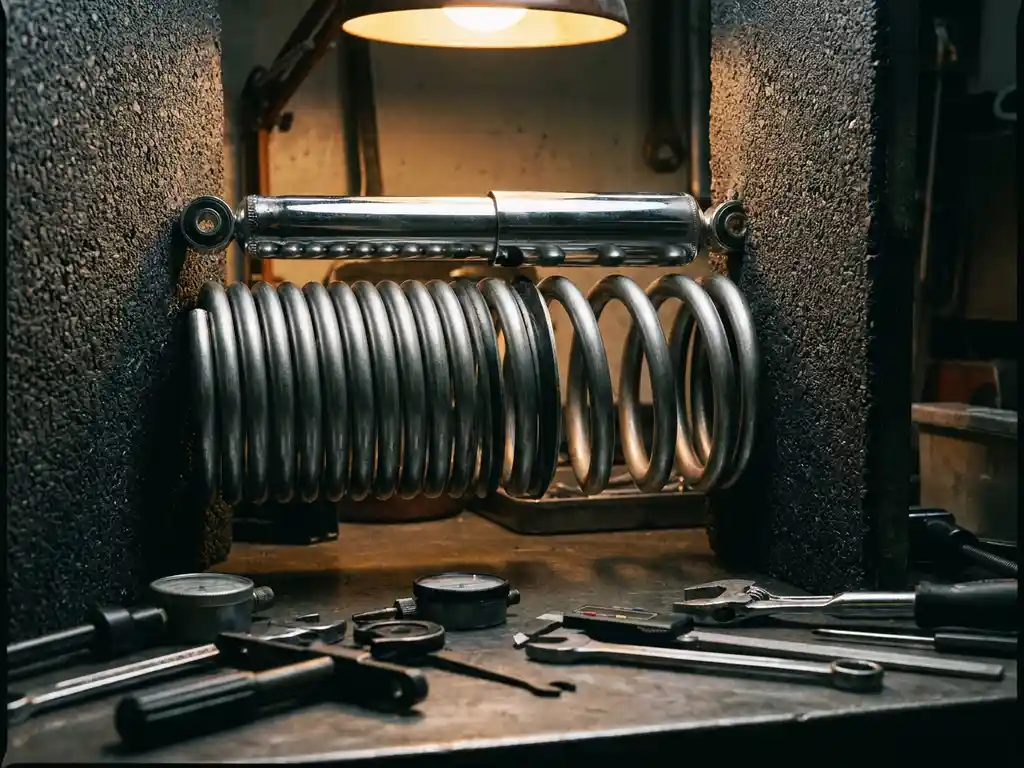
Progressive springs improve ride quality by automatically adjusting their spring rate based on compression distance, providing softer initial comfort for small bumps while maintaining firmer support for larger impacts. Unlike linear springs, which maintain a constant rate throughout their travel, progressive springs start soft and become progressively stiffer, delivering the best of both comfort and control in a single component.
This variable rate characteristic allows progressive springs to adapt seamlessly to different road conditions and driving situations. When properly tuned with matching shock absorbers, they create a suspension system that enhances both daily driving comfort and handling performance without compromise.
What makes progressive springs different from linear springs?
Progressive springs feature a variable spring rate that increases as the spring compresses, while linear springs maintain a constant rate throughout their entire compression range. This fundamental difference means progressive springs start soft for initial comfort but become firmer as they compress further, providing better bottoming resistance.
The variable rate characteristic comes from the spring’s construction. Progressive springs typically use coils with varying wire thickness, different coil spacing, or multiple coil diameters within the same spring. As the spring compresses, the coils with larger spacing or smaller wire diameter compress first, creating the initial soft rate. When these coils reach their solid height, the remaining active coils provide a much firmer rate.
Linear springs, by contrast, maintain consistent coil spacing and wire diameter throughout their length. This creates a predictable, constant force relationship where doubling the compression doubles the force required. While this predictability benefits certain racing applications, it forces engineers to compromise between comfort and performance for street use.
The progressive design eliminates this compromise by providing the exact spring characteristics needed at different compression points. Small road imperfections encounter the soft initial rate for comfort, while larger impacts or aggressive cornering forces engage the firmer rate for control and stability.
How do progressive springs adapt to different driving conditions?
Progressive springs automatically adjust their stiffness based on the magnitude of suspension movement, becoming softer for minor road irregularities and firmer for aggressive driving or heavy loading conditions. This self-adjusting behavior happens instantaneously without any driver input or electronic systems.
During normal city driving over small bumps and road imperfections, progressive springs operate in their soft initial range. This provides excellent isolation from road noise and vibration, creating a comfortable ride quality similar to luxury vehicle suspensions. The soft initial rate allows the suspension to respond quickly to minor inputs without transmitting harsh impacts to the cabin.
When encountering larger road irregularities like potholes or speed bumps, the springs compress further into their progressive range where the rate increases significantly. This firmer response prevents excessive suspension travel and maintains vehicle control during more demanding situations. The progressive nature ensures a smooth transition between the soft and firm characteristics.
Under aggressive driving conditions such as hard cornering, braking, or acceleration, body movement compresses the springs into their firmest range. Here, the high spring rate provides excellent body control and maintains proper suspension geometry for optimal tire contact and handling precision. The same springs that provided comfort during normal driving now deliver performance-oriented characteristics when needed most.
Why do progressive springs improve both comfort and handling?
Progressive springs improve both comfort and handling by eliminating the traditional compromise between these characteristics, allowing the suspension to be soft when comfort is needed and firm when performance is required. The variable rate design provides optimal spring characteristics for each specific driving situation automatically.
For comfort enhancement, the soft initial rate of progressive springs absorbs small road imperfections that would normally transmit through linear springs to the vehicle body. This creates a more refined ride quality, reducing driver fatigue and improving passenger comfort during daily driving. The springs effectively filter out road noise and vibration while maintaining proper wheel contact with the road surface.
The handling benefits emerge when the suspension encounters larger forces during cornering, braking, or acceleration. As the springs compress into their firmer range, they provide excellent body control and maintain proper suspension geometry. This prevents excessive body roll during cornering and maintains optimal tire contact patches for maximum grip and steering precision.
The key advantage lies in the seamless transition between these characteristics. Unlike adjustable suspension systems that require manual intervention, progressive springs automatically provide the appropriate response for each situation. This creates a suspension system that feels comfortable and refined during normal driving while delivering sports car-like handling when performance is demanded.
When combined with properly matched shock absorbers, progressive springs create synergy where improved handling actually enhances comfort rather than detracting from it. Better body control reduces unnecessary suspension movement, creating a more stable and predictable ride quality.
What are the disadvantages of progressive springs?
Progressive springs have a less predictable spring rate compared to linear springs, making precise suspension tuning more complex for professional racing applications. The variable rate characteristic can also create challenges in achieving perfect balance between front and rear suspension behavior across all driving conditions.
The complexity of progressive spring design makes them more expensive to manufacture than linear springs. The varying coil specifications and precise manufacturing tolerances required to achieve the correct progressive rate increase production costs. Additionally, replacement progressive springs often require more specific fitment data to ensure proper performance characteristics.
For professional motorsport applications, the variable rate can be disadvantageous when engineers need precise, predictable suspension behavior. Race car setup requires exact knowledge of spring rates at specific compression points, and the changing characteristics of progressive springs can complicate aerodynamic balance and handling predictability at the limit.
Progressive springs may also exhibit slightly different behavior when installed in different orientations or with varying preload settings. The effective spring rate can change based on the initial compression point, requiring careful consideration during installation and setup. This sensitivity to installation parameters can make achieving consistent results more challenging compared to linear springs.
Some progressive spring designs may produce subtle changes in ride height as the springs settle over time, particularly if the initial soft coils compress slightly under the vehicle’s static weight. This can require periodic ride height adjustments to maintain optimal suspension geometry.
How do you choose the right progressive spring setup?
Choosing the right progressive spring setup requires matching the spring’s rate progression to your vehicle’s weight distribution, intended use, and desired balance between comfort and performance. The initial soft rate should provide adequate comfort for daily driving, while the maximum rate must support the vehicle’s weight and handling requirements.
Start by determining your vehicle’s corner weights and current spring rates if known. Progressive springs should begin with an initial rate approximately 20-30% softer than equivalent linear springs for the same application. The progression should increase to a maximum rate that’s 40-60% higher than the initial rate, depending on your performance requirements.
Consider your primary driving conditions and priorities. For vehicles used primarily for comfortable street driving with occasional spirited driving, choose progressive springs with a gentler rate progression. For vehicles that see regular track use or aggressive driving, select springs with a more aggressive progression that reaches higher maximum rates.
Vehicle modifications significantly impact spring selection. Lowered vehicles require shorter springs with different progressive characteristics to maintain proper suspension travel. Added weight from audio systems, cargo, or passengers requires springs with higher initial and maximum rates to maintain proper ride height and handling balance.
Wheel and tire combinations also influence spring choice. Larger, heavier wheels with low-profile tires benefit from progressive springs with firmer initial rates to maintain proper suspension control. Lighter wheel setups can use springs with softer initial rates for improved comfort without sacrificing performance.
How Intrax Racing helps with progressive spring optimization
We specialize in creating custom progressive springs and shock absorber combinations that eliminate the traditional compromise between comfort and performance. Our nearly 50 years of motorsport experience allows us to engineer progressive spring setups that deliver optimal characteristics for your specific vehicle and driving requirements.
Our custom approach to progressive spring optimization includes:
- Detailed analysis of your vehicle’s weight distribution, suspension geometry, and intended use
- Custom calculation of progressive spring rates based on your comfort and performance priorities
- Matching shock absorber valving specifically tuned to work with your progressive spring characteristics
- Complete suspension packages that optimize both springs and dampers as a unified system
- Ongoing support and adjustability to fine-tune your setup based on real-world feedback
Unlike off-the-shelf solutions that force compromises, our engineering team calculates every component specifically for your application. This ensures your progressive spring setup delivers the exact balance of comfort and performance you’re seeking. Contact us to discuss how we can optimize your suspension with custom progressive spring technology.