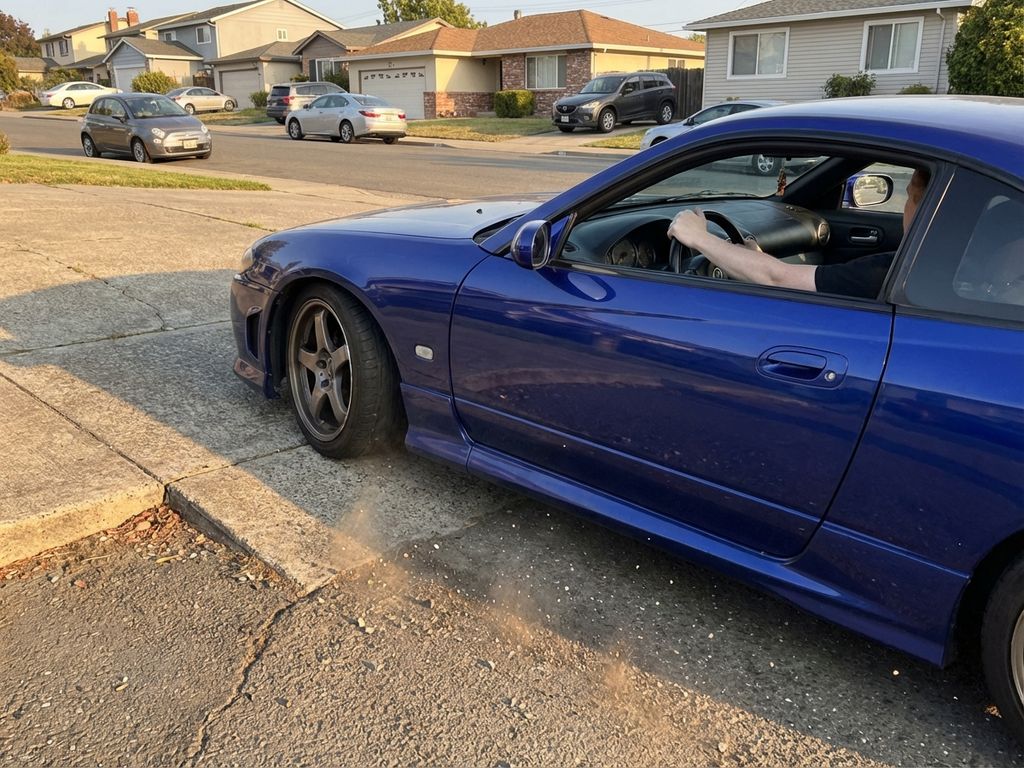
A lowered car isn’t necessarily harder to drive, but it does change how you interact with the vehicle daily. The main differences involve ground clearance challenges and altered handling characteristics. While lowered suspension can improve cornering and reduce body roll, it requires more attention when navigating speed bumps, steep driveways, and parking situations. Proper suspension setup significantly affects the overall driving experience and can minimise many potential difficulties.
What actually changes when you lower your car’s suspension?
Lowering your car fundamentally alters several key mechanical aspects that affect vehicle performance and behaviour. The most significant change is the lowered centre of gravity, which reduces body roll during cornering and creates a more planted feeling at higher speeds. This modification also changes the suspension geometry, affecting camber angles, toe settings, and the relationship between various suspension components.
The altered suspension geometry impacts how your tyres contact the road surface. When you lower a vehicle, you’re essentially changing the arc through which the suspension travels, which can affect tyre wear patterns and handling characteristics. The reduced wheel travel means your suspension has less room to absorb bumps and road imperfections, potentially transferring more road feel directly to the cabin.
These changes also affect aerodynamics, as the reduced ride height can improve airflow under the vehicle. However, the most noticeable daily impact comes from the decreased ground clearance, which fundamentally changes how you must approach certain driving situations and road conditions.
Does lowering your car make it harder to handle in everyday driving?
Lowering your car typically improves handling performance whilst creating new challenges for everyday driving situations. The reduced body roll and lower centre of gravity enhance cornering ability and provide more responsive steering feel. However, daily driving scenarios require increased awareness and different driving techniques compared to standard ride height vehicles.
Parking becomes more complex, as you must consider approach angles when entering car parks or driveways. Speed bumps require slower speeds and sometimes angled approaches to prevent scraping. The turning radius may be affected if the lowering is extreme, as tyres can contact wheel arches during full lock manoeuvres.
Urban driving presents unique challenges, particularly with kerb awareness and navigating uneven road surfaces. Many drivers find they develop a heightened sense of road conditions and obstacles, leading to more deliberate driving habits. The enhanced feedback from the road can actually improve overall driving awareness, though it requires an adjustment period.
What are the main driving challenges with a lowered vehicle?
The primary challenge with a lowered vehicle involves managing reduced ground clearance in various driving situations. Speed bumps become significant obstacles requiring careful approach angles and reduced speeds. Steep driveways, car park entrances, and fuel station forecourts often demand strategic positioning to avoid scraping the front splitter, exhaust system, or rear diffuser.
Road hazards that standard height vehicles navigate easily become problematic. Potholes, raised manhole covers, and debris require increased vigilance and sometimes route adjustments. Winter driving can be particularly challenging, as snow accumulation and ice ridges created by snowploughs can create impassable obstacles.
Loading and unloading passengers or cargo may require consideration of the vehicle’s stance. Some lowered cars experience reduced boot space or altered loading angles. Additionally, certain multi storey car parks with steep ramps or low ceiling clearances may become inaccessible, requiring alternative parking arrangements.
Browse Products
Shock absorbers, springs, camber plates, air jacks and more. Explore the full range.
Custom Suspension
Every shock absorber built to your exact car, discipline and driving style. Nothing off the shelf.
Get in Touch
Have a question or a specific project? Our engineers are ready to help, no obligation.
How does suspension setup affect the driving difficulty of lowered cars?
Proper suspension setup dramatically influences how manageable a lowered car becomes for daily use. Well engineered lowering solutions with appropriate spring rates and damper settings can maintain ride comfort whilst achieving the desired stance. Poor setups often result in harsh rides, excessive road noise, and premature component wear.
Quality springs matched to appropriate dampers ensure the suspension continues to function effectively through its reduced travel range. Springs and shock absorbers work as a system, changing one without matching the other limits results. Lowering springs alone can improve cornering but reduce shock absorber stroke, which actually hurts ride quality rather than improving it. Progressive spring rates can provide comfort over small bumps whilst maintaining control during aggressive driving. Adjustable dampers allow fine tuning for different driving conditions and personal preferences.
The importance of maintaining proper suspension geometry cannot be overstated. Professional alignment after lowering ensures optimal tyre contact patches and helps prevent premature wear. Some applications benefit from adjustable suspension arms or camber plates to maintain ideal geometry throughout the suspension’s travel range.
How Intrax Racing helps with lowered car suspension challenges
We specialise in creating custom suspension solutions that address the specific challenges of lowered vehicles whilst maintaining excellent driveability. Factory suspensions are always a compromise designed to work for all drivers, climates, and conditions, which means they’re optimised for none. Custom suspension can ensure that you adapt the car to the driver’s preference. Our motorsport derived engineering ensures that lowered cars retain comfort and reliability for daily use through complete, matched setups tailored to individual requirements.
Our approach includes:
- Custom spring rates calculated for your specific vehicle weight and intended use
- Matched damper valving that works effectively with reduced suspension travel
- Geometry correction components to maintain optimal wheel alignment
- Progressive spring designs that balance comfort with performance
- Adjustable systems allowing fine tuning for different driving conditions
With nearly 50 years of suspension expertise, we understand how to create lowered setups that minimise driving difficulties whilst maximising the benefits of reduced ride height. Intrax delivers complete, matched custom setups rather than individual components that may not work harmoniously together. Contact us to discuss how we can develop a custom suspension solution tailored to your specific vehicle and driving requirements.
Browse Products
Shock absorbers, springs, camber plates, air jacks and more. Explore the full range.
Custom Suspension
Every shock absorber built to your exact car, discipline and driving style. Nothing off the shelf.
Get in Touch
Have a question or a specific project? Our engineers are ready to help, no obligation.