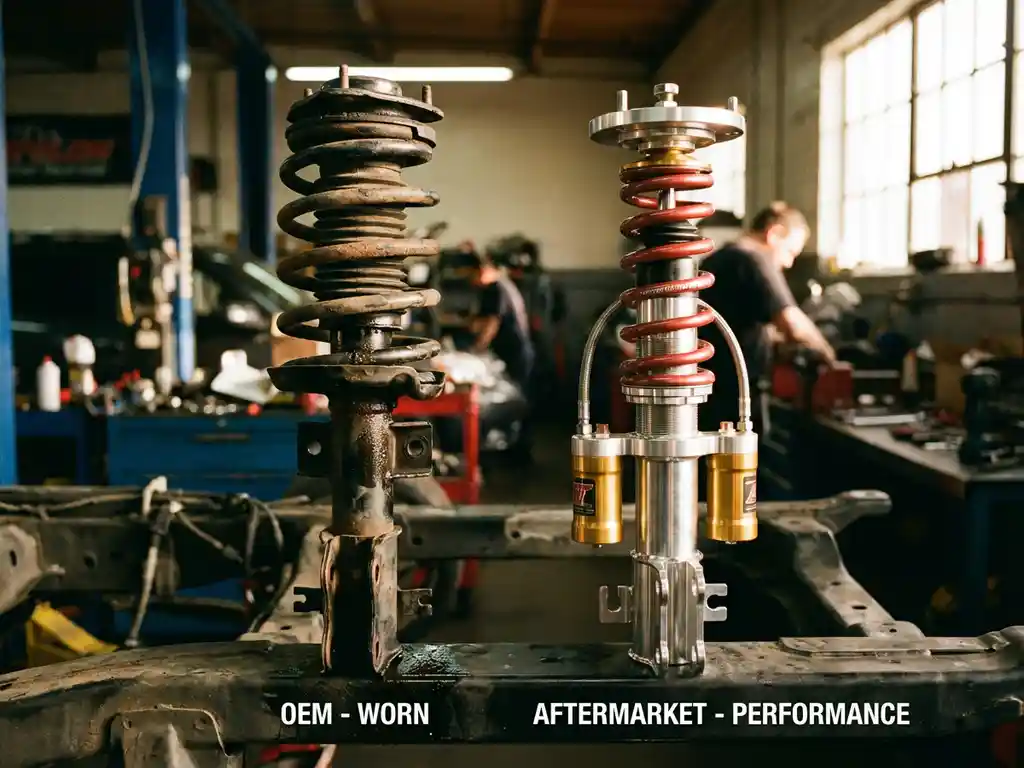
Factory suspension represents a carefully calculated compromise designed to satisfy diverse driving conditions, varying load requirements, and different user preferences across a broad customer base. Manufacturers must create suspension systems that perform adequately in all scenarios rather than excelling in specific applications. This universal approach means factory suspension cannot deliver optimal performance for individual driving styles, vehicle modifications, or specialized requirements. Understanding these inherent limitations reveals why custom suspension technology offers superior solutions for drivers seeking enhanced automotive performance and handling precision.
What makes factory suspension a universal compromise?
Factory suspension systems are engineered to meet the needs of the average driver across all possible driving scenarios, creating inherent compromises that prevent optimization for any specific use case. Manufacturers must design suspension that works for daily commuting, highway cruising, occasional spirited driving, and varying passenger loads while remaining cost-effective for mass production.
The universal design approach requires suspension engineers to find middle-ground settings that satisfy regulatory requirements across multiple markets. These systems must perform adequately in extreme temperature variations, from arctic conditions to desert heat, while accommodating different road surfaces and driving styles. The result is a suspension setup that never truly excels in any particular area.
Cost constraints significantly influence factory suspension design decisions. Manufacturers must balance performance with affordability, leading to compromises in component quality and adjustability features. Mass production requirements further limit customization options, as factories need standardized components that can be efficiently manufactured and assembled across thousands of vehicles.
Regulatory compliance adds another layer of complexity, as factory suspension must meet safety standards and emissions requirements across different regions. These regulations often dictate specific performance parameters that may not align with optimal handling or comfort characteristics for individual drivers.
Why can’t factory suspension handle different driving styles effectively?
Factory suspension settings are calibrated for average driving scenarios, making them inadequate for enthusiastic drivers, track use, or specialized performance requirements. The fixed damping rates and spring stiffness cannot adapt to the varying demands of different driving styles, resulting in suboptimal performance across the spectrum.
Standard suspension systems lack the adjustability needed to accommodate spirited driving, where firmer damping and a lower ride height would improve handling precision. Conversely, drivers prioritizing comfort may find factory settings too firm for their preferences. The one-size-fits-all calibration results in compromises in both scenarios.
Track driving exposes the limitations of factory suspension most dramatically. The fixed damping rates cannot provide the precise control needed for high-speed cornering, while the spring rates may be too soft for consistent performance under extreme conditions. Without adjustability, drivers cannot fine-tune their suspension for optimal lap times or handling characteristics.
Daily driving styles vary significantly between individuals, from gentle commuting to aggressive motorway driving. Factory suspension cannot account for these personal preferences, leading to suboptimal comfort, handling, or both. The inability to adjust compression and rebound damping means drivers must accept whatever compromise the manufacturer deemed appropriate for the masses.
What are the main limitations of one-size-fits-all suspension design?
One-size-fits-all suspension design suffers from fixed damping rates, non-adjustable spring systems, and an inability to accommodate vehicle modifications or weight changes. These limitations directly impact ride quality, handling precision, and overall vehicle dynamics, preventing drivers from optimizing their suspension for specific requirements.
Fixed damping rates represent the most significant limitation of factory suspension. Without the ability to adjust compression and rebound damping independently, drivers cannot fine-tune their suspension for different road conditions or driving preferences. This inflexibility means accepting whatever compromise the manufacturer programmed into the system.
Non-adjustable spring rates prevent optimization for different vehicle weights or modifications. When drivers add performance modifications, change wheel and tyre combinations, or regularly carry varying loads, factory spring systems cannot adapt to maintain optimal handling characteristics. The fixed spring rates become increasingly inappropriate as vehicle specifications change.
Vehicle modifications expose factory suspension limitations most clearly. Lowering springs, different wheel sizes, or performance modifications alter the vehicle’s dynamics in ways that factory dampers cannot accommodate. The result is compromised ride quality, reduced handling precision, or both, as the suspension components work against each other rather than in harmony.
Weight distribution changes, whether from modifications or varying passenger loads, cannot be compensated for by factory suspension systems. The fixed settings mean the suspension cannot maintain optimal geometry or damping characteristics when vehicle weight or distribution changes significantly from the original design parameters.
Browse Products
Shock absorbers, springs, camber plates, air jacks and more. Explore the full range.
Custom Suspension
Every shock absorber built to your exact car, discipline and driving style. Nothing off the shelf.
Get in Touch
Have a question or a specific project? Our engineers are ready to help, no obligation.
How does custom suspension technology solve factory limitations?
Custom suspension technology addresses factory limitations through personalized damping curves, adjustable components, and application-specific tuning that considers individual vehicle usage, driver preferences, and specific performance goals. This engineering approach creates optimized suspension solutions that excel in their intended applications rather than compromising across multiple scenarios.
Personalized damping curves represent the foundation of custom suspension technology. By analyzing individual driving requirements, vehicle specifications, and performance goals, engineers can create damping characteristics that optimize handling, comfort, or both according to the driver’s priorities. This bespoke approach eliminates the compromises inherent in factory systems.
Adjustable components provide the flexibility that factory systems lack. Custom suspension systems often include adjustable compression and rebound damping, allowing drivers to fine-tune their setup for different conditions or preferences. This adjustability means the suspension can evolve with changing requirements or vehicle modifications.
Application-specific tuning considers the complete vehicle package, including modifications, intended use, and driver preferences. Rather than designing for the masses, custom suspension technology focuses on creating the optimal setup for each specific application, whether that is track performance, comfortable cruising, or spirited road driving.
The engineering approach behind custom suspension considers factors that mass-produced systems cannot address. Individual vehicle weight distribution, specific tyre compounds, driving environment, and personal preferences all influence the final suspension calibration, creating a truly optimized system.
How Intrax Racing helps with custom suspension solutions
We specialize in creating custom suspension systems that eliminate the compromises inherent in factory setups. Our approach involves detailed analysis of your vehicle, driving requirements, and performance goals to create bespoke suspension solutions that excel in their intended applications.
Our custom suspension development process includes:
- Comprehensive vehicle analysis and driver requirement assessment
- Personalized damping curve development based on your specific needs
- Application-specific component selection and calibration
- Ongoing support and adjustment capabilities for evolving requirements
- Integration with existing vehicle modifications or future upgrade plans
Rather than accepting factory compromises, we create suspension systems that optimize your vehicle’s performance for your specific requirements. Whether you prioritize track performance, enhanced comfort, or improved handling precision, our custom approach ensures your suspension excels in its intended application. Contact us to discuss how custom suspension technology can transform your driving experience.
Browse Products
Shock absorbers, springs, camber plates, air jacks and more. Explore the full range.
Custom Suspension
Every shock absorber built to your exact car, discipline and driving style. Nothing off the shelf.
Get in Touch
Have a question or a specific project? Our engineers are ready to help, no obligation.
Related Articles
- How much suspension travel do you need for performance car builds?
- What is the difference between high speed and low speed damping?
- Can you make a sports car more comfortable to drive?
- What happens if your suspension is too stiff?
- What are the most common suspension upgrade mistakes?
- How to fix understeer on your BMW?