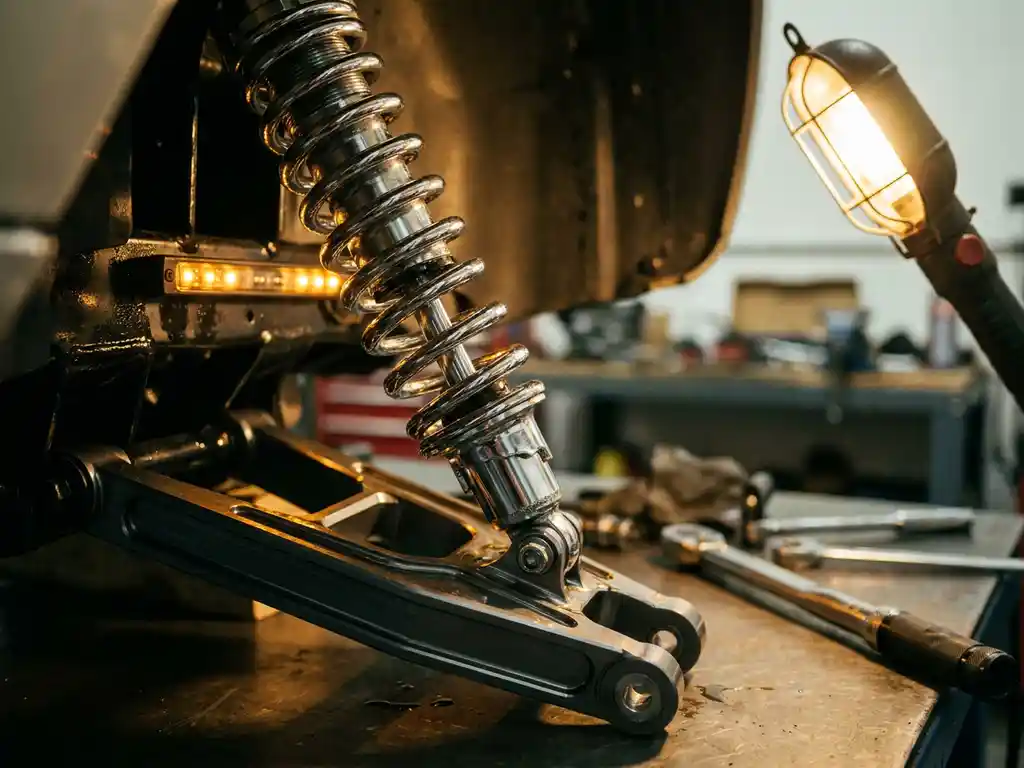
The amount of suspension travel you need for a performance car build depends on your intended use, with street cars typically requiring 3-4 inches of total travel per wheel, while dedicated track cars can function with as little as 2-3 inches. The key is balancing adequate compression and rebound travel to handle your driving conditions without bottoming out or losing tire contact. Understanding your specific requirements helps determine whether you need more travel for comfort and versatility or can sacrifice some for improved handling precision.
What factors determine how much suspension travel you need?
Suspension travel requirements are determined by your vehicle’s weight, intended use, road conditions, and desired balance between comfort and performance. Heavier vehicles need more travel to absorb impacts effectively, while lighter sports cars can operate with reduced travel for sharper handling response.
Your driving environment plays a crucial role in determining travel needs. Street-driven cars encounter varying road surfaces, speed bumps, and potholes that require sufficient compression travel to prevent harsh bottoming out. Track-only vehicles operate on smooth surfaces where minimal travel maximizes tire contact and reduces body movement during cornering.
Vehicle modifications also influence travel requirements. Lowered cars with custom suspension setups often sacrifice some travel for improved aerodynamics and a lower center of gravity. However, this reduction must be carefully calculated to maintain adequate bump and rebound travel for the intended use case.
Spring rates work hand-in-hand with travel requirements. Stiffer springs can reduce the amount of travel needed by controlling body movement more effectively, while softer springs require more travel to prevent bottoming out during compression events. The relationship between spring rate and available travel determines your suspension’s ability to handle various driving scenarios.
How does suspension travel differ between street and track cars?
Street cars typically require 3-4 inches of total suspension travel per wheel to handle everyday driving conditions, while dedicated track cars can operate effectively with 2-3 inches of travel focused on precise handling response. Street applications prioritize comfort and versatility over maximum performance.
Street-driven vehicles must accommodate a wide range of scenarios including parking lot entrances, speed bumps, road imperfections, and varying load conditions. This requires more compression travel to absorb larger impacts without damaging components or creating harsh ride quality. The additional travel also provides a safety margin for unexpected road hazards.
Track cars operate in controlled environments with smooth surfaces and predictable conditions. Reduced travel allows for more precise suspension tuning, improved aerodynamic efficiency, and reduced weight transfer during cornering. The shorter travel range can be optimized specifically for the lateral and longitudinal forces encountered during performance driving.
Dual-purpose cars represent a compromise between these extremes. These vehicles require careful suspension design to provide adequate travel for street comfort while maintaining performance capabilities on track. The challenge lies in optimizing the available travel range for both applications without significant compromises in either area.
Browse Products
Shock absorbers, springs, camber plates, air jacks and more. Explore the full range.
Custom Suspension
Every shock absorber built to your exact car, discipline and driving style. Nothing off the shelf.
Get in Touch
Have a question or a specific project? Our engineers are ready to help, no obligation.
What happens when you have too little suspension travel?
Insufficient suspension travel leads to harsh bottoming out, reduced tire contact, and potential component damage when the suspension reaches its physical limits during compression or rebound events. This creates safety risks and significantly degrades both performance and comfort.
When compression travel is inadequate, the suspension bottoms out against bump stops or mechanical limits during normal driving. This creates jarring impacts that transfer directly to the chassis, causing discomfort for occupants and potential damage to suspension components. Repeated bottoming out can lead to premature wear of shocks, springs, and mounting hardware.
Limited rebound travel causes the opposite problem, where wheels lose contact with the road surface over crests or during weight transfer events. This reduces available grip precisely when you need it most, creating dangerous handling characteristics and unpredictable vehicle behavior. Loss of tire contact also reduces braking effectiveness and cornering stability.
Component longevity suffers significantly with insufficient travel. Shock absorbers experience increased stress when operating at the extremes of their range, leading to premature seal failure and internal damage. Springs may experience coil bind or excessive stress when compressed beyond their designed working range.
Can you have too much suspension travel in a performance car?
Yes, excessive suspension travel can hurt performance by allowing too much body movement, reducing aerodynamic efficiency, and creating imprecise handling response during aggressive driving. The key is finding the optimal amount for your specific application rather than maximizing travel.
Too much travel allows excessive body roll during cornering, which reduces tire contact patch effectiveness and creates delayed response to steering inputs. This makes the vehicle feel disconnected and unpredictable during performance driving situations where precise control is essential.
Aerodynamic considerations become important with high-performance vehicles. Excessive suspension travel can allow the vehicle to move outside its optimal aerodynamic window, reducing downforce effectiveness and increasing drag. This is particularly relevant for vehicles with aggressive aerodynamic packages or ground effects.
Weight transfer characteristics also suffer with excessive travel. More movement means longer settling times during transitions between acceleration, braking, and cornering. This reduces the driver’s ability to chain together performance maneuvers smoothly and predictably.
However, the definition of “too much” varies significantly based on intended use. What constitutes excessive travel for a dedicated track car might be perfectly appropriate for a street car that occasionally sees track duty. Professional suspension systems are designed to optimize travel for specific applications rather than simply maximizing or minimizing it.
How do you calculate the right suspension travel for your build?
Calculate suspension travel by determining your vehicle’s sprung weight, intended use parameters, and available packaging space, then allocating roughly 60-70% for compression travel and 30-40% for rebound travel. Start with manufacturer recommendations and adjust based on your specific modifications and requirements.
Begin by measuring your current setup if modifying an existing vehicle. Document ride height, available space between components, and current travel limitations. This provides a baseline for understanding what changes are possible within your vehicle’s physical constraints.
Consider your weight distribution and intended load conditions. Vehicles with rear weight bias may require different front and rear travel allocations. Factor in any planned modifications like roll cages, different wheels, or aerodynamic components that might affect packaging or weight distribution.
Spring rate selection directly impacts travel requirements. Higher spring rates reduce the amount of travel used during normal driving, allowing you to operate with less total travel while maintaining adequate safety margins. Lower spring rates require more travel to prevent bottoming out during compression events.
Professional consultation can be valuable for complex builds or when pushing the limits of what’s possible. Experienced suspension engineers can help optimize travel allocation based on your specific vehicle, modifications, and intended use patterns.
How Intrax Racing helps with suspension travel optimization
We specialize in calculating and building custom suspension solutions that optimize travel for your specific vehicle and driving requirements. Our nearly 50 years of motorsport experience allows us to determine the precise travel requirements for any application, from street cars to Formula 1 vehicles.
Our custom suspension approach includes:
- Complete analysis of your vehicle’s weight distribution, modifications, and intended use
- Precise calculation of optimal compression and rebound travel allocation
- Custom shock absorber design with body length and stroke tailored to your requirements
- Spring rate optimization that works in harmony with your travel requirements
- Ongoing support for adjustments and refinements based on real-world testing
Every shock absorber we build is calculated specifically for your vehicle’s data and your driving preferences, ensuring optimal travel utilization without compromises. Whether you need maximum comfort for street driving or precise control for track use, we can design a solution that optimizes travel for your exact requirements. Contact us to discuss how we can optimize suspension travel for your performance car build.
Browse Products
Shock absorbers, springs, camber plates, air jacks and more. Explore the full range.
Custom Suspension
Every shock absorber built to your exact car, discipline and driving style. Nothing off the shelf.
Get in Touch
Have a question or a specific project? Our engineers are ready to help, no obligation.
Related Articles
- What are common car suspension problems?
- How do you adjust rebound damping for performance driving?
- How to adjust suspension for different driver weights in cars?
- How much does it cost to convert your MacPherson to an upside-down setup?
- Why do aftermarket coilovers feel so stiff?
- Is upgrading suspension worth it?