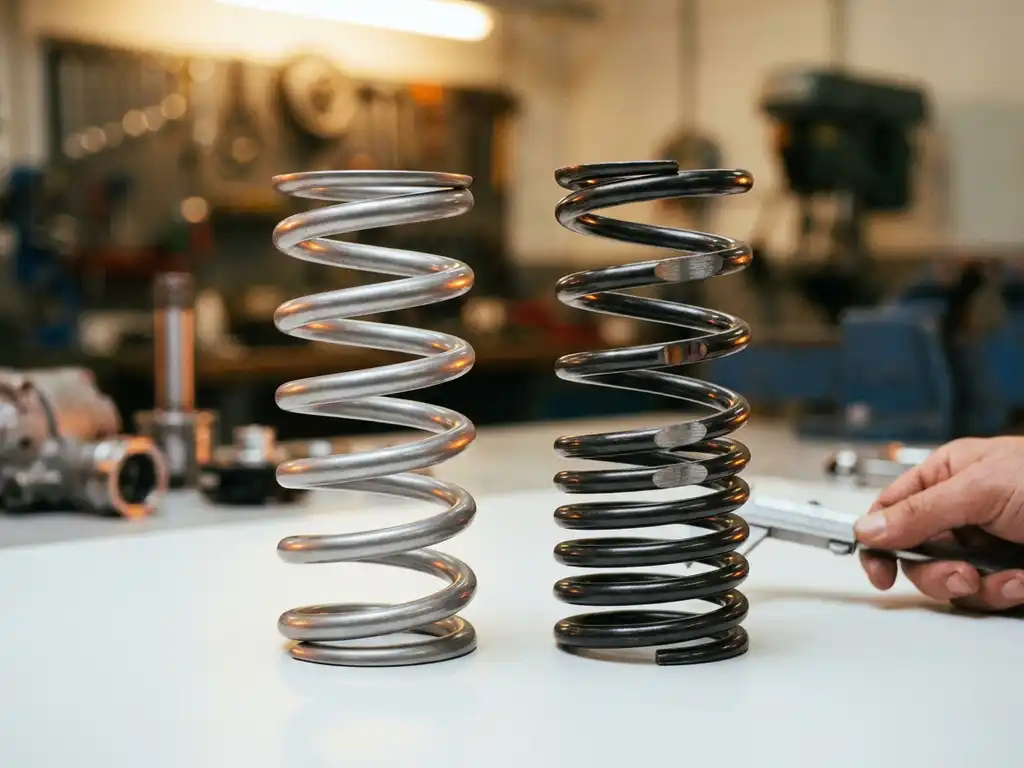
Linear springs maintain a consistent spring rate throughout their compression range, while progressive springs have a variable spring rate that increases as the spring compresses further. This fundamental difference affects how each spring type responds to road conditions and driving forces.
Understanding these spring characteristics is crucial for anyone looking to optimize their vehicle’s suspension setup, as the choice between linear and progressive springs significantly impacts ride quality, handling precision, and overall driving experience.
How do linear springs behave differently from progressive springs?
Linear springs compress at a constant rate regardless of load, meaning each millimeter of compression requires the same force throughout the spring’s travel. Progressive springs start with a softer initial rate that gradually increases, requiring more force for each additional millimeter of compression as the spring compresses further.
This behavioral difference stems from their construction. Linear springs feature consistent coil spacing and wire diameter throughout their length, creating uniform resistance. Progressive springs use varying coil spacing, wire thickness, or coil diameter to create sections with different spring rates within the same component.
During normal driving, linear springs provide a predictable, consistent response to road inputs. When encountering a bump, the spring compresses proportionally to the force applied, making suspension behavior highly predictable for drivers and suspension engineers alike. This consistency makes linear springs ideal for applications where precise suspension tuning is critical.
Progressive springs, conversely, offer dual-stage behavior. Under light loads and small bumps, they compress easily, providing comfort similar to a softer spring. As compression increases during harder impacts or cornering forces, the spring rate progressively increases, offering support similar to a stiffer spring. This variable behavior allows one spring to handle multiple driving scenarios effectively.
What are the advantages and disadvantages of linear springs?
Linear springs offer superior predictability and precise tuning capabilities, making them the preferred choice for motorsport and performance applications where consistent suspension behavior is paramount. Their disadvantages include a potential compromise between comfort and performance in street applications.
Advantages of Linear Springs
The primary advantage of linear springs lies in their predictable behavior. Engineers can calculate exactly how the suspension will respond under specific conditions, enabling precise tuning for optimal performance. This predictability is why linear springs dominate professional motorsport applications.
Linear springs also provide consistent handling characteristics. During cornering, the spring rate remains constant, offering drivers predictable feedback and allowing precise vehicle control. This consistency helps drivers understand their vehicle’s limits and maintain confidence during spirited driving.
For suspension engineers, linear springs simplify calculations and adjustments. When combined with properly matched dampers, linear springs create suspension systems that behave exactly as designed, without surprises or variable characteristics that could affect vehicle dynamics.
Disadvantages of Linear Springs
The main disadvantage of linear springs is their inability to optimize for multiple driving conditions simultaneously. A spring rate chosen for comfort may compromise handling, while a rate selected for performance may create an uncomfortably stiff ride during daily driving.
Linear springs also require a more precise initial setup. Since the spring rate cannot adapt to different conditions, the chosen rate must represent a compromise between all intended uses. This limitation often leads to suboptimal performance in some driving scenarios.
What are the advantages and disadvantages of progressive springs?
Progressive springs excel at providing comfort during normal driving while offering increased support when needed, making them ideal for street applications. However, their variable behavior can create challenges for precise suspension tuning and may feel less predictable during performance driving.
Advantages of Progressive Springs
Progressive springs offer exceptional versatility by adapting their characteristics to driving conditions. During gentle driving over small road imperfections, the initial soft rate provides excellent comfort. When encountering larger bumps or during aggressive cornering, the increasing spring rate provides necessary support without requiring separate adjustments.
This adaptability makes progressive springs particularly valuable for street vehicles that must handle diverse conditions. Daily commuting, highway cruising, and occasional spirited driving all benefit from the spring’s ability to adjust its behavior automatically based on the forces applied.
Progressive springs also help maintain consistent ride height under varying loads. As passenger or cargo weight increases, the spring’s progressive rate provides additional support, preventing excessive suspension compression that could affect handling or appearance.
Disadvantages of Progressive Springs
The variable nature of progressive springs creates challenges for precise suspension tuning. Since the effective spring rate changes throughout the compression range, predicting exact suspension behavior becomes more complex, particularly for performance applications requiring precise handling characteristics.
Progressive springs may also create inconsistent handling feel. As the spring rate changes during cornering or braking, drivers may experience varying levels of support and feedback, which can reduce confidence during performance driving situations where predictable behavior is crucial.
Browse Products
Shock absorbers, springs, camber plates, air jacks and more. Explore the full range.
Custom Suspension
Every shock absorber built to your exact car, discipline and driving style. Nothing off the shelf.
Get in Touch
Have a question or a specific project? Our engineers are ready to help, no obligation.
Which spring type is better for daily driving versus performance driving?
Progressive springs are generally better for daily driving due to their comfort-oriented initial rates and automatic adaptation to varying conditions, while linear springs excel in performance driving applications where predictable, consistent behavior is essential for precise vehicle control.
For daily driving, progressive springs provide the ideal balance between comfort and capability. The soft initial rate absorbs minor road imperfections without transmitting harsh impacts to passengers, while the increasing rate handles larger bumps and maintains control during emergency maneuvers. This dual-nature design eliminates the need to choose between comfort and performance for typical street driving.
Progressive springs also adapt well to real-world driving conditions. Whether navigating city streets with frequent stops, cruising highways at steady speeds, or occasionally taking highway on-ramps spiritedly, progressive springs automatically adjust their behavior to provide appropriate support and comfort for each situation.
Performance driving, however, demands the predictability and precision that linear springs provide. During track days, autocross events, or spirited mountain driving, drivers need consistent feedback and predictable suspension behavior to maintain confidence and extract maximum performance from their vehicles.
Linear springs allow performance drivers to understand exactly how their vehicle will respond in any given situation. This predictability enables drivers to push their vehicles closer to their limits safely, knowing that suspension behavior will remain consistent throughout the entire range of motion.
How do you choose between linear and progressive springs for your car?
Choose progressive springs if comfort and versatility for street driving are priorities, or linear springs if predictable performance and precise handling characteristics are more important. Consider your primary driving scenarios, performance requirements, and willingness to compromise between comfort and handling precision.
Start by honestly evaluating your driving habits and priorities. If your vehicle primarily serves as daily transportation with occasional enthusiastic driving, progressive springs likely offer the best overall experience. The automatic adaptation to different driving conditions provides excellent versatility without requiring manual adjustments or compromises.
For drivers who prioritize handling precision, participate in track events, or prefer predictable vehicle behavior, linear springs represent the better choice. The consistent spring rate enables precise suspension tuning and provides the predictable feedback necessary for performance driving confidence.
Consider your vehicle’s intended modifications and overall suspension setup. Linear springs work exceptionally well with adjustable dampers and comprehensive suspension upgrades, allowing fine-tuning of the entire system. Progressive springs integrate well with stock or mildly modified suspension systems, providing improvement without requiring extensive additional modifications.
Also evaluate your tolerance for suspension adjustments and tuning. Linear springs may require more initial setup and periodic adjustments to optimize performance for specific conditions. Progressive springs typically provide good performance across various conditions with minimal adjustment requirements.
How Intrax Racing helps with spring selection and suspension optimization
We specialize in creating custom suspension solutions that eliminate the traditional compromises between comfort and performance by perfectly matching springs and dampers to your specific vehicle and driving requirements. Our approach considers your car’s specifications, intended use, and personal preferences to determine whether linear or progressive springs will best serve your needs.
Our custom suspension development process includes:
- Detailed analysis of your vehicle’s weight distribution, geometry, and modifications
- Assessment of your driving style, typical road conditions, and performance requirements
- Engineering calculations to determine optimal spring rates and damping characteristics
- Custom manufacturing of springs and dampers specifically for your application
- Complete documentation and future upgrade path planning
Rather than forcing you to choose between comfort and performance, we engineer suspension systems where properly matched springs and dampers work together to enhance both characteristics. This synergy means better handling doesn’t come at the expense of ride quality when components are designed to complement each other perfectly.
Ready to explore a suspension solution tailored specifically to your vehicle and driving needs? Contact us to discuss how our custom engineering approach can optimize your suspension performance without the typical compromises.
Browse Products
Shock absorbers, springs, camber plates, air jacks and more. Explore the full range.
Custom Suspension
Every shock absorber built to your exact car, discipline and driving style. Nothing off the shelf.
Get in Touch
Have a question or a specific project? Our engineers are ready to help, no obligation.
Related Articles
- What causes excessive tyre wear after fitting coilovers?
- What happens if rebound damping is too fast on a car?
- Why does your car feel worse after fitting budget coilovers?
- How do you choose the right suspension for your car?
- Do you need an alignment after lowering your car?
- How to lower your BMW without ruining comfort?