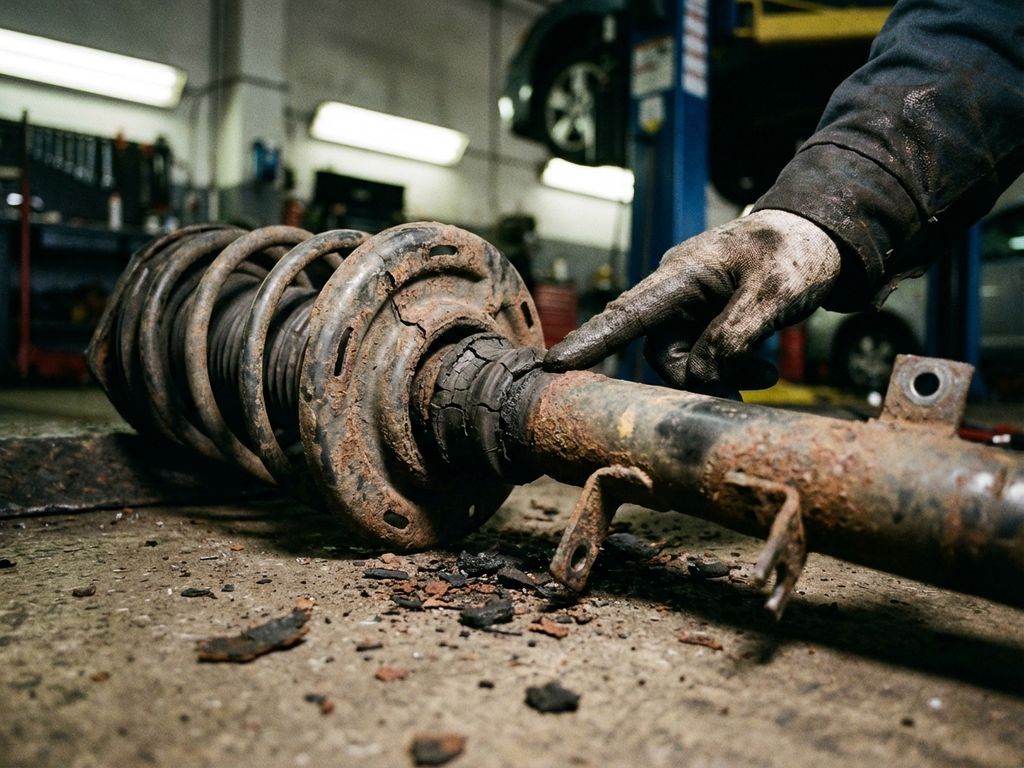
Suspension noise occurs when components wear out, become loose, or lose their damping properties over time. Worn shock absorbers and damaged struts are the most common culprits, creating squeaking, clunking, or rattling sounds while driving. Other causes include deteriorated bushings, loose mounting hardware, and internal seal failures that allow fluid to leak from dampers.
What are the most common causes of suspension noise?
The primary sources of suspension noise include worn shock absorbers, damaged struts, loose mounting components, and deteriorated rubber bushings. Each component produces distinct sounds when failing, helping you identify the specific problem area.
Worn shock absorbers typically create a dull thudding or bouncing noise when driving over bumps. As internal seals deteriorate and fluid leaks out, the damper loses its ability to control spring movement smoothly. This results in metal on metal contact and harsh impacts that produce audible noise.
Damaged struts often manifest as squeaking or groaning sounds, particularly during turns or when the suspension compresses. The strut bearing plates can wear out, causing friction between moving parts. Additionally, the internal piston and cylinder may develop scoring that creates grinding noises during operation.
Loose components throughout the suspension system contribute to various rattling and clunking sounds. Mounting bolts can work loose over time, allowing excessive movement between parts. Sway bar links, ball joints, and control arm bushings are common areas where looseness develops, each producing characteristic noise patterns during different driving maneuvers.
Deteriorated rubber bushings create squeaking and creaking noises as they lose their flexibility and develop cracks. These components normally provide cushioned connections between metal parts, but when they harden or split, direct contact occurs between suspension components, generating unwanted sounds.
How can you identify different types of suspension noises?
Different suspension problems create specific sound patterns that help pinpoint the exact source. Squeaking noises usually indicate worn bushings or dry pivot points, while clunking suggests loose components or worn mounting hardware.
Squeaking or creaking sounds typically occur during slow speed maneuvers like parking or turning. These high pitched noises often point to rubber bushings that have hardened or developed cracks. The sounds may be more pronounced in cold weather when rubber components become stiffer.
Clunking noises happen when loose components move excessively during suspension travel. You’ll often hear these sounds when hitting bumps, during braking, or when changing direction. The timing of the clunk relative to your driving actions helps identify whether the problem lies in the front or rear suspension.
Rattling sounds suggest multiple loose components or worn internal parts within shock absorbers. These noises often occur continuously while driving on rough surfaces and may increase in frequency with vehicle speed. Internal rattling from dampers indicates worn pistons, broken internal components, or complete fluid loss.
Grinding noises represent more serious problems, often involving metal to metal contact within strut assemblies or completely failed bushings. These sounds require immediate attention, as they indicate significant component wear that affects vehicle safety and handling.
To identify the source accurately, listen carefully under different driving conditions. Note whether sounds occur during turning, braking, acceleration, or simply when driving straight. The location and timing of noises provide valuable diagnostic clues about which specific components need attention.
Browse Products
Shock absorbers, springs, camber plates, air jacks and more. Explore the full range.
Custom Suspension
Every shock absorber built to your exact car, discipline and driving style. Nothing off the shelf.
Get in Touch
Have a question or a specific project? Our engineers are ready to help, no obligation.
Why do shock absorbers and struts start making noise over time?
Shock absorbers and struts develop noise due to internal wear patterns, seal failures, and fluid loss that occur naturally over time. Internal component degradation happens as pistons, valves, and cylinders wear from constant movement and hydraulic pressure cycling.
The internal piston moves thousands of times during normal driving, gradually wearing against the cylinder walls. This creates microscopic metal particles that contaminate the hydraulic fluid and accelerate further wear. As tolerances increase, the piston develops excessive clearance, allowing fluid to bypass and reducing damping effectiveness while creating noise.
Seal failures represent another major cause of damper noise. The rod seal prevents fluid from leaking past the piston rod, but constant movement and exposure to road contaminants eventually cause deterioration. When seals fail, fluid leaks out and air enters the system, leading to cavitation and noise during operation.
External factors significantly accelerate wear patterns in suspension components. Frequent driving on rough roads subjects dampers to excessive stress and heat buildup. Salt exposure from winter driving corrodes internal components and external mounting points, while high mileage operation simply accumulates wear over time.
Temperature cycling also affects damper longevity. Extreme hot and cold conditions cause seals to expand and contract, eventually leading to permanent deformation and leakage. The hydraulic fluid itself degrades over time, losing its viscosity and lubrication properties, which increases internal friction and wear rates.
Poor maintenance practices contribute to premature failure. Neglecting regular inspections allows small problems to develop into major component failures. Additionally, using the vehicle for purposes beyond its design parameters, such as carrying excessive loads or driving aggressively, accelerates normal wear patterns.
What should you do when your suspension starts making noise?
Begin with a systematic approach involving visual inspection, listening techniques, and professional evaluation when necessary. Safety considerations should guide your response, as some suspension noises indicate problems that affect vehicle stability and braking performance.
Start with a visual inspection of all suspension components. Look for obvious signs of damage such as leaking fluid around shock absorbers, cracked rubber bushings, or loose mounting hardware. Check for uneven tire wear patterns that might indicate suspension problems affecting wheel alignment.
Perform listening tests under different driving conditions to isolate the noise source. Drive slowly over speed bumps while listening for clunks or rattles. Turn the steering wheel while stationary to identify squeaking from bushings or strut bearings. Note whether sounds occur during specific maneuvers or continuously while driving.
Assess the urgency based on noise characteristics and changes in driving behavior. Grinding noises or significant changes in vehicle handling require immediate professional attention. Mild squeaking from bushings may be less urgent but should still be addressed promptly to prevent further damage.
Document when and where noises occur to help technicians during diagnosis. Note whether sounds happen during turning, braking, or over bumps. This information helps professionals focus their inspection on the most likely problem areas.
Consider the relationship between different symptoms. Suspension noise often accompanies changes in ride quality, handling characteristics, or steering response. Multiple symptoms together usually indicate more serious problems requiring prompt attention, as springs and shock absorbers work as a system and changing one component without matching the other limits results.
How Intrax Racing helps with suspension noise problems
We specialize in diagnosing and resolving suspension noise issues through custom made solutions tailored to your specific vehicle and driving requirements. Our motorsport derived expertise enables us to identify the root causes of suspension problems and provide lasting solutions. Factory suspension is always a compromise designed to work for all drivers, climates, and conditions, but optimized for none. Custom suspension allows you to adapt the car to your specific driving preferences and requirements.
Our comprehensive approach includes:
- Detailed suspension analysis to identify all noise sources and underlying causes
- Custom shock absorber and strut design to eliminate noise while improving performance
- High quality springs and components that work together as a complete system
- Expert guidance on maintenance practices to prevent future noise problems
- Ongoing technical support to ensure optimal suspension performance
Whether you’re dealing with worn components on a classic car or need performance upgrades for motorsport applications, our nearly 50 years of suspension expertise ensures effective solutions. Intrax delivers complete, matched custom setups where springs and dampers are engineered to work in perfect harmony. Contact us to discuss your suspension noise concerns and discover how custom engineering can restore quiet, comfortable operation to your vehicle.
Browse Products
Shock absorbers, springs, camber plates, air jacks and more. Explore the full range.
Custom Suspension
Every shock absorber built to your exact car, discipline and driving style. Nothing off the shelf.
Get in Touch
Have a question or a specific project? Our engineers are ready to help, no obligation.