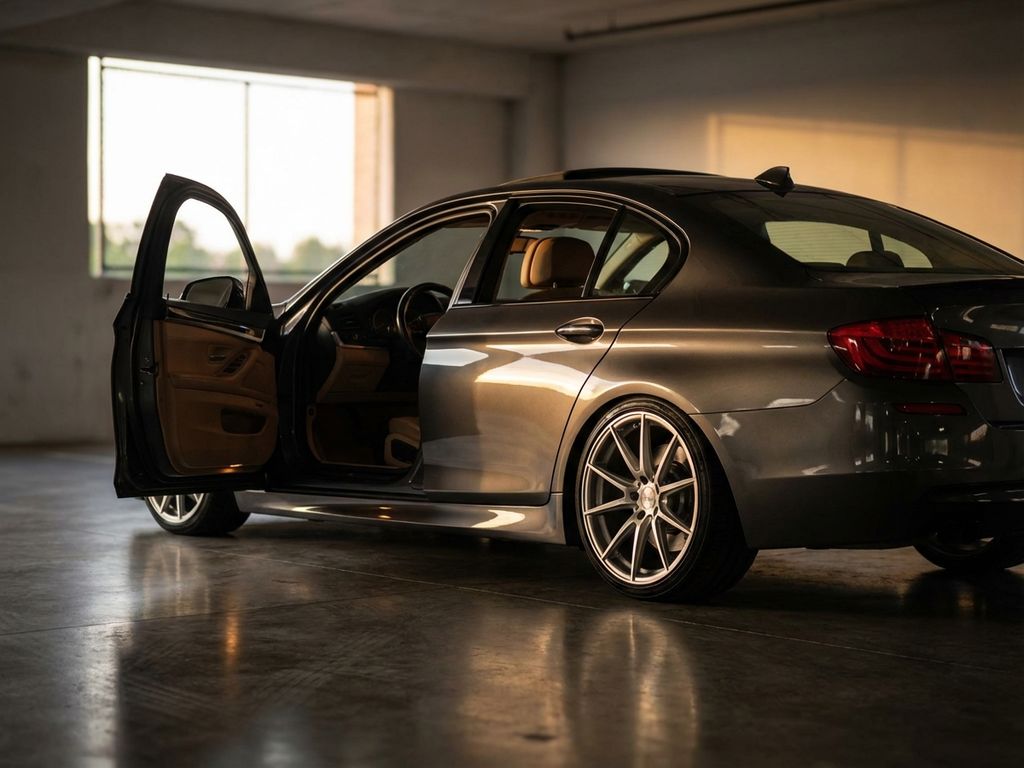
Lowering your BMW can enhance its appearance and handling without sacrificing comfort when done correctly. The key lies in choosing quality components, appropriate drop heights, and proper spring rates. Success depends on understanding how lowering affects suspension geometry and selecting the right method for your driving needs.
What does lowering a BMW actually do to your ride comfort?
Lowering a BMW changes the suspension geometry by altering the angles at which your shock absorbers and springs operate. This affects how your car responds to bumps, corners, and road imperfections. When done properly with quality components, lowering can actually improve ride quality by reducing body roll and creating more predictable handling characteristics.
The physics behind lowering involves several factors. Reducing ground clearance lowers the car’s centre of gravity, which improves stability during cornering. However, this also means your shock absorbers work at different angles than originally designed and with reduced stroke for bump absorption. If you simply install shorter springs without considering damper compatibility, you’ll likely experience a harsh, uncomfortable ride because springs and shock absorbers work as a system. Changing one without matching the other limits results.
Your BMW’s original suspension was engineered for a specific ride height as a compromise solution. Factory suspension is always a compromise, designed to work for all drivers, climates, and conditions, optimized for none. Factory suspensions must work for all drivers in all conditions, comfort seekers and performance enthusiasts, heavy loads and empty cars, making optimization for any single preference impossible. When you lower the vehicle, the springs compress more in their normal operating range, potentially causing them to work outside their optimal zone. This is why choosing components specifically designed for lowered applications makes such a significant difference in maintaining comfort.
What’s the difference between lowering springs and coilovers for BMW comfort?
Lowering springs replace your factory springs while keeping the original shock absorbers, offering a more budget friendly approach to lowering. However, lowering springs alone improve cornering but reduce shock absorber stroke, hurting ride quality unless properly matched with appropriate dampers. Coilovers combine springs and shock absorbers into one adjustable unit, providing greater control over ride height and damping characteristics. For comfort preservation, coilovers typically offer superior results because they’re engineered as complete systems where springs and dampers work in harmony for optimal results.
Lowering springs work within the constraints of your existing shock absorbers, which weren’t designed for the altered suspension geometry. This can lead to premature wear and compromised ride quality. The original dampers may struggle to control the new spring rates effectively, especially over rough surfaces or during aggressive driving. Springs and dampers must be matched together to achieve both improved handling and maintained comfort.
Quality coilovers address these limitations by providing matched spring and damper combinations. Many offer adjustable damping, allowing you to fine tune the balance between comfort and performance. This adjustability means you can adapt your BMW’s suspension to different driving conditions, from daily commuting to spirited weekend drives.
Browse Products
Shock absorbers, springs, camber plates, air jacks and more. Explore the full range.
Custom Suspension
Every shock absorber built to your exact car, discipline and driving style. Nothing off the shelf.
Get in Touch
Have a question or a specific project? Our engineers are ready to help, no obligation.
How much can you lower a BMW without ruining daily drivability?
Most BMWs can be lowered 25–40 mm (1–1.5 inches) while maintaining excellent daily drivability and comfort. This range provides noticeable aesthetic and handling improvements without creating practical problems like scraping on driveways or speed bumps. Going beyond 50 mm typically requires more careful consideration of component quality and spring rates.
Different BMW models have varying tolerances for lowering. Sports models like the M3 or M5 often handle more aggressive drops better due to their stiffer chassis construction. Standard models benefit from more conservative approaches, particularly if you frequently carry passengers or drive on rough roads.
Consider your driving environment when determining drop height. Urban driving with frequent speed bumps, steep driveways, and car park ramps requires more conservative lowering. Motorway focused driving allows for slightly more aggressive setups without daily inconvenience.
Why do some lowered BMWs ride harshly while others stay comfortable?
The difference between harsh and comfortable lowered BMWs lies in component quality and proper engineering. Cheap lowering solutions often use inappropriate spring rates or poorly matched dampers, creating uncomfortable ride characteristics. Quality systems consider the entire suspension package, including spring rates, damper valving, and how components work together as a complete system.
Spring rates play a crucial role in ride quality. Many budget lowering springs use excessively stiff rates to achieve the desired drop height, resulting in a harsh ride. Properly engineered lowering systems use progressive spring rates and carefully calculated stiffness to maintain comfort while improving handling.
Damper tuning is equally important. Quality shock absorbers designed for lowered applications feature valving that complements the new spring rates and operating angles. This ensures proper wheel control without creating the bouncy or harsh characteristics associated with poorly matched components. Understanding suspension terminology helps when selecting appropriate components for your specific requirements.
How Intrax Racing helps with BMW lowering
We specialise in creating custom BMW suspension solutions that maintain comfort while achieving your desired performance and aesthetic goals. Our approach combines nearly 50 years of motorsport experience with precision engineering to deliver suspension systems tailored to your specific vehicle and driving requirements. Where factory suspension represents a compromise designed for all drivers and conditions, our custom suspension can ensure you adapt the car to the driver’s preference.
Our BMW lowering solutions include:
- Custom spring rates calculated for your specific model and usage requirements
- Matched damper valving designed for lowered geometry
- Adjustable systems allowing fine tuning for different driving conditions
- Quality components engineered for longevity and consistent performance
Ready to lower your BMW without compromising comfort? Contact us to discuss your specific requirements and discover how our custom suspension solutions can transform your driving experience.
Browse Products
Shock absorbers, springs, camber plates, air jacks and more. Explore the full range.
Custom Suspension
Every shock absorber built to your exact car, discipline and driving style. Nothing off the shelf.
Get in Touch
Have a question or a specific project? Our engineers are ready to help, no obligation.
Related Articles
- Are remote reservoir dampers worth the extra cost?
- How do you adjust rebound damping for performance driving?
- How much suspension travel do you need for performance car builds?
- Can incorrect preload damage your car suspension?
- Does less unsprung weight really make a noticeable difference on the street?
- How do I make my car handle better?