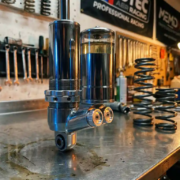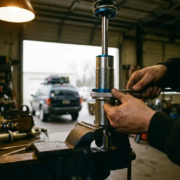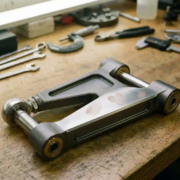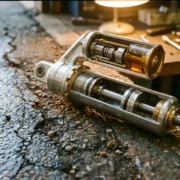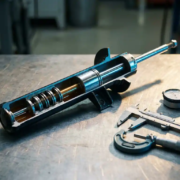
Chrome MacPherson strut assembly suspended upside-down in precision workshop, coil spring and damper catching golden light on steel workbench

What is an Upside-Down MacPherson?

What is an upside-down MacPherson strut?

An upside-down MacPherson strut, also called an inverted MacPherson strut, is a suspension design in which the shock absorber’s piston rod is mounted at the bottom and connected to the wheel hub, while the cylinder body is fixed to the vehicle’s chassis at the top. This configuration reverses the traditional MacPherson strut arrangement.

In conventional MacPherson struts, the heavy cylinder body sits at the bottom near the wheel, with the thinner piston rod extending upward to the chassis mount. The inverted design flips this orientation completely. This suspension technology lowers the center of gravity of the unsprung mass, which includes all components that move with the wheel during suspension travel. The suspension terminology can be confusing, but understanding this fundamental difference helps explain why many performance vehicles adopt this configuration.

How does an upside-down MacPherson differ from a regular MacPherson strut?

The primary difference lies in the mounting orientation and weight distribution. In a regular MacPherson strut, the heavy shock absorber body is positioned at the bottom, while an inverted MacPherson strut places the lighter piston rod at the bottom and the heavier cylinder at the top, attached to the vehicle’s structure.

This design change affects several key aspects of suspension performance. The inverted configuration reduces unsprung weight, which is the mass that moves with the wheel and tire. Lower unsprung weight allows the suspension to respond more quickly to changes in the road surface, improving tire contact and overall handling precision. Additionally, the inverted design typically offers better structural rigidity because the larger-diameter cylinder body provides a more robust mounting point to the chassis. The shock absorber in inverted systems also tends to run cooler, since the cylinder body dissipates heat more effectively when mounted away from the wheel and brake components.

What are the benefits of upside-down MacPherson suspension?

Upside-down MacPherson suspension offers three main advantages: reduced unsprung weight, improved structural rigidity, and better heat management. These benefits translate directly into enhanced vehicle dynamics, more precise steering response, and more consistent damping performance under demanding conditions.

The reduced unsprung weight is perhaps the most significant benefit. When the heavy shock absorber body moves to the sprung side of the suspension, the wheel assembly becomes lighter and more responsive to road surface variations. This improved responsiveness enhances tire grip and provides better feedback to the driver. The structural advantages come from mounting the larger cylinder body to the chassis, creating a more rigid connection that reduces flex under load.

Heat dissipation is another crucial advantage of inverted suspension systems. The shock absorber cylinder, positioned away from the wheel well and brake components, operates in cooler conditions, maintaining more consistent damping characteristics during extended performance driving. This thermal management becomes especially important in motorsport applications, where suspension components face extreme operating conditions.

Why do high-performance cars use inverted MacPherson struts?

High-performance cars use inverted MacPherson struts because they provide superior dynamic response, better weight distribution, and more consistent performance under extreme driving conditions. Reduced unsprung weight and improved structural rigidity directly contribute to faster lap times and enhanced driver control.

Racing and performance applications demand suspension systems that can respond instantly to driver inputs and road surface changes. The lighter unsprung mass in inverted strut systems allows wheels to follow track irregularities more precisely, maintaining optimal tire contact patches. This improved contact translates into better braking performance, more predictable cornering behavior, and enhanced traction under acceleration.

High-performance vehicles also require durability under stress. Inverted struts typically feature larger-diameter components and more robust mounting systems, allowing them to withstand the increased loads generated by aggressive driving, aerodynamic downforce, and performance tires. Improved heat dissipation helps ensure that damping performance remains consistent even during extended track sessions or competitive racing scenarios.

How Intrax Racing Helps with Custom Inverted Suspension Solutions

We specialize in developing custom-made inverted MacPherson strut systems tailored to specific vehicles and driving requirements. Our approach ensures that each suspension system maximizes the benefits of inverted strut technology while addressing the unique characteristics of your particular application.

Our custom inverted suspension solutions include:

  • Precise damping calibration based on vehicle weight distribution and intended use
  • Custom valving designed for your specific driving style and performance goals
  • Integration with existing vehicle systems while optimizing unsprung weight reduction
  • Heat management solutions for consistent performance under demanding conditions

Every inverted strut system we build starts with a detailed analysis of your vehicle’s requirements and your performance objectives. This ensures that the suspension technology delivers measurable improvements in handling, comfort, and overall driving dynamics. Contact us to discuss how custom inverted MacPherson struts can transform your vehicle’s suspension performance.

Related Articles

Worn MacPherson strut assembly with rust corrosion and damaged rubber boot on automotive workbench with precision tools

What causes MacPherson struts to fail?

What are MacPherson struts, and how do they work?

MacPherson struts are a type of automotive suspension system that combines a shock absorber and a coil spring into a single structural unit, serving as both a damping element and a load-bearing component. This design connects directly to the wheel assembly and the vehicle’s body, providing both vertical support and lateral stability.

The system works by using a piston rod that moves within a cylinder filled with hydraulic fluid. When the wheel encounters road irregularities, the strut compresses and extends, forcing fluid through precisely calibrated valves to control the damping rate. The coil spring surrounding the strut supports the vehicle’s weight and provides the restoring force that returns the wheel to its normal position.

MacPherson struts are particularly popular because of their compact design and cost-effectiveness. Unlike more complex suspension systems, they require fewer mounting points and take up less space, making them ideal for front-wheel-drive vehicles where engine-bay space is limited. The strut essentially replaces the upper control arm found in other suspension designs, simplifying the overall assembly while maintaining effective wheel control.

What are the most common causes of MacPherson strut failure?

The most common causes of MacPherson strut failure include seal deterioration, internal component wear, external damage from road hazards, and structural stress from lateral forces during cornering. These failures typically develop gradually over time, although sudden damage can occur due to impacts or extreme driving conditions.

Seal failure is the primary cause of strut deterioration. The rubber seals that prevent hydraulic fluid from escaping become brittle with age and temperature cycling. Once the seals fail, the strut loses its damping ability as fluid leaks out, leading to poor ride quality and reduced vehicle control. Environmental factors such as road salt, debris, and extreme temperatures accelerate this degradation process.

Internal wear occurs as the piston and valving components experience millions of cycles during normal operation. Constant movement gradually wears down the precision-machined surfaces, causing increased internal friction and inconsistent damping performance. Additionally, contamination from failed seals can introduce particles that accelerate this wear process.

Lateral forces during cornering create significant stress in the MacPherson strut design. Because the piston rod serves as both a damping element and a structural component, bending forces can cause the rod to flex, disrupting smooth operation and potentially leading to premature failure. This structural limitation becomes more pronounced during performance driving or when carrying heavy loads.

How can you tell if your MacPherson struts are failing?

Signs of failing MacPherson struts include visible fluid leakage around the strut body, excessive bouncing after hitting bumps, uneven tire wear patterns, and increased body roll during cornering. You may also notice knocking or clunking sounds when driving over rough surfaces, which can indicate internal component damage.

The bounce test provides a simple diagnostic method. Push down firmly on each corner of your vehicle and release. A healthy strut should allow the vehicle to return to its normal position with minimal additional bouncing. If the corner continues to bounce more than once or twice, the strut’s damping ability has likely deteriorated significantly.

Tire wear patterns can reveal strut problems before other symptoms become obvious. Look for cupping or scalloping on the tire tread, where irregular high and low spots develop across the tire surface. This occurs when failing struts allow excessive wheel movement, preventing consistent tire contact with the road surface.

Handling characteristics change noticeably as struts deteriorate. You might experience increased stopping distances, as worn struts reduce tire contact during braking. The vehicle may also feel less stable in crosswinds or when changing lanes, and steering response may become less precise due to inconsistent wheel positioning.

Why do MacPherson struts fail faster than other suspension components?

MacPherson struts fail faster than other suspension components because they serve dual functions as both damping elements and structural load-bearing members, subjecting them to more stress than specialized, single-purpose components. This combined role means they experience both the constant cycling of shock absorption and the lateral forces from steering and cornering.

The conventional MacPherson design places the piston rod under bending stress during cornering, as it must resist lateral forces while maintaining smooth damping action. Other suspension designs separate these functions, with dedicated control arms handling lateral loads while shock absorbers focus solely on damping. This division of labor typically results in longer component life for each element.

Seal exposure is another vulnerability unique to MacPherson struts. The seals are directly exposed to road contaminants, temperature extremes, and physical damage from debris. In contrast, shock absorbers in other suspension systems often benefit from greater protection from surrounding components or mounting locations that shield them from direct environmental exposure.

The integrated design also means that when any part of the MacPherson strut fails, the entire unit typically requires replacement. Other suspension systems allow individual component replacement, potentially extending overall system life through selective maintenance rather than complete unit replacement.

How long should MacPherson struts last before replacement?

MacPherson struts typically last between 50,000 and 100,000 miles under normal driving conditions, although this range varies significantly based on driving habits, road conditions, and vehicle usage patterns. Performance-oriented driving or harsh road conditions can reduce this lifespan considerably, while gentle driving on smooth roads may extend it.

Several factors influence strut longevity beyond simple mileage. Frequent driving on rough or unpaved roads accelerates wear through increased cycling and potential impact damage. Climate conditions also play a role, with extreme temperature variations causing faster seal degradation and internal component wear. Vehicles that regularly carry heavy loads or are used for towing experience additional stress that shortens strut life.

Regular maintenance can help maximize strut lifespan. Keeping the vehicle properly aligned reduces uneven loading on the struts, while maintaining appropriate tire pressure ensures optimal load distribution. However, unlike some suspension components, MacPherson struts cannot be serviced or rebuilt in most cases, making replacement the primary maintenance option.

Rather than relying solely on mileage intervals, monitor your struts’ performance characteristics. The symptoms described earlier provide more reliable indicators of replacement needs than arbitrary mileage targets. Some struts may require replacement at 40,000 miles due to severe service conditions, while others might perform adequately beyond 100,000 miles with careful use.

How Intrax Racing helps with MacPherson strut solutions

We address MacPherson strut limitations through our advanced suspension technology and custom engineering approach. Our upside-down MacPherson design eliminates the primary weakness of conventional struts by inverting the load path, making the larger outer tube the structural element while protecting the piston rod from bending forces.

Our custom-built solutions offer several key advantages:

  • Elimination of piston-rod bending stress through an inverted design architecture
  • Consistent damping performance regardless of lateral forces or cornering loads
  • Reduced camber change under dynamic conditions for improved tire contact
  • Extended service life through optimized load distribution and reduced component stress
  • Personalized tuning based on your specific vehicle requirements and driving style

With nearly 50 years of suspension expertise, we build each damper specifically for your application rather than offering one-size-fits-all solutions. This approach ensures optimal performance and longevity while addressing the inherent limitations of conventional MacPherson strut designs. Contact us to discuss how our advanced suspension technology can solve your MacPherson strut challenges and deliver superior performance for your specific needs.

Related Articles

Cutaway MacPherson strut assembly showing internal spring coil and shock absorber piston on automotive workshop bench

What is the MacPherson strut?

What is a MacPherson strut, and how does it work?

A MacPherson strut is a type of automotive suspension system that combines a shock absorber and a coil spring into a single structural unit, which also serves as a steering pivot for the front wheels. This integrated design uses the shock absorber as a suspension-locating device and a structural member of the suspension system.

The MacPherson strut works by mounting the coil spring around the outside of the shock absorber, with the entire assembly bolted to the vehicle’s chassis at the top and connected to the steering knuckle at the bottom. When the wheel encounters a bump or dip, the spring compresses or extends while the shock absorber controls the oscillations, preventing excessive bouncing. The strut also allows the wheel to turn left and right for steering, as the entire assembly rotates around the upper mounting point.

This suspension design was invented by Earle S. MacPherson at Ford in the 1940s and has become one of the most widely used suspension systems in modern vehicles due to its simplicity and space efficiency.

What are the main advantages of MacPherson strut suspension?

MacPherson strut suspension offers several key benefits, including a compact design, cost-effective manufacturing, reduced weight, and simplified maintenance compared to more complex suspension systems. The integrated design requires fewer components and takes up less space in the engine bay.

The space-saving nature of MacPherson struts makes them particularly valuable in front-wheel-drive vehicles, where engine bay space is at a premium. By combining the shock absorber and spring mounting into one unit, engineers can create more room for the engine, transmission, and other components. Additionally, the reduced number of parts compared to double-wishbone systems means fewer potential failure points and generally lower manufacturing costs.

Another significant advantage is the relatively straightforward maintenance and replacement process. When suspension components need attention, the integrated design often allows for easier access and service. The system also provides predictable handling characteristics that work well for everyday driving situations.

What’s the difference between MacPherson struts and other suspension types?

MacPherson struts differ from other suspension types primarily in their integrated design and structural role, whereas systems like double-wishbone or multi-link suspensions use separate components for spring mounting, shock absorption, and wheel location. Double-wishbone systems offer superior handling precision but require more space and more components.

Double-wishbone suspension systems use upper and lower control arms to locate the wheel, with separate mounting points for the spring and shock absorber. This configuration provides better control over wheel movement and camber changes during suspension travel, making it preferred for high-performance applications. However, it requires significantly more space and uses more components than a MacPherson strut setup.

Multi-link suspensions take complexity even further, using multiple arms and links to control wheel movement with extreme precision. While these systems offer the best handling characteristics, they’re more expensive to manufacture and maintain. In contrast, MacPherson struts provide a good balance of performance, cost, and packaging efficiency, though they may allow more unwanted wheel movement during cornering compared to more sophisticated systems.

How do you know when MacPherson struts need replacement?

MacPherson struts typically need replacement when you notice symptoms such as excessive bouncing after hitting bumps, uneven tire wear patterns, clunking noises during turns or over bumps, or visible fluid leaks from the shock absorber portion of the strut assembly.

One of the most telling signs is the “bounce test”: push down firmly on each corner of your vehicle and release. If the car continues to bounce more than once or twice before settling, the struts may be worn. Additionally, pay attention to how your vehicle handles during braking, as worn struts can cause the front end to dive excessively or create an unstable feeling.

Visual inspection can also reveal problems. Look for oil stains or wet spots around the strut assembly, which indicate seal failure in the shock absorber. Uneven tire wear, particularly cupping or scalloping patterns on the tire tread, often points to worn suspension components. Most MacPherson struts have a service life of 50,000 to 100,000 miles, depending on driving conditions and road quality.

Can you upgrade MacPherson struts for better performance?

Yes, MacPherson struts can be significantly upgraded for better performance through custom-tuned shock absorbers, performance springs, and adjustable components that improve handling, ride quality, and vehicle response while maintaining the original suspension geometry.

Performance upgrades typically involve replacing the standard shock absorber and spring combination with components specifically designed for your driving needs and vehicle application. Unlike standard components that must work across all conditions and driving styles, upgraded struts can be tailored to your specific requirements. When the shock absorber and spring are properly matched and tuned together, you achieve improved handling without sacrificing ride comfort—it’s a synergy rather than a compromise.

Adjustable struts offer even more flexibility, allowing fine-tuning of damping characteristics for different driving situations. Some performance struts also feature remote reservoirs or advanced valving systems that provide more consistent performance under demanding conditions. The key is selecting components that work together as a complete system rather than mixing random performance parts.

How Intrax Racing helps with MacPherson strut upgrades

We specialize in custom-built MacPherson strut solutions that transform your vehicle’s handling and ride quality through precision-engineered components tailored specifically to your car and driving requirements. Rather than offering one-size-fits-all solutions, we build each strut assembly from the ground up based on your vehicle’s specifications and your performance goals.

Our MacPherson strut upgrade services include:

  • Custom shock absorber valving calculated for your specific vehicle weight, spring rates, and intended use
  • Precision-matched spring combinations that work in harmony with the damping characteristics
  • Adjustable damping options for fine-tuning performance across different driving conditions
  • Complete system integration, ensuring optimal performance without compromising reliability

With nearly 50 years of suspension technology expertise, we understand that every vehicle-and-driver combination is unique. Our custom approach means your MacPherson struts are built only after we have all the necessary data about your car and your specific requirements. Contact us to discuss how we can optimize your MacPherson strut suspension for your exact needs and driving style.

Related Articles

Custom-fabricated coilover suspension assembly with polished aluminum components on workbench next to boxed mass-produced kit

Is custom suspension better than off-the-shelf kits?

Custom suspension offers superior performance compared to off-the-shelf kits because it is specifically engineered for your vehicle and driving requirements. While standard kits are designed with compromises to fit multiple vehicles and driving conditions, custom suspension technology provides precise tuning that optimises both handling and comfort. The investment delivers measurable improvements in vehicle control, ride quality, and long-term durability that mass-produced alternatives simply cannot match.

What exactly is custom suspension and how does it differ from off-the-shelf kits?

Custom suspension is individually engineered and built specifically for your vehicle’s exact specifications and intended use. Unlike off-the-shelf suspension kits that use predetermined settings to accommodate multiple vehicle models, custom systems are calculated and manufactured from raw materials only after receiving detailed vehicle data and driver requirements.

The fundamental difference lies in the engineering approach. Standard kits must work across varying temperatures, different driving styles, and multiple vehicle configurations. This creates inherent compromises in performance. Custom suspension technology eliminates these compromises by designing shock absorbers and spring rates specifically matched to your vehicle’s weight distribution, intended use, and personal preferences.

Manufacturing processes also differ significantly. Off-the-shelf kits are mass-produced with fixed valving and spring rates. Custom systems begin with raw components and are assembled with precisely calculated internal specifications. This includes custom valve stacks, specific oil viscosities, and tailored compression and rebound settings that cannot be replicated in mass production.

Why do performance enthusiasts choose custom suspension over standard kits?

Performance enthusiasts select custom suspension because it delivers precise vehicle control that matches their specific driving requirements and conditions. Standard kits cannot provide the exact balance of handling characteristics needed for optimal performance in different motorsport disciplines or driving environments.

The ability to specify exact spring rates, damping characteristics, and ride height creates a suspension system that works in perfect harmony with the vehicle’s intended purpose. Whether for track days, rally driving, or spirited road use, custom systems can be tuned to provide optimal tyre contact, predictable handling characteristics, and consistent performance under varying conditions.

Build quality represents another crucial advantage. Custom suspension components are typically manufactured to higher tolerances with superior materials compared to mass-produced alternatives. This attention to detail results in more consistent performance, better longevity, and the ability to handle extreme conditions that would overwhelm standard components.

The precision tuning capabilities extend beyond basic spring and damper rates. Custom systems can incorporate specific features such as adjustable compression and rebound settings, allowing fine-tuning for different track conditions or driving scenarios without compromising the fundamental setup.

What are the real-world benefits of investing in custom suspension technology?

Custom suspension technology delivers improved handling characteristics whilst maintaining or enhancing ride comfort through precise component matching. When shock absorbers and springs are engineered together, the result is enhanced vehicle control without the traditional compromise between comfort and performance.

Enhanced ride quality comes from eliminating the compromises inherent in mass-produced systems. Custom tuning allows for optimal damping characteristics that control wheel movement precisely whilst filtering road imperfections effectively. This creates a more composed ride that feels both comfortable and controlled.

Durability improvements result from components designed specifically for your vehicle’s requirements rather than engineered to survive worst-case scenarios across multiple applications. This targeted approach often extends component life whilst providing more consistent performance throughout the system’s operational life.

Vehicle control becomes more predictable and precise, particularly during dynamic driving situations. Custom suspension responds exactly as intended because it is designed for your specific vehicle’s characteristics, weight distribution, and intended use patterns.

How much more does custom suspension cost compared to off-the-shelf options?

Custom suspension represents a significant investment compared to standard kits, typically costing several times more than off-the-shelf alternatives. The price difference reflects the individual engineering, custom manufacturing process, and superior materials used in bespoke systems.

Several factors influence custom suspension pricing. The complexity of the vehicle application, specific performance requirements, and desired adjustability features all affect the final cost. Motorsport applications typically require more sophisticated solutions than road use, reflecting the demanding performance requirements.

The value proposition becomes clearer when considering long-term performance and durability. Custom systems often provide years of consistent performance with minimal maintenance, whilst cheaper alternatives may require frequent replacement or fail to deliver the desired characteristics.

Understanding the relationship between investment and performance returns helps justify the cost. Custom suspension delivers measurable improvements in lap times for motorsport applications, enhanced safety through better vehicle control, and superior comfort for daily driving that standard systems cannot match.

When should you consider upgrading to custom suspension instead of standard kits?

Consider custom suspension when your vehicle usage demands exceed what standard systems can provide, or when you require specific performance characteristics that off-the-shelf kits cannot deliver. This includes serious motorsport applications, vehicles with significant modifications, or situations where comfort and performance requirements are particularly demanding.

Vehicle usage patterns play a crucial role in this decision. Regular track day participation, competitive motorsport, or professional racing applications benefit significantly from custom suspension. The precise control and consistency required for optimal performance in these environments exceed standard kit capabilities.

Budget considerations should include long-term value rather than just initial cost. If you have previously purchased multiple standard systems in search of better performance, custom suspension often provides better value through superior durability and performance that eliminates the need for frequent upgrades.

Specific applications where custom solutions provide the most value include modified vehicles where standard systems cannot accommodate changes in weight distribution or spring rates. Vehicles used in demanding conditions, whether in motorsport or on challenging terrain, also benefit from the precision engineering that custom systems provide.

The decision often comes down to whether you need a suspension system that works adequately or one that works optimally for your specific requirements. Understanding suspension terminology and your vehicle’s needs helps determine when custom solutions justify the investment.

How Intrax Racing helps with custom suspension solutions

We specialise in creating bespoke suspension systems that eliminate the compromises inherent in mass-produced alternatives. Our approach involves detailed analysis of your vehicle specifications and driving requirements to engineer solutions that deliver optimal performance for your specific needs.

Our custom suspension development process includes:

  • Comprehensive vehicle assessment and performance requirement analysis
  • Individual calculation of spring rates and damping characteristics
  • Custom manufacturing from raw materials to exact specifications
  • Precision tuning and testing to ensure optimal performance
  • Ongoing support and adjustment capabilities for changing requirements

With nearly five decades of motorsport experience, from Formula 1 to road car applications, we understand how proper suspension engineering transforms vehicle performance. Every system we create is individually calculated and built, ensuring you receive suspension technology that works specifically for your vehicle and driving style.

Ready to experience the difference that truly custom suspension can make? Get in touch to discuss your specific requirements and discover how our bespoke approach can transform your vehicle’s performance and handling characteristics.

Related Articles

Chrome coilover springs and dampers displayed in professional garage with worn factory suspension parts on workbench

What actually changes when you get a custom spring and damper setup?

A custom spring and damper setup transforms your vehicle by replacing mass-produced components with made-to-measure suspension specifically engineered for your car, driving style, and requirements. Unlike factory systems designed with compromises for all conditions and users, custom suspension eliminates these limitations through personalised spring rates and damper valving that optimise handling, comfort, and performance for your exact needs.

What exactly happens when you switch from factory to custom suspension?

Factory suspension systems are built with unavoidable compromises to work across extreme temperature ranges, varying load conditions, and different driving styles. Custom suspension systems eliminate these compromises by designing spring rates and damper characteristics specifically for your vehicle and driving requirements.

When you switch to custom-made suspension, the fundamental change occurs in how forces are managed through your vehicle’s chassis. Factory springs use standardised rates that must accommodate everything from gentle motorway cruising to emergency manoeuvres while carrying different passenger loads. Custom springs are calculated for your specific vehicle weight, intended use, and performance goals.

The damper valving undergoes an even more dramatic transformation. Standard dampers use generic valve settings that attempt to control spring movement across all scenarios. Custom dampers feature valve configurations engineered for your exact spring rates, vehicle dynamics, and driving-style preferences. This creates a suspension system in which every component works in perfect harmony rather than fighting against compromise-driven settings.

The result is a suspension system that responds predictably and consistently to your inputs, providing the exact balance of control and comfort you require for your specific driving conditions.

How does custom suspension change your car’s handling and comfort?

Custom suspension transforms both handling precision and ride comfort by eliminating the conflicts inherent in mass-produced systems. When springs and dampers are matched specifically to each other and your vehicle, handling improves while comfort is maintained or enhanced.

Body roll reduces significantly because custom spring rates can be optimised for your vehicle’s centre of gravity and intended cornering speeds. Unlike stiffer factory sport settings that compromise comfort, custom systems achieve superior control through precise engineering rather than simply increasing spring rates. Your car maintains better contact with the road surface, improving both safety and confidence.

Road feedback becomes more refined and informative. Custom damper valving filters out harsh impacts while preserving important steering feel and road surface information. This means you experience less fatigue on long journeys while gaining better awareness of your vehicle’s behaviour and grip levels.

The comfort improvements often surprise drivers who expect performance upgrades to mean harsh rides. Because custom systems eliminate the compromises of factory settings, they can provide better impact absorption while delivering superior control. The suspension works with your vehicle’s natural dynamics rather than fighting against generic assumptions about how all cars should behave.

What’s the difference between adjustable and fully custom suspension systems?

Adjustable coilovers offer preset options within predetermined ranges, while fully custom suspension systems are engineered from the ground up for your specific vehicle and requirements. Bespoke suspension systems provide superior performance because every component is calculated and built for your exact application.

Off-the-shelf adjustable systems use standardised components with variable settings. These work well for many applications but still contain compromises because the spring rates, damper valving, and adjustment ranges must suit multiple vehicle types and driving styles. The adjustments allow you to find the best compromise within the system’s predetermined limits.

Fully custom systems begin with detailed analysis of your vehicle’s weight distribution, suspension geometry, intended use, and personal preferences. Spring rates are calculated specifically for your requirements, not selected from available options. Damper valving is designed to work perfectly with those exact spring rates and your vehicle’s characteristics.

The customisation process involves understanding how you drive, where you drive, and what you want to achieve. This information guides every aspect of the design, from compression and rebound damping curves to progressive spring rates. The result is a suspension system that performs exactly as intended for your specific situation rather than offering the best available compromise.

Why do custom springs and dampers cost more than standard options?

Custom springs and dampers cost more because they require individual engineering, specialised materials, and bespoke manufacturing processes. Each system is designed and built specifically for one application, eliminating the cost efficiencies of mass production while delivering significantly superior performance and longevity.

The engineering process begins with detailed analysis of your vehicle and requirements. This involves calculations for spring rates, damper valving, and component specifications that will deliver your desired performance characteristics. Unlike mass-produced components that use generic specifications, every aspect must be individually determined and validated.

Manufacturing custom suspension requires specialised processes and materials. Springs are wound to exact specifications using premium materials selected for your application. Dampers are assembled with custom valve stacks, precise oil specifications, and components chosen for your exact performance requirements. This individual attention to each component ensures optimal performance but requires significantly more time and expertise than automated production lines.

The long-term value proposition extends beyond initial performance improvements. Custom systems typically last longer because they operate within their designed parameters rather than constantly managing compromises. They maintain their performance characteristics better over time and can be rebuilt or modified as your requirements change, providing lasting value that justifies the initial investment.

How Intrax Racing helps with custom suspension solutions

We specialise in creating truly custom spring and damper setups that eliminate the compromises found in mass-produced suspension systems. Our approach involves detailed analysis of your vehicle, driving style, and performance goals to engineer suspension components that work in perfect harmony.

Our custom suspension process includes:

  • Individual vehicle analysis and suspension geometry assessment
  • Personalised spring rate calculations based on your specific requirements
  • Custom damper valving designed to match your exact spring rates and driving style
  • Comprehensive testing and refinement to ensure optimal performance
  • Ongoing support for adjustments and modifications as your needs evolve

Every suspension system we build is unique, created specifically for your vehicle and requirements rather than adapted from existing designs. This ensures you receive the full benefits of tailored shock absorbers and suspension components engineered without compromise. Get in touch to discuss how we can create the perfect suspension solution for your vehicle and driving needs.

Related Articles

Red sports car interior with premium leather seats, ergonomic steering wheel, and warm ambient lighting from driver's view.

Can you make a sports car more comfortable to drive?

Yes, you can make a sports car more comfortable for daily driving through suspension modifications and tuning. The key lies in finding the right balance between maintaining the car’s performance characteristics and improving ride quality. Custom suspension solutions allow you to adjust spring rates, damping settings, and ride height to create a more comfortable driving experience without completely sacrificing the car’s sporting nature.

What makes a sports car uncomfortable to drive daily?

Sports cars prioritise performance over comfort through aggressive suspension setups that create a harsh ride quality for everyday use. These vehicles feature stiff springs, firm dampers, and low ride heights designed to maximise cornering ability and track performance rather than daily comfort.

The primary culprits behind sports car discomfort include extremely firm spring rates that transmit road imperfections directly into the cabin. These stiff springs prevent body roll during aggressive cornering but make every pothole and road imperfection feel jarring during normal driving. Aggressive damping settings compound this issue by providing minimal cushioning over bumps and surface irregularities.

Low ride height, whilst improving aerodynamics and lowering the centre of gravity, creates additional challenges for daily driving. The reduced ground clearance means constant vigilance around speed bumps, car park ramps, and road debris. The wide, low-profile tyres fitted to most sports cars also contribute to harsh ride quality, as they offer less sidewall cushioning compared to standard tyres.

Performance-oriented suspension geometry further compromises comfort. The suspension components are positioned to optimise handling dynamics rather than smooth ride quality, resulting in increased road noise transmission and vibration through the chassis during regular driving conditions.

How can suspension tuning improve sports car comfort?

Suspension tuning can significantly improve sports car comfort through careful adjustment of spring rates, damping characteristics, and ride height optimisation. These modifications allow you to soften the ride quality whilst maintaining acceptable performance levels for spirited driving.

Spring rate modifications represent the most effective approach to improving comfort. Reducing spring stiffness by 10–20% can dramatically improve ride quality over bumps and road imperfections whilst still providing adequate body control during cornering. The key lies in finding springs that offer sufficient support for the vehicle’s weight whilst allowing more suspension movement over surface irregularities.

Damping adjustments play an equally important role in comfort enhancement. Progressive damping curves can provide a softer initial response to small bumps whilst maintaining firm control during larger suspension movements. This allows the suspension to absorb minor road imperfections more effectively whilst preserving handling characteristics when needed.

Ride height optimisation involves raising the car slightly from its factory setting to improve ground clearance and reduce the likelihood of scraping on everyday obstacles. Even a modest 10–15 mm increase can significantly improve practicality without severely compromising the car’s visual appeal or aerodynamic performance.

What’s the difference between adjustable and fixed suspension systems?

Adjustable suspension systems allow drivers to modify damping settings and sometimes ride height electronically, switching between comfort and sport modes as needed. Fixed systems maintain consistent characteristics but can be professionally tuned to optimise the balance between comfort and performance for specific driving requirements.

Adjustable systems typically offer multiple damping settings accessible through dashboard controls or smartphone applications. These systems can transform a track-focused setup into a comfortable daily driver at the touch of a button. The most sophisticated systems adjust compression and rebound damping independently, allowing fine-tuning for different driving conditions and personal preferences.

The primary advantage of adjustable systems lies in their versatility. You can enjoy comfortable cruising during daily commutes and switch to firmer settings for weekend track days or spirited driving. However, these systems often come with increased complexity, higher costs, and potential reliability concerns due to their electronic components.

Fixed suspension systems, whilst lacking adjustability, can be precisely calibrated for specific driving needs and vehicle applications. When properly engineered, a fixed system can provide an optimal balance between comfort and performance that suits your primary driving requirements. These systems typically offer better long-term reliability and lower maintenance requirements.

Fixed systems also allow more precise tuning of spring and damper combinations, as engineers can optimise every aspect of the setup without compromise. This approach often results in superior overall performance within the chosen operating parameters.

Why should you consider custom-made suspension for your sports car?

Custom suspension solutions are specifically engineered for your individual driving needs, vehicle specifications, and comfort preferences whilst maintaining performance characteristics. Unlike mass-produced systems that compromise to suit various applications, custom setups optimise every component for your specific requirements and driving style.

The primary advantage of custom suspension lies in its ability to eliminate the compromises inherent in standard systems. Mass-produced dampers must work across varying temperatures, driving styles, and vehicle loading conditions. A custom system can be precisely calibrated for your local climate, typical driving conditions, and personal comfort preferences.

Custom springs and dampers work together as a matched system, creating synergy between components that improves both ride quality and handling performance. This coordinated approach ensures that spring rates complement damping characteristics, resulting in superior comfort without sacrificing the vehicle’s dynamic capabilities.

Vehicle-specific geometry considerations play a crucial role in custom suspension design. Each sports car has unique suspension pickup points, weight distribution, and structural characteristics that affect how suspension modifications perform. Custom solutions account for these factors to optimise performance for your specific vehicle.

The personalisation aspect extends beyond mere comfort improvements. Custom suspension can be tailored to your driving style, whether you prefer a more compliant setup for touring or a firmer configuration that maintains comfort whilst enhancing cornering ability.

How Intrax Racing helps with sports car comfort optimisation

We specialise in creating custom suspension solutions that transform sports car comfort without compromising performance characteristics. Our approach involves comprehensive analysis of your vehicle, driving requirements, and comfort preferences to develop perfectly matched suspension systems.

Our custom suspension development process includes:

  • Detailed vehicle assessment and current suspension analysis
  • Personal driving style and comfort requirement evaluation
  • Custom spring rate calculation based on vehicle weight and geometry
  • Bespoke damper design with optimised compression and rebound characteristics
  • Ride height optimisation for improved practicality and comfort
  • Complete system integration testing and fine-tuning

Each suspension system is built specifically for your vehicle after we receive detailed specifications and requirements. This ensures optimal performance and comfort that mass-produced alternatives simply cannot match. Contact us to discuss how we can improve your sports car’s daily driving comfort whilst preserving its performance character.

Related Articles

Mechanic assembling chrome coil spring and black hydraulic damper strut on workbench in professional garage workshop

Why should springs and dampers always be upgraded together?

Springs and dampers must always be upgraded together because they function as a matched suspension system. When you replace only one component, you create a mismatch between spring rates and damper valving that compromises handling, comfort, and safety. Properly matched systems ensure optimal vehicle dynamics, prevent premature wear, and deliver consistent performance across all driving conditions.

What happens when you upgrade springs without replacing dampers?

Upgrading springs without replacing dampers creates a fundamental mismatch between the new spring rates and the existing damper valving, resulting in poor handling characteristics and compromised vehicle dynamics. The old dampers cannot properly control the oscillations from stiffer or softer springs, leading to unpredictable suspension behaviour that affects both performance and safety.

When coil springs are replaced with different rates, the existing shock absorbers lack the appropriate valving to manage the new spring characteristics. Stiffer springs paired with soft dampers create excessive bouncing and poor body control, while softer springs with firm dampers result in harsh ride quality and inadequate suspension travel.

This mismatch creates several immediate problems:

  • Oscillation issues where the suspension continues bouncing after hitting bumps
  • Reduced tyre contact with the road surface during cornering and braking
  • Inconsistent handling that makes the vehicle difficult to predict
  • Accelerated wear on both suspension components and tyres
  • Compromised comfort with either excessive harshness or a wallowing motion

The suspension system loses its ability to maintain proper wheel control, directly impacting vehicle safety and driving enjoyment. These issues become more pronounced under dynamic driving conditions where precise suspension control is essential.

Why do springs and dampers work as a matched system?

Springs and dampers complement each other in a carefully engineered relationship in which springs handle load support and dampers control oscillation. The damping ratios must match the spring rates to achieve an optimal suspension frequency response, ensuring the system works harmoniously to manage vehicle motion effectively across different driving scenarios.

The technical relationship between these components centres on suspension frequency and damping coefficients. Springs determine the natural frequency at which the vehicle oscillates, while dampers control how quickly these oscillations settle. When properly matched, this creates a well-damped system that responds predictably to road inputs.

Understanding suspension terminology helps explain why this relationship matters. The damper’s compression and rebound valving must correspond to the spring’s stiffness to achieve the correct damping ratio. Too little damping allows excessive oscillation, while too much damping prevents the suspension from responding properly to road irregularities.

Key technical considerations include:

  • Spring rate compatibility with damper valving characteristics
  • Compression and rebound damping balanced for specific spring frequencies
  • Load-dependent damping that works with spring compression rates
  • Temperature stability across the operating range of both components

This matched approach ensures the suspension system maintains consistent behaviour whether navigating motorway undulations, tackling country roads, or managing emergency manoeuvres. The synergy between properly paired components delivers both improved handling precision and sustained comfort.

How does upgrading both components improve vehicle performance?

Upgrading both springs and dampers simultaneously delivers comprehensive performance improvements, including enhanced handling precision, better road contact, improved comfort, reduced body roll, and more predictable vehicle behaviour. Matched systems maintain consistent performance across varying driving conditions, providing drivers with confidence and control in all situations.

The performance benefits extend beyond simple handling improvements. When the suspension system components work in harmony, the vehicle maintains better tyre contact with the road surface, improving grip for acceleration, braking, and cornering. This enhanced contact patch utilisation translates directly into shorter stopping distances and more precise steering response.

Comfort improvements occur because properly matched components eliminate the harsh impacts or excessive body movement that characterise mismatched systems. The suspension can respond appropriately to both small road imperfections and larger undulations, filtering unwanted motion while maintaining vehicle control.

Specific performance advantages include:

  • Reduced body roll during cornering without sacrificing ride comfort
  • Improved stability under braking with less nose dive
  • Better traction during acceleration
  • Enhanced steering feedback and road feel
  • Consistent performance regardless of load or driving conditions
  • Reduced fatigue on longer journeys due to improved comfort

The matched-system approach ensures these benefits work together rather than competing against each other. Drivers experience the full potential of their suspension upgrade without the compromises that come from mixing old and new components.

What are the risks of mixing old and new suspension components?

Mixing old and new suspension components creates safety and performance risks, including uneven wear patterns, compromised braking performance, increased maintenance costs, and potential damage to other suspension elements. These issues affect vehicle reliability, warranty coverage, and long-term ownership costs while potentially compromising driver and passenger safety.

The most significant concern involves unpredictable handling characteristics that can compromise safety during emergency manoeuvres. When one corner of the vehicle responds differently due to mismatched components, the driver loses the ability to predict how the car will behave, particularly during sudden steering inputs or emergency braking.

Financial implications extend beyond the initial component cost. Mismatched systems accelerate wear on tyres, bushings, and other suspension elements, leading to more frequent replacements and higher maintenance expenses. The false economy of partial upgrades often results in greater long-term costs than investing in a complete system from the outset.

Specific risks include:

  • Uneven tyre wear patterns that require premature replacement
  • Accelerated wear on suspension bushings and mounting points
  • Potential voiding of component warranties due to improper application
  • Increased stress on chassis mounting points
  • Compromised emergency handling capabilities
  • Higher likelihood of component failure under stress

Professional suspension specialists understand these risks and design complete systems to avoid them entirely. The integrated approach eliminates compatibility concerns while ensuring optimal performance and longevity.

How Intrax Racing helps with suspension upgrades

At Intrax Racing, we understand that proper suspension performance requires perfectly matched springs and dampers working as a unified system. Our approach eliminates the guesswork and compatibility issues that plague mixed-component installations, ensuring you receive optimal performance, comfort, and reliability from your suspension upgrade.

Our custom-made suspension solutions provide:

  • Precisely matched spring rates and damper valving for your specific vehicle
  • Custom tuning based on your driving style and performance requirements
  • Complete system integration that eliminates compatibility concerns
  • Professional consultation to determine the optimal setup for your needs
  • Comprehensive warranty coverage for complete peace of mind

Rather than risk the compromises and potential problems of partial upgrades, we deliver complete suspension solutions that maximise both performance and comfort. Our decades of motorsport experience ensure your suspension system performs flawlessly whether you are navigating daily commutes or exploring your vehicle’s dynamic capabilities.

Ready to experience the difference that properly matched suspension components can make? Get in touch with our suspension specialists to discuss your specific requirements and discover how we can transform your vehicle’s performance and comfort.

Related Articles

Mechanic adjusting red coilover suspension on lifted sports car in professional garage with specialized tools

How does a suspension specialist set up your car?

A suspension specialist customises your car’s shock absorbers and springs through detailed analysis of your vehicle, driving style, and performance goals. They measure weight distribution, assess intended use, and calculate optimal settings to create a perfectly balanced setup. This process involves technical measurements, driver consultation, and precise adjustments that transform how your car handles and feels on the road.

What exactly does a suspension specialist do during setup?

A suspension specialist conducts a comprehensive vehicle assessment that includes measuring corner weights, analysing current suspension components, and evaluating your car’s geometry. They examine how weight transfers during acceleration, braking, and cornering to understand the specific demands your vehicle faces.

The process begins with a detailed consultation about your driving habits, performance expectations, and comfort preferences. The specialist needs to understand whether you prioritise track performance, daily comfort, or a balance between both. They will ask about typical road surfaces, driving frequency, and any specific handling characteristics you want to improve or maintain.

Technical measurements form the core of professional suspension setup. The specialist measures your car’s weight distribution across all four corners, checks ride height, and assesses the current spring rates and damper settings. They also evaluate tyre wear patterns, which reveal how forces currently affect your vehicle’s contact with the road.

During the setup process, the specialist calculates optimal spring rates based on your car’s weight, intended use, and performance goals. They determine compression and rebound damping settings that complement the springs, ensuring the suspension system works as a cohesive unit rather than individual components fighting each other.

How does a specialist determine the right suspension settings for your car?

Specialists use precise calculations combining vehicle weight distribution, intended usage patterns, and driver preferences to determine optimal suspension settings. They consider factors like sprung versus unsprung weight, centre of gravity, and how different spring rates affect handling balance and ride quality.

The technical analysis starts with understanding your car’s weight distribution front to rear and side to side. This affects how much support each corner needs and influences spring rate selection. A front-heavy car requires different considerations than one with near-perfect weight distribution, and the specialist adjusts recommendations accordingly.

Driving style assessment plays a crucial role in determining appropriate settings. Aggressive drivers who enjoy spirited cornering need different damper characteristics than those prioritising comfort for daily commuting. The specialist evaluates your acceleration patterns, braking habits, and cornering preferences to match the suspension’s personality to your driving style.

Vehicle dynamics principles guide the specialist’s calculations for optimal spring rates and damper settings. They consider how changes to one corner affect the entire vehicle’s behaviour, ensuring modifications improve overall balance rather than creating new handling quirks. The specialist also factors in tyre characteristics, as different tyres interact differently with suspension settings.

What information do you need to provide to a suspension specialist?

You should provide complete vehicle specifications, including year, make, model, engine type, and any existing modifications. The specialist also needs details about your typical driving patterns, performance goals, comfort preferences, and how you use your car most frequently.

Vehicle specifications help the specialist understand your car’s baseline characteristics and any unique requirements. Information about engine swaps, weight-reduction modifications, or aerodynamic changes affects suspension calculations significantly. Even seemingly minor modifications like different wheels or tyres influence optimal suspension settings.

Driving habits information should include typical journey types, the road surfaces you encounter, and driving frequency. Whether you primarily use motorways, country roads, or urban streets affects the ideal suspension balance. The specialist needs to know if you participate in track days, autocross events, or other performance driving activities.

Performance goals and comfort expectations require an honest discussion about your priorities. Some drivers want maximum performance regardless of comfort impact, while others need a setup that works well for daily use with occasional spirited driving. Budget considerations also matter, as different approaches require varying levels of investment in components and setup time.

Why can’t you just use standard suspension settings for every car?

Standard suspension settings represent compromises designed to work acceptably across wide ranges of conditions, vehicles, and drivers. They cannot account for individual vehicle variations, specific driving styles, or particular performance requirements that make each setup unique and suboptimal for most applications.

Vehicle variations occur even within identical models due to manufacturing tolerances, different option packages, and varying states of wear. Two seemingly identical cars can have different weight distributions, slightly different suspension geometry, or varying component conditions that affect optimal settings. Standard settings ignore these individual characteristics.

Driver differences significantly impact ideal suspension characteristics. Some drivers prefer responsive, firm setups that provide immediate feedback, while others want more forgiving characteristics that smooth out road imperfections. Driving experience levels, physical considerations, and personal preferences all influence what constitutes optimal suspension behaviour.

Usage requirements vary dramatically between different applications. A car used primarily for motorway commuting needs different suspension characteristics than one used for weekend canyon runs or track days. Standard settings cannot optimise for these specific use cases, resulting in compromised performance in the areas that matter most to individual owners.

When shock absorbers and springs work together through custom setup, the suspension system transforms from a collection of compromises into a cohesive unit that enhances both handling precision and ride quality. This synergy only occurs when components are specifically matched to work together in your particular vehicle and usage scenario.

How Intrax Racing helps with suspension setup

We provide comprehensive suspension analysis and custom setup services that transform your car’s handling characteristics while maintaining comfort. Our approach combines decades of motorsport experience with detailed technical analysis to create suspension systems perfectly matched to your vehicle and driving requirements.

Our suspension setup process includes:

  • Detailed vehicle assessment, including weight distribution analysis and geometry evaluation
  • Comprehensive driver consultation to understand your specific needs and performance goals
  • Custom component calculation for optimal spring rates and damper settings
  • Professional installation and testing to ensure perfect system integration
  • Follow-up support for fine-tuning and adjustments as needed

Every suspension system we create is built specifically for your car and requirements, ensuring you receive optimal performance rather than generic compromises. Contact us to discuss how professional suspension setup can transform your driving experience.

Related Articles

Mechanic pointing to worn suspension components and loose sway bar links on lowered sports car's undercarriage in garage

Why does my lowered car make a clunking noise?

A lowered car clunking noise typically indicates worn suspension components, improper installation, or altered geometry stressing parts beyond their design limits. When vehicles are lowered, suspension angles change dramatically, creating new stress points that cause premature wear and unwanted sounds. The clunking often comes from ball joints, control arm bushings, or shock absorbers struggling with modified geometry that standard components were not designed to handle.

What causes clunking noises in lowered cars?

Clunking noises in lowered vehicles stem from three primary mechanical causes: component wear, installation errors, and geometric stress. When ride height drops significantly, suspension components operate outside their intended range of motion, creating excessive wear on ball joints, bushings, and mounting points.

The most common culprits include worn control arm bushings that deteriorate faster under altered angles, ball joints experiencing increased lateral forces, and shock absorbers working beyond their optimal compression range. Poor installation compounds these issues when components are not properly torqued or aligned during the lowering process.

Geometry changes create the most significant long-term problems. Lowering springs alter suspension angles, causing components to bind or operate in positions they were not engineered for. This misalignment creates stress concentrations that lead to premature failure and the characteristic clunking sounds owners experience.

How do you identify where the clunking sound is coming from?

Pinpointing clunking sources requires systematic listening and visual inspection techniques. Start by identifying when the noise occurs: during turns, over bumps, braking, or acceleration. Each scenario points to different suspension components and helps narrow your diagnostic focus.

Listen carefully to sound characteristics and location. Front-end clunking during turns often indicates worn ball joints or tie rod ends. Sounds from the rear during compression suggest shock absorber or spring seat issues. Clunking during braking typically points to worn brake components or loose caliper mounting.

Visual inspection reveals obvious problems like cracked bushings, loose bolts, or damaged components. Check for excessive play in ball joints by grabbing the wheel and testing for movement. Look for oil leaks around shock absorbers and inspect rubber bushings for cracking or separation. Understanding suspension terminology helps identify specific components during your inspection.

Why do lowering springs create more suspension noise than stock springs?

Lowering springs increase suspension noise because they fundamentally alter vehicle geometry and component operating angles. Standard springs maintain suspension components within their designed range of motion, while lowered setups force parts to work in compromised positions that accelerate wear and create unwanted sounds.

The shortened spring length changes suspension geometry significantly. Control arms operate at steeper angles, placing additional stress on bushings and ball joints. Shock absorbers work closer to their compression limits, reducing their ability to control wheel movement effectively and creating harsh impacts that translate to clunking sounds.

Increased component stress leads to faster deterioration of rubber bushings, which are particularly sensitive to altered angles. When bushings wear prematurely, metal-to-metal contact occurs, creating the distinctive clunking sounds that plague many lowered vehicles. The problem compounds over time as worn components create additional stress on remaining parts.

What is the difference between normal settling sounds and problematic clunking?

Normal settling sounds are brief, light creaking or groaning noises that occur immediately after lowering modifications as components adjust to new positions. These sounds typically disappear within a few hundred miles as rubber bushings settle and components find their new operating positions.

Problematic clunking sounds are sharp, metallic noises that persist or worsen over time. They occur consistently during specific driving conditions like turning, braking, or hitting bumps. These sounds indicate component failure, loose hardware, or excessive wear requiring immediate attention.

Timing and consistency distinguish normal from problematic sounds. Settling noises are temporary and gradually diminish, while suspension clunking sounds that indicate problems persist or intensify. Problematic clunking often accompanies changes in handling characteristics, such as increased steering play or reduced ride quality, signaling that safety-critical components need attention.

How can custom-made suspension systems prevent clunking issues?

Custom-made suspension systems eliminate clunking issues by addressing the root cause: components designed specifically for altered vehicle geometry. Unlike universal lowering solutions that force standard parts to work outside their intended range, custom systems account for changed angles and stress patterns from the design stage.

Professional custom suspension design considers your specific vehicle, intended use, and desired ride height. Engineers calculate new geometry requirements and specify components that maintain proper operating angles while achieving the desired stance. This approach prevents the stress concentrations that cause premature wear and clunking in standard setups.

The synergy between custom shock absorbers and springs creates optimal performance without compromising reliability. When components are matched and tuned together, they work harmoniously within their design parameters, eliminating the binding and stress that cause noise while actually improving both handling and comfort compared to standard configurations.

How Intrax Racing helps with lowered car clunking noise

We specialize in eliminating clunking issues through properly engineered suspension solutions that address the root causes rather than masking symptoms. Our custom approach ensures every component works within its optimal range, preventing the geometric stress that creates unwanted noise.

Our comprehensive solution includes:

  • Complete geometric analysis of your specific vehicle and lowering requirements
  • Custom shock absorbers designed for your exact ride height and driving style
  • Properly matched spring rates that work harmoniously with shock valving
  • Component selection that maintains proper operating angles throughout suspension travel
  • Professional consultation to ensure long-term reliability and performance

Rather than forcing standard components to work in compromised positions, we build suspension systems from the ground up for your specific application. This eliminates the fundamental cause of clunking while delivering superior handling and comfort. Contact us to discuss how a properly engineered suspension system can solve your clunking issues permanently.

Related Articles

Worn car shock absorber with oil leaks and compressed spring on lowered vehicle's rear wheel suspension system

How do I know if my shocks are worn out after lowering?

Worn shocks after lowering your vehicle create noticeable performance and safety issues. The most obvious signs include excessive bouncing after hitting bumps, uneven tyre wear patterns, visible fluid leaks around the shock body, and deteriorated handling characteristics such as increased body roll or poor steering response. Lowered vehicles put additional stress on shock absorbers, making regular inspection essential for maintaining proper suspension performance and driving safety.

What are the most obvious signs that your shocks are worn out after lowering?

Worn shock absorbers on lowered vehicles display several distinct warning signs that become more pronounced than on standard-height cars. Excessive bouncing after hitting road imperfections is the most immediate indicator – your vehicle should settle quickly after one bounce, not continue oscillating.

Visual inspection reveals additional telltale signs of shock deterioration. Look for oil or fluid leaks around the shock body, particularly near the piston rod seal. This hydraulic fluid loss severely compromises damping performance and indicates internal seal failure.

Uneven tyre wear patterns provide another clear indicator of worn dampers. When shocks cannot control wheel movement properly, tyres develop irregular wear spots, cupping, or scalloping patterns. The inside or outside edges may wear faster than the centre, indicating poor wheel control during cornering and braking.

Handling changes become particularly noticeable in lowered vehicles with worn shocks. You might experience increased body roll during cornering, nose-diving under braking, or rear-end squatting during acceleration. The steering may feel less responsive, and the vehicle might wander or feel unstable at motorway speeds.

How do you properly test shock absorbers on a lowered car?

Testing shock absorbers on lowered vehicles requires specific techniques adapted for reduced suspension travel. The traditional bounce test involves pushing down firmly on each corner of the vehicle and releasing quickly. A properly functioning shock should allow only one bounce before settling completely.

Visual inspection becomes crucial for lowered suspension systems. Check each shock for signs of physical damage, including bent rods, damaged mounting points, or corrosion around the body. Look carefully at the dust boot covering the piston rod – torn or missing boots allow contaminants to damage internal seals.

Professional diagnostic approaches include road testing at various speeds and in different conditions. Drive over speed bumps, around corners, and perform emergency braking manoeuvres. Listen for unusual noises such as knocking, clunking, or squeaking that indicate internal component wear or mounting problems.

Check the shock mounting points thoroughly, as lowered vehicles often stress these connection points more than standard setups. Loose or worn bushings create handling problems that might be mistaken for shock failure but require different solutions.

Why do shocks wear out faster after lowering your vehicle?

Lowering your vehicle fundamentally changes shock absorber operating conditions, leading to accelerated wear rates and different failure patterns. The reduced suspension travel forces shocks to work within a compressed range, often operating closer to their mechanical limits during normal driving.

Altered geometry affects shock absorber angles and mounting positions. When lowering springs compress the suspension, shock absorbers operate at steeper angles than originally designed. This angular change increases side loads on internal components and mounting hardware, causing premature wear of seals, bushings, and guide rods.

The shortened travel distance means shock absorbers reach their compression and extension limits more frequently. Standard shocks designed for greater travel ranges struggle with the reduced operating window, leading to harsh impacts when suspension travel is exhausted.

Heat generation increases in lowered suspension systems because shock absorbers work harder to control wheel movement within the restricted travel range. Higher operating temperatures break down hydraulic fluid more quickly and accelerate internal seal deterioration, significantly reducing overall component lifespan.

What’s the difference between worn shocks and normal lowering effects?

Distinguishing between normal lowering characteristics and actual shock deterioration requires understanding expected changes versus component failure symptoms. Normal lowering effects include a firmer ride quality, reduced body roll during cornering, and a slightly harsher response to road imperfections – these are expected trade-offs.

Worn shocks create distinctly different symptoms that go beyond normal firmness. Excessive bouncing, where the vehicle continues moving up and down after hitting bumps, indicates damping failure rather than normal stiffness. Proper shocks, even in lowered applications, should control movement effectively without continued oscillation.

Normal lowering maintains predictable handling characteristics, though with reduced comfort. Worn dampers create unpredictable behaviour such as sudden steering changes, inconsistent cornering response, or a sensation that the vehicle is floating or disconnected from the road surface.

The key difference lies in control versus comfort. Lowering reduces comfort but should maintain or improve vehicle control. Worn shocks compromise both comfort and control, creating safety concerns that proper lowering alone does not cause.

When should you replace shocks after lowering your car?

Shock replacement timing in lowered vehicles requires more frequent attention than standard suspension setups. Immediate replacement becomes necessary when you notice fluid leaks, excessive bouncing, or any handling characteristics that compromise safety during normal driving conditions.

Mileage guidelines for lowered vehicles typically reduce standard replacement intervals by 25–30%. Where standard shocks might last 80,000–100,000 miles, lowered suspension components often require replacement every 50,000–70,000 miles due to increased operating stress.

Performance degradation indicators include gradual increases in body roll, longer stopping distances, or reduced steering precision. These subtle changes develop over time but significantly impact driving safety and vehicle control when allowed to progress unchecked.

Safety concerns warrant immediate attention regardless of mileage or age. If your lowered vehicle feels unstable, exhibits unpredictable handling, or shows visible component damage, replacement should not be delayed. The combination of reduced ground clearance and compromised suspension control creates dangerous driving conditions.

How Intrax Racing helps with suspension optimisation

We specialise in creating custom-made shock absorber solutions that address the specific challenges of lowered vehicles. Rather than forcing standard components to work in compromised conditions, our approach involves designing dampers specifically calculated for your lowered setup and driving requirements.

Our custom suspension solutions include:

  • Shock absorbers engineered for your specific ride height and spring rates
  • Valving optimised for reduced travel ranges without compromising control
  • Geometry corrections that account for altered mounting angles
  • Damping characteristics matched to your driving style and vehicle use

When shock absorber and spring are developed together, handling improves whilst maintaining ride comfort – this is not a compromise but rather a synergy between perfectly matched components. Contact us to discuss how custom suspension technology can solve the inherent problems of lowering whilst delivering the performance and reliability you expect.

Related Articles