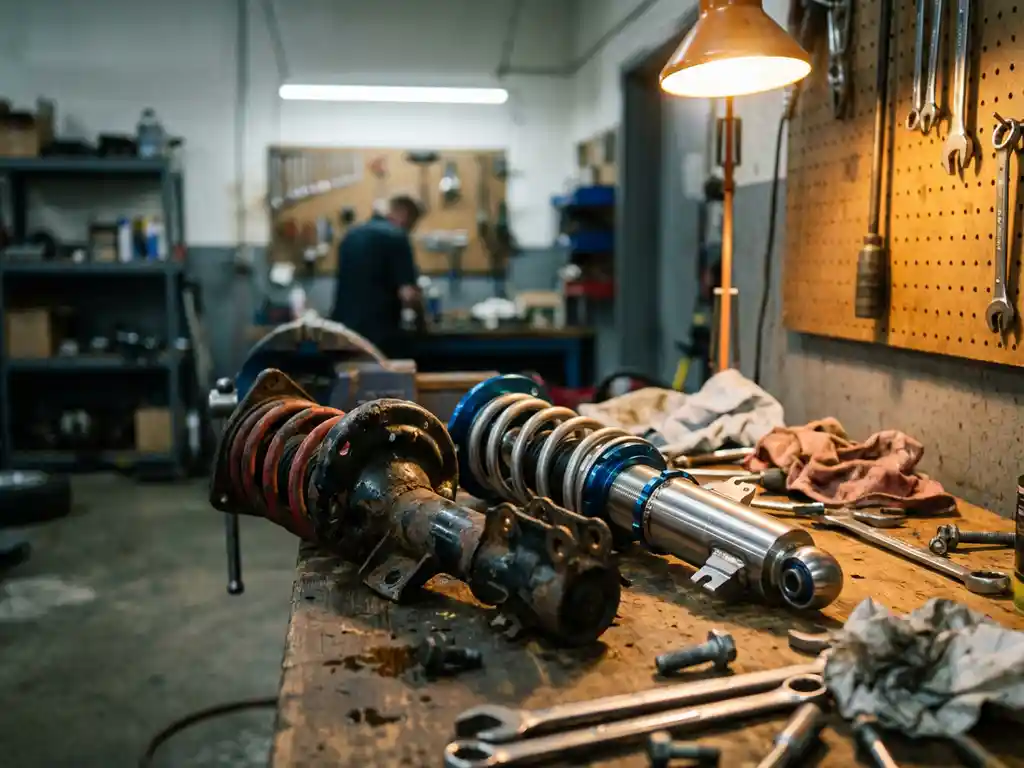
Installing budget coilovers on your car might seem like an affordable way to improve handling and lower your ride height, but many drivers discover that their vehicle actually feels worse after the modification. While the promise of enhanced performance at a fraction of the cost sounds appealing, cheap coilover systems often create more problems than they solve, leaving you with compromised ride quality, poor handling, and potential safety concerns.
Understanding why budget suspension components fail to deliver on their promises can help you make informed decisions about upgrading your vehicle’s suspension system. The difference between quality and cheap coilovers extends far beyond price, affecting everything from daily comfort to long-term reliability.
What happens to your car when you install budget coilovers?
Budget coilovers typically make your car feel harsh, bouncy, and unstable compared to the original suspension. The ride becomes noticeably stiffer without improving actual handling performance, while road noise increases significantly and the vehicle may feel disconnected from the road surface.
The immediate effects become apparent during your first drive. Budget coilovers often use inappropriately stiff springs paired with inadequate damping, creating a combination that transmits every road imperfection directly to the cabin. This harsh ride doesn’t translate to better cornering ability because the dampers cannot properly control spring movement.
Over time, additional problems emerge. The vehicle may develop an uncomfortable bouncing sensation over bumps, as cheap dampers struggle to settle the suspension quickly. Steering response often becomes vague or unpredictable, particularly during direction changes or emergency maneuvers. The suspension geometry may also be compromised if the coilovers don’t properly replicate the original mounting points and suspension terminology specifications.
Why do cheap coilovers perform worse than stock suspension?
Cheap coilovers perform worse than stock suspension because manufacturers use inferior materials, simplified designs, and generic tuning that doesn’t match your specific vehicle’s requirements. Stock suspension systems are extensively tested and engineered for your exact car model, while budget coilovers use a one-size-fits-all approach.
Original equipment manufacturers invest millions in developing suspension systems tailored to each vehicle’s weight distribution, intended use, and target market. They conduct extensive testing across various road conditions, temperatures, and driving scenarios. Budget coilover manufacturers cannot justify this investment for low-cost products, instead relying on generic valving and spring rates that may be completely inappropriate for your vehicle.
The materials used in cheap coilovers also contribute to poor performance. Low-grade seals allow oil to leak from the dampers, reducing their effectiveness over time. Inferior spring steel may sag or break under normal use, while cheap adjustment mechanisms can seize or strip easily. Stock suspension components, while not adjustable, use higher-quality materials designed to last for the vehicle’s intended lifespan.
Browse Products
Shock absorbers, springs, camber plates, air jacks and more. Explore the full range.
Custom Suspension
Every shock absorber built to your exact car, discipline and driving style. Nothing off the shelf.
Get in Touch
Have a question or a specific project? Our engineers are ready to help, no obligation.
What are the most common problems with budget coilover systems?
The most common problems with budget coilover systems include oil leaks from poor seals, seized adjustment collars, premature spring failure, and inconsistent damping performance. These issues typically appear within the first year of installation and worsen over time.
Oil leaks represent the most frequent failure mode in cheap coilovers. Low-quality seals cannot withstand constant movement and pressure changes, allowing damper oil to escape. Once oil leaks begin, the damper loses its ability to control spring movement effectively, resulting in poor handling and ride quality.
Adjustment mechanisms on budget coilovers often seize due to inadequate materials and poor manufacturing tolerances. The adjustment collars may become impossible to turn, trapping you at whatever ride height was initially set. When adjustment is possible, the threads may strip easily, making the coilovers permanently non-adjustable.
Spring-related problems include sagging, where the springs lose their ability to support the vehicle’s weight, and complete spring failure, where coils break entirely. Budget springs often use inferior steel alloys that cannot maintain their properties under repeated compression cycles. Additionally, the spring rates may be completely inappropriate for your vehicle’s weight and intended use.
How much should you spend on quality coilovers?
Quality coilovers typically cost significantly more than budget alternatives, but the investment reflects superior engineering, materials, and performance. The price difference between cheap and quality suspension often represents the cost of proper development, testing, and manufacturing standards.
While budget coilovers might seem attractive at first glance, they often require replacement within a year or two, making them more expensive in the long run. Quality suspension systems are designed to last for many years with proper maintenance, providing consistent performance throughout their lifespan.
The true value of quality coilovers extends beyond the initial cost. Properly engineered suspension improves safety, enhances driving enjoyment, and maintains vehicle value. Quality systems also offer genuine adjustability, allowing you to fine-tune the setup for different driving conditions or preferences. Custom-engineered solutions provide the ultimate value by matching the suspension precisely to your vehicle and driving requirements.
What should you look for in a proper coilover system?
A proper coilover system should feature high-quality damper construction, appropriate spring rates for your vehicle, reliable adjustment mechanisms, and comprehensive engineering support. Look for manufacturers with proven experience in suspension development and strong warranties backing their products.
Quality dampers use precision-machined components, high-grade seals, and carefully calibrated valving. The adjustment collars should operate smoothly and lock securely in position. Springs should be manufactured from high-quality steel with appropriate rates calculated for your specific vehicle’s weight and intended use.
Reputable manufacturers provide detailed specifications for their products, including spring rates, damping curves, and adjustment ranges. They should offer technical support to help you select the appropriate setup for your vehicle and driving requirements. Quality systems also come with comprehensive warranties and rebuild services, ensuring long-term performance and value.
How Intrax Racing helps with suspension performance
We specialize in creating custom-made suspension solutions that eliminate the compromises found in both stock and budget aftermarket systems. Our approach ensures your suspension is precisely matched to your vehicle’s specifications and your driving preferences, delivering optimal performance without sacrificing comfort.
Our custom suspension development process includes:
- Complete vehicle analysis, including weight distribution, intended use, and modifications
- Personalized spring rate calculations based on your driving style and requirements
- Custom damper valving engineered specifically for your setup
- Proper ride height adjustment guidance using proven principles of spring preload
- Ongoing support and rebuild services to maintain peak performance
With nearly 50 years of motorsport experience, we understand that proper suspension tuning requires individual attention rather than generic solutions. Contact us to discuss how custom suspension engineering can transform your driving experience while maintaining the reliability and comfort you need for daily use.
Browse Products
Shock absorbers, springs, camber plates, air jacks and more. Explore the full range.
Custom Suspension
Every shock absorber built to your exact car, discipline and driving style. Nothing off the shelf.
Get in Touch
Have a question or a specific project? Our engineers are ready to help, no obligation.