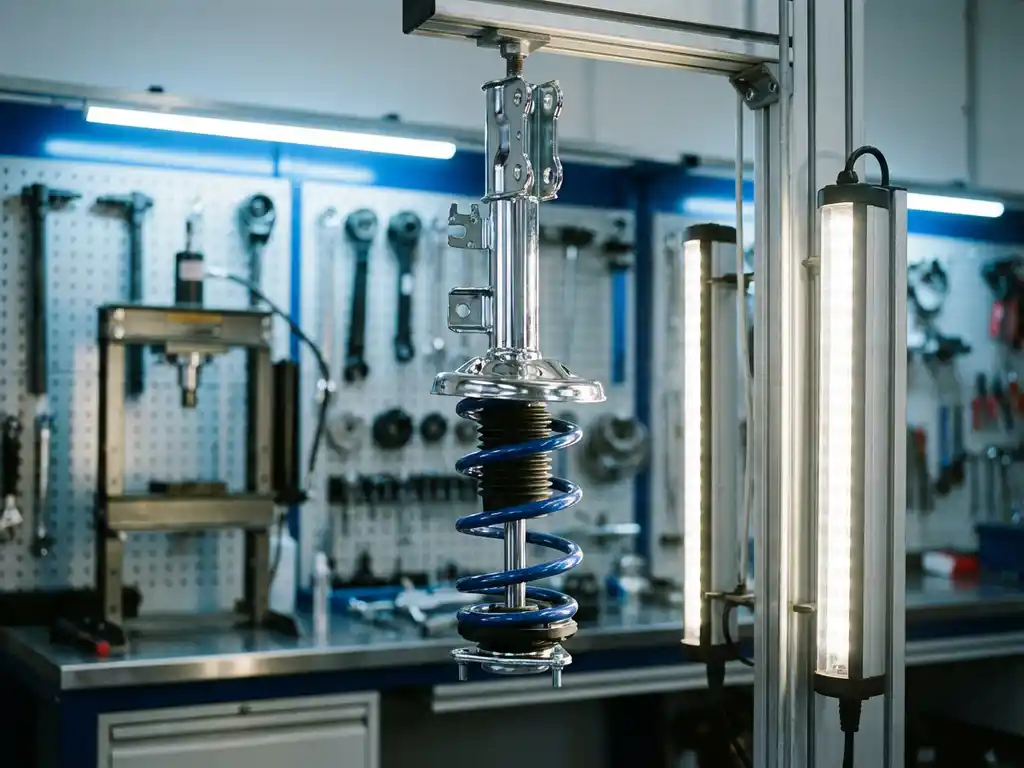
What is an upside-down MacPherson strut, and how does it work?
An upside-down MacPherson strut, also known as an inverted strut suspension, reverses the traditional MacPherson design by mounting the larger damper body (cylinder) at the top and the smaller piston rod at the bottom. This configuration is the opposite of the conventional setup, in which the cylinder sits at the bottom of the suspension assembly.
In this inverted design, the damper body connects directly to the vehicle’s chassis, while the piston rod attaches to the wheel hub. This arrangement creates a more rigid mounting point at the top, reducing flex during compression and rebound. The inverted strut suspension maintains the same basic operating principles as a conventional MacPherson strut, using hydraulic damping to control wheel movement while supporting the vehicle’s weight through an integrated coil spring.
What are the main benefits of inverted MacPherson struts?
Inverted MacPherson struts offer superior rigidity, reduced unsprung weight, and improved heat dissipation compared with conventional designs. The larger cylinder mounted at the top provides a more stable connection point, minimizing deflection under load and enhancing suspension precision.
The inverted configuration also shifts more mass to the sprung side of the vehicle, effectively reducing unsprung weight at the wheel. This reduction improves wheel control over road surfaces and enhances overall handling responsiveness. Additionally, the upside-down design allows better heat management, as the larger damper body has more surface area for cooling and sits in a position with improved airflow.
Performance drivers particularly appreciate how inverted strut suspension maintains more consistent damping characteristics during extended use. The enhanced structural integrity translates into more predictable handling, especially during aggressive cornering or track driving, where suspension precision becomes critical.
What’s the difference between upside-down and conventional MacPherson struts?
The primary difference lies in orientation: conventional MacPherson struts mount the damper cylinder at the bottom with the piston rod extending upward, while upside-down versions reverse this arrangement. This fundamental change affects structural rigidity, weight distribution, and thermal management.
Conventional MacPherson struts connect the smaller piston rod to the chassis, creating a potential flex point under heavy loads. The inverted strut design reduces this weakness by connecting the larger, more rigid cylinder directly to the vehicle structure. This creates a significantly stiffer mounting arrangement that better maintains wheel alignment under stress.
Manufacturing complexity also differs between the two designs. Standard MacPherson struts follow a simpler construction process, making them more cost-effective for mass production. Inverted MacPherson struts require more precise engineering and specialized sealing solutions to handle the reversed pressure dynamics, contributing to their premium positioning in the suspension market.
Browse Products
Shock absorbers, springs, camber plates, air jacks and more. Explore the full range.
Custom Suspension
Every shock absorber built to your exact car, discipline and driving style. Nothing off the shelf.
Get in Touch
Have a question or a specific project? Our engineers are ready to help, no obligation.
Which cars benefit most from upside-down MacPherson struts?
Sports cars, track-focused vehicles, and high-performance street cars gain the most significant advantages from upside-down MacPherson struts. These vehicles demand precise suspension control and can fully utilize the enhanced rigidity and reduced unsprung weight that inverted designs provide.
Vehicles with aggressive suspension tuning particularly benefit from the improved structural integrity. Cars used for autocross, track days, or spirited canyon driving experience noticeable improvements in handling precision and consistency. The enhanced heat dissipation also proves valuable for vehicles that see repeated hard use, where conventional dampers might fade.
However, the benefits extend beyond pure performance applications. Enthusiast-oriented daily drivers can appreciate the improved road feel and more controlled suspension movement, especially when paired with properly matched spring rates. The key is ensuring the suspension system is properly tuned to match the vehicle’s intended use and the driver’s preferences.
How much does upgrading to inverted MacPherson struts cost?
The cost of upgrading to inverted MacPherson struts varies significantly based on vehicle application, performance requirements, and the level of customization. Premium inverted suspension systems typically command higher prices than conventional alternatives due to their specialized engineering and manufacturing complexity.
Several factors influence the investment required for an inverted strut upgrade. Vehicle-specific engineering requirements, desired adjustability features, and performance specifications all affect the final cost. Custom-tuned systems designed for specific driving styles and vehicle setups generally require additional investment but deliver optimized performance for the intended application.
When considering an upgrade, it’s important to factor in the complete suspension system rather than individual components. Properly matched springs, dampers, and supporting hardware work together to deliver the full benefits of inverted strut technology. Professional installation and setup also contribute to achieving optimal performance from the upgraded suspension system.
Are upside-down MacPherson struts worth it for street driving?
Upside-down MacPherson struts can be worthwhile for street driving when properly tuned for daily use, offering improved handling precision and road feel without sacrificing comfort. The key lies in custom tuning that balances performance benefits with street-driving requirements.
Many drivers assume that enhanced performance means compromised comfort, but this isn’t necessarily true with properly engineered inverted suspension systems. When dampers and springs are specifically calibrated for street use, the improved structural rigidity can contribute to better control over road imperfections. This results in a more composed ride that maintains comfort while delivering superior handling characteristics.
The decision ultimately depends on driving priorities and expectations. Enthusiasts who value precise handling, reduced body roll, and enhanced feedback will find inverted MacPherson struts beneficial for street use. However, drivers primarily focused on maximum comfort might prefer conventional suspension systems tuned specifically for that purpose. The versatility of custom-tuned suspension allows for optimization based on individual preferences and driving patterns.
How Intrax Racing helps with custom inverted suspension solutions
We specialize in designing and manufacturing custom-made suspension systems that maximize the benefits of inverted MacPherson strut technology for your specific vehicle and driving requirements. Our approach eliminates the compromises found in standard suspension systems by creating solutions tailored to your exact specifications.
Our inverted suspension solutions include:
- Vehicle-specific engineering that optimizes mounting points and geometry
- Custom damping curves calculated for your driving style and performance goals
- Matched spring rates that complement the inverted strut characteristics
- Professional consultation to determine the ideal setup for your application
- Comprehensive tuning that balances performance with comfort requirements
With nearly 50 years of motorsport experience, we understand how to harness inverted strut technology for both street and track applications. Every suspension system we build starts with your specific requirements, ensuring optimal performance whether you’re navigating daily commutes or attacking corners on track. Ready to explore how custom inverted suspension can transform your driving experience? Contact us to discuss your project and discover the possibilities.
Browse Products
Shock absorbers, springs, camber plates, air jacks and more. Explore the full range.
Custom Suspension
Every shock absorber built to your exact car, discipline and driving style. Nothing off the shelf.
Get in Touch
Have a question or a specific project? Our engineers are ready to help, no obligation.