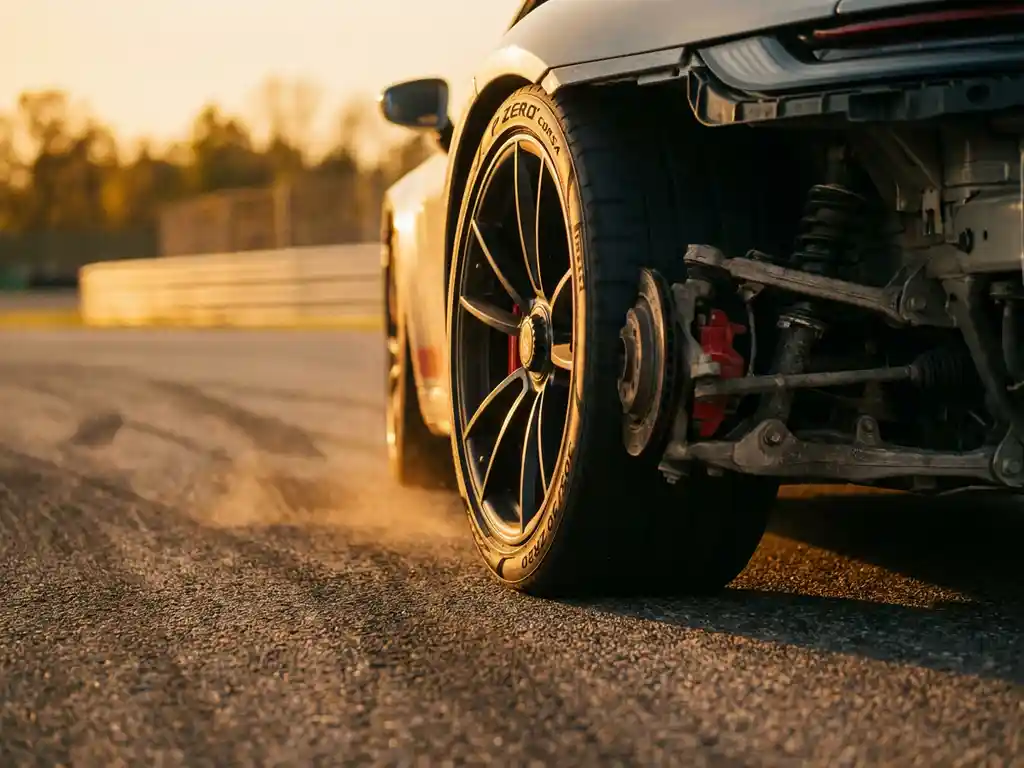
Taking your car to the track for the first time is an exciting milestone that opens up a new world of driving experiences. One of the most common questions first-time track drivers ask is whether their factory suspension will handle the demands of performance driving. While many modern cars come with surprisingly capable stock suspension systems, understanding their limitations and capabilities is crucial for both safety and enjoyment on track.
The answer isn’t simply yes or no. Stock suspension can work for your first track day, but knowing what to expect—and when to consider upgrades—will help you make informed decisions about your vehicle’s setup as your skills and ambitions develop.
What is stock suspension, and how does it differ from performance suspension?
Stock suspension is the factory-installed system designed to balance comfort, durability, and handling for everyday driving conditions. Unlike performance suspension, stock systems prioritize ride quality and longevity over maximum track capability, using compromise settings that work across various driving scenarios and load conditions.
The fundamental difference lies in engineering priorities. Stock suspension must accommodate everything from highway cruising to city driving, carrying passengers and cargo while maintaining comfort over thousands of miles. This means shock absorbers use moderate damping rates, springs provide softer rates for comfort, and the overall setup favors predictable, stable handling rather than ultimate performance.
Performance suspension systems, by contrast, are engineered with specific use cases in mind. They feature stiffer spring rates for reduced body roll, more aggressive damping to control wheel movement precisely, and often adjustable components to fine-tune behavior for different tracks or driving styles. The trade-off is typically a firmer ride and more focused handling characteristics that may feel harsh in daily driving.
Can you safely use stock suspension on a track day?
Yes, you can safely use stock suspension on a track day, provided your vehicle is in good mechanical condition and you understand the system’s limitations. Most modern cars with properly maintained factory suspension will handle track driving without immediate safety concerns, making them suitable for novice track experiences.
Safety on track depends more on driver skill, proper instruction, and vehicle maintenance than on having performance suspension. Stock systems are engineered to handle emergency maneuvers and spirited driving, though they may reach their limits sooner than dedicated track setups. The key is recognizing when the suspension begins to struggle and adjusting your driving accordingly.
Before taking any vehicle on track, ensure your suspension components are in good condition. Check for leaking shock absorbers, worn bushings, or damaged springs. Fresh brake fluid, proper tire pressure, and a recent inspection of all suspension mounting points are essential regardless of whether you’re running stock or aftermarket components.
Browse Products
Shock absorbers, springs, camber plates, air jacks and more. Explore the full range.
Custom Suspension
Every shock absorber built to your exact car, discipline and driving style. Nothing off the shelf.
Get in Touch
Have a question or a specific project? Our engineers are ready to help, no obligation.
What are the main limitations of stock suspension on track?
Stock suspension faces three primary limitations on track: heat buildup in shock absorbers, excessive body roll during cornering, and compromised tire contact patch management. These factors combine to reduce lap times and can make the car feel unstable as speeds increase throughout a track session.
Heat buildup occurs because factory shock absorbers aren’t designed for sustained high-speed operation. As oil temperature rises inside the shocks, damping performance degrades, leading to a bouncy, uncontrolled feeling. This thermal fade typically becomes noticeable after 15–20 minutes of aggressive track driving, depending on ambient temperature and track layout.
Excessive body roll compromises cornering performance by shifting weight dramatically during direction changes. While some body roll is normal and can even be helpful for driver feedback, stock suspension often allows too much movement for optimal track performance. This affects tire contact patches and makes the car feel less responsive to steering inputs.
Brake dive and acceleration squat present additional challenges. Stock suspension settings that provide comfort during daily driving can create unwanted weight transfer during hard braking and acceleration, affecting vehicle balance and making consistent lap times more difficult to achieve.
How do you know when it’s time to upgrade your suspension?
It’s time to upgrade your suspension when you consistently experience heat fade, feel limited by excessive body movement, or want more precise control over your vehicle’s behavior on track. These signs typically emerge after several track days as your driving skills develop and you begin pushing closer to the car’s limits.
The clearest indicator is thermal performance degradation. If your car feels progressively worse as track sessions continue, with increasing body roll and less predictable handling, your stock shocks are likely overheating. This usually happens when you’re consistently running faster lap times and maintaining higher cornering speeds.
Driver feedback also signals when it’s time for an upgrade. When you can feel the car’s limitations holding back your progress, or when you’re compensating for suspension behavior rather than focusing on driving technique, performance suspension becomes beneficial. Advanced drivers often report wanting more immediate response and better feedback through the chassis.
Consider your commitment level, too. If track driving becomes a regular activity rather than occasional fun, investing in proper suspension components makes sense for both performance and long-term enjoyment.
What suspension upgrades make the biggest difference for track performance?
Custom-tuned shock absorbers provide the most significant improvement for track performance, followed by appropriately matched spring rates and anti-roll bar adjustments. Unlike off-the-shelf solutions, properly calculated suspension components work together to optimize handling for your specific vehicle and driving style.
The biggest impact comes from shock absorbers designed for sustained performance driving. These components resist heat buildup and provide consistent damping throughout extended track sessions. When properly matched with spring rates calculated for your vehicle’s weight distribution and intended use, the improvement in control and feedback is immediately noticeable.
Adjustability becomes valuable as your skills develop. Components that allow fine-tuning of compression and rebound damping let you optimize the setup for different tracks and conditions. This flexibility means your suspension can evolve with your driving abilities rather than requiring complete replacement.
The synergy between components matters more than individual upgrades. A well-engineered system in which shock absorbers, springs, and anti-roll bars work together will outperform expensive individual components that aren’t properly matched to each other or to your specific vehicle.
How Intrax Racing helps with track day suspension optimization
We specialize in creating suspension solutions that bridge the gap between street comfort and track performance, ensuring you get the most out of your track day experiences. Our custom-built approach means every component is calculated specifically for your vehicle, driving style, and intended use rather than using generic off-the-shelf settings.
Our track day suspension solutions offer:
- Custom damping calculations based on your vehicle’s weight distribution and modifications
- Heat-resistant shock absorber designs that maintain performance throughout extended sessions
- Matched spring rates that complement the damping characteristics for optimal balance
- Adjustability options that let you fine-tune your setup as your skills develop
- Rebuildable components that provide long-term value and upgrade paths
Whether you’re planning your first track day or looking to optimize an existing setup, our engineering expertise ensures your suspension enhances rather than limits your driving experience. Contact us to discuss how we can create a suspension solution tailored to your specific track day goals and vehicle requirements.
Browse Products
Shock absorbers, springs, camber plates, air jacks and more. Explore the full range.
Custom Suspension
Every shock absorber built to your exact car, discipline and driving style. Nothing off the shelf.
Get in Touch
Have a question or a specific project? Our engineers are ready to help, no obligation.