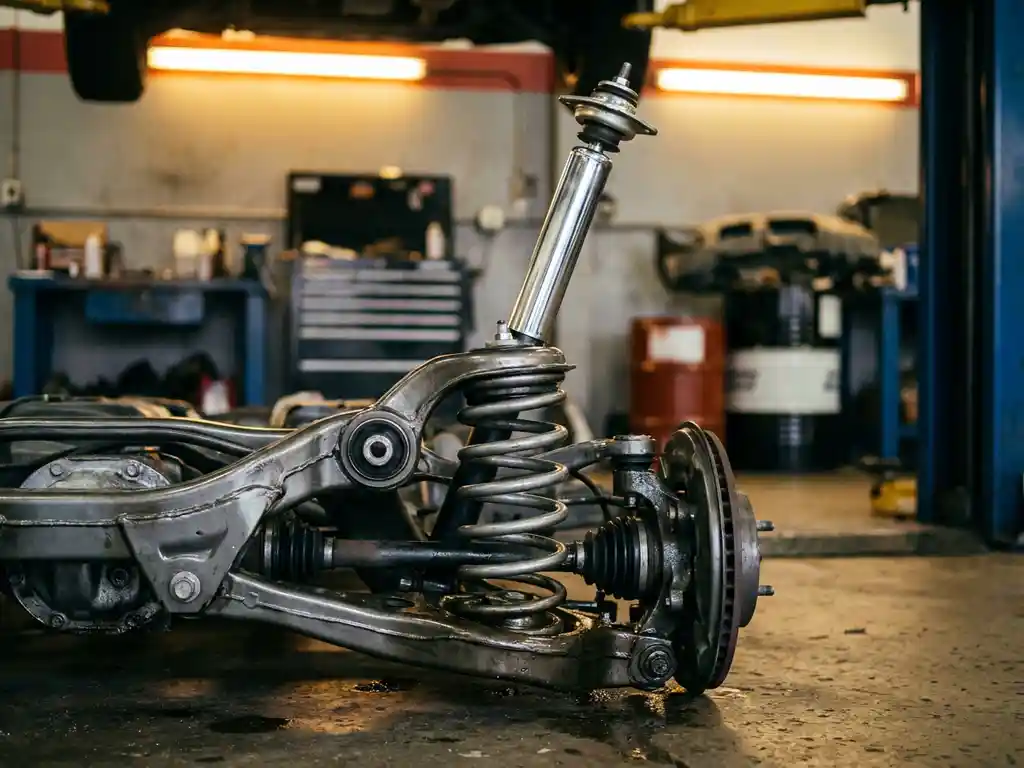
Suspension topping out occurs when a shock absorber reaches its maximum extension limit during rebound, causing the suspension to hit its mechanical stops with a harsh impact. This happens when the damper cannot control the upward movement of the wheel quickly enough, typically during aggressive driving, over bumps, or when the suspension settings are incorrect for the vehicle’s use.
Understanding suspension topping out is crucial for maintaining vehicle safety and performance. When suspension components reach their travel limits, it can lead to uncomfortable driving experiences, reduced handling capabilities, and potential damage to expensive suspension parts.
Why does suspension topping out happen?
Suspension topping out happens when the rebound damping force is insufficient to control the upward movement of the wheel, causing the shock absorber to extend beyond its intended travel range. This creates a harsh impact when the suspension hits its mechanical stops, resulting in the characteristic “topping out” sensation.
Several factors contribute to suspension topping out. Insufficient rebound damping is the primary cause, as the damper cannot adequately slow down the wheel’s upward movement after compression. When driving over bumps or through dips in the road, the suspension compresses and then rapidly extends as it tries to maintain contact with the road surface.
Incorrect spring rates also play a significant role. Springs that are too soft for the vehicle’s weight or intended use cannot provide adequate support, allowing excessive suspension movement. Similarly, worn suspension components lose their ability to control wheel movement effectively, increasing the likelihood of topping out events.
Aggressive driving styles compound these issues. Hard acceleration, sudden braking, and taking corners at speed all create dynamic weight transfer that can overwhelm suspension systems not properly calibrated for such demands. Track driving or spirited road driving particularly exposes inadequate suspension setups to topping out problems.
What’s the difference between topping out and bottoming out?
Topping out occurs when the suspension reaches maximum extension and hits the rebound stops, while bottoming out happens when the suspension compresses fully and hits the compression stops. Both represent suspension travel limits but occur at opposite ends of the damper’s operating range.
During topping out, the wheel moves away from the vehicle body until the shock absorber cannot extend further. This typically happens when the suspension rebounds too quickly after compression, such as when driving over a bump or through a dip. The impact occurs at the top of the suspension travel, hence “topping out.”
Bottoming out involves the opposite scenario. The suspension compresses beyond its intended range, causing the shock absorber to hit its compression stops or the springs to coil bind. This commonly occurs when hitting large bumps, carrying heavy loads, or during hard cornering when weight transfer compresses one side of the vehicle.
The sensations differ significantly between these conditions. Topping out creates a sharp, metallic impact sound followed by potential wheel hop or loss of tire contact. Bottoming out produces a more muffled thud as the suspension components compress together, often accompanied by harsh ride quality and reduced handling precision.
How can you tell if your suspension is topping out?
Suspension topping out produces distinctive symptoms including sharp metallic impacts from the wheel wells, wheel hop or bouncing after hitting bumps, and temporary loss of steering control or tire contact with the road surface. These signs typically occur during rebound after compression events.
The most obvious indicator is the characteristic sound. Unlike the muffled thump of bottoming out, topping out creates a sharp, metallic clank or bang that seems to come from the top of the suspension travel. This sound occurs immediately after the wheel encounters a bump or dip, during the rebound phase.
Visual inspection can reveal additional clues. Look for impact marks or wear on the upper suspension components, particularly around the shock absorber mounting points and rebound stops. Fresh scratches or deformation on these parts indicate recent topping out events.
Driving behavior changes also signal topping out issues. The vehicle may feel unstable after hitting bumps, with the affected wheel seeming to bounce or hop rather than maintaining smooth contact with the road. Steering may feel momentarily light or disconnected, particularly if the front suspension tops out.
Professional diagnosis involves measuring suspension travel and examining damper performance. Technicians can assess whether the available rebound travel matches the vehicle’s requirements and determine if the damping forces are appropriate for controlling wheel movement throughout the suspension’s range.
Browse Products
Shock absorbers, springs, camber plates, air jacks and more. Explore the full range.
Custom Suspension
Every shock absorber built to your exact car, discipline and driving style. Nothing off the shelf.
Get in Touch
Have a question or a specific project? Our engineers are ready to help, no obligation.
What damage does suspension topping out cause?
Suspension topping out causes damage to shock absorber seals, mounting points, and rebound stops through repeated harsh impacts. Over time, this leads to reduced damping performance, oil leaks, and potential failure of suspension components, compromising both safety and ride quality.
The immediate impact damages the shock absorber’s internal components. Repeated topping out events stress the piston rod seals, potentially causing oil leaks that reduce damping effectiveness. The harsh impacts can also damage the shock absorber’s internal valving, leading to inconsistent damping performance across the travel range.
Mounting points and bushings suffer significant stress during topping out events. The sudden stop at maximum extension transfers enormous forces through the suspension mounting points, potentially causing cracks in mounting brackets or premature wear of rubber bushings. These components are designed to handle normal suspension loads, not the shock loads created by topping out.
Rebound stops and bump stops deteriorate rapidly under repeated impacts. These rubber or polyurethane components are designed to provide a cushioned limit to suspension travel, but frequent harsh contact causes them to compress permanently or crack, reducing their protective effectiveness.
Secondary damage affects other vehicle systems. Wheel hop and loss of tire contact reduce braking effectiveness and steering control, creating safety risks. The harsh impacts can also stress wheel bearings, steering components, and even the vehicle’s chassis, particularly in performance applications where topping out occurs frequently.
How do you prevent suspension from topping out?
Preventing suspension topping out requires proper rebound damping adjustment, appropriate spring rates for the vehicle’s use, and correct ride height settings. Professional suspension tuning ensures optimal balance between compression and rebound control while maintaining adequate suspension travel for the intended application.
Rebound damping adjustment is the primary solution. Increasing rebound damping slows the suspension’s extension speed, preventing it from reaching the travel limits too quickly. However, excessive rebound damping can cause the suspension to pack down over successive bumps, so finding the correct balance is crucial.
Spring rate selection significantly impacts topping out tendency. Springs must provide adequate support for the vehicle’s weight while allowing sufficient suspension movement. Stiffer springs reduce suspension travel requirements but may compromise ride quality, while softer springs increase travel demands but improve comfort over small bumps.
Ride height adjustment affects available suspension travel. Lowering a vehicle reduces both compression and extension travel, making topping out more likely. When adjusting ride height, it’s essential to maintain adequate travel in both directions while considering the vehicle’s intended use and load conditions.
Regular maintenance prevents component wear that contributes to topping out. Worn shock absorbers lose their ability to control suspension movement effectively, making topping out more likely even with proper settings. Replacing worn components and maintaining proper fluid levels ensures consistent damping performance.
How Intrax Racing helps with suspension topping out
We help eliminate suspension topping out through our custom-made suspension solutions that are specifically calculated and engineered for your vehicle’s exact requirements and driving style. Drawing from nearly 50 years of motorsport experience, our engineers analyze your vehicle data, intended use, and performance requirements to create suspension systems that prevent topping out while optimizing overall performance.
Our comprehensive approach includes:
- Custom damping calculations that provide optimal rebound control for your specific vehicle weight and suspension geometry
- Precise spring rate selection based on your driving style, whether for comfortable road use, occasional track days, or dedicated racing applications
- Tailored suspension travel optimization that maintains adequate extension range while preventing topping out events
- Professional setup guidance and ongoing support to ensure your suspension performs flawlessly throughout its service life
Every shock absorber we build receives a unique identification number with complete specifications stored under your name, ensuring future service and upgrades remain perfectly matched to your requirements. Don’t let suspension topping out compromise your vehicle’s performance and safety. Contact us today to discuss how our custom suspension solutions can eliminate topping out while enhancing your driving experience.
Browse Products
Shock absorbers, springs, camber plates, air jacks and more. Explore the full range.
Custom Suspension
Every shock absorber built to your exact car, discipline and driving style. Nothing off the shelf.
Get in Touch
Have a question or a specific project? Our engineers are ready to help, no obligation.