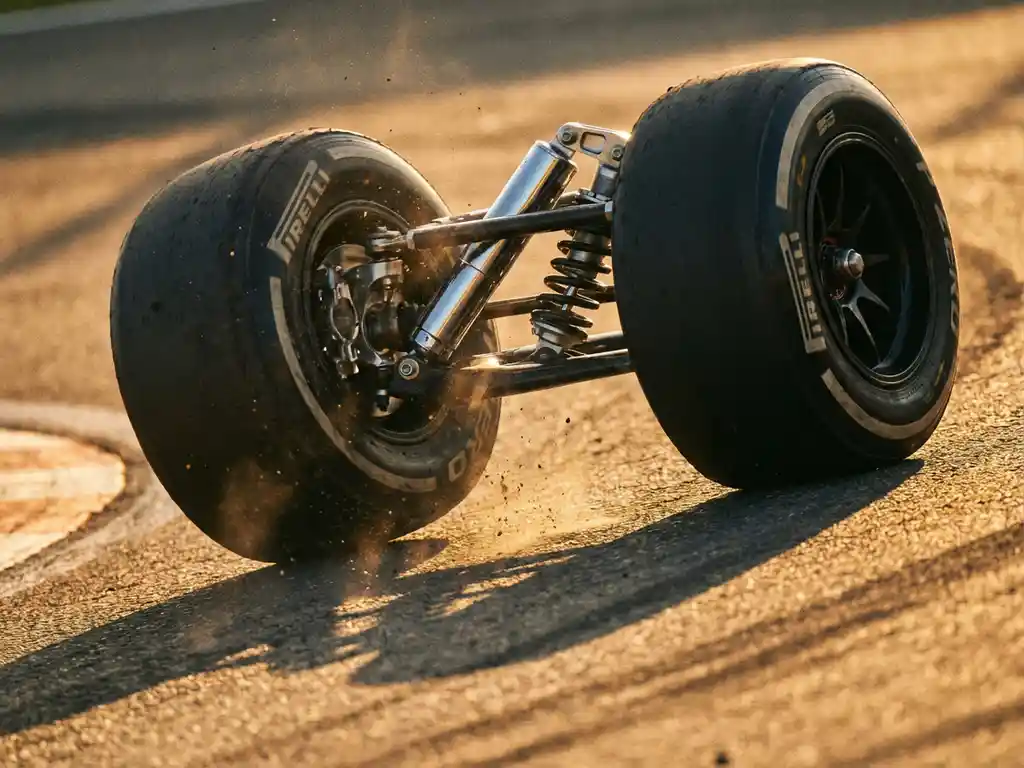
Suspension technology plays a crucial role in determining how fast a car can navigate a racing circuit. While engine power gets most of the attention, the suspension system is what actually transfers that power to the track and maintains tire contact through every corner, braking zone, and acceleration point. Understanding how suspension affects lap times can help drivers and teams unlock significant performance gains on any racing circuit.
The relationship between suspension setup and track performance involves complex interactions among vehicle dynamics, tire behavior, and driver confidence. Even small adjustments to suspension components can result in measurable improvements in lap times, making suspension tuning one of the most cost-effective ways to enhance racing performance.
What is the connection between suspension and lap times?
Suspension directly affects lap times by controlling tire contact with the track surface, managing weight transfer during cornering and braking, and maintaining optimal vehicle balance throughout each lap. A well-tuned suspension system keeps tires in their optimal operating window, maximizing grip and allowing drivers to carry more speed through corners while braking later and accelerating earlier.
The suspension system acts as the critical link between the chassis and the track surface. When suspension components are properly calibrated, they maintain consistent tire contact patches even as the vehicle experiences rapid changes in direction, speed, and load. This consistent contact translates directly into predictable handling characteristics that allow drivers to push closer to the absolute limits of adhesion.
Weight transfer management represents another crucial aspect of the suspension-and-lap-time relationship. During cornering, the suspension controls how quickly weight shifts from the inside wheels to the outside wheels. Proper damping rates ensure this weight transfer happens in a controlled manner, preventing sudden grip losses that force drivers to reduce speed. Similarly, during braking and acceleration phases, suspension tuning affects how effectively the car can use available traction.
How does suspension affect cornering speed and stability?
Suspension affects cornering speed by controlling body roll, maintaining tire contact angles, and managing the rate of weight transfer during direction changes. Properly tuned shock absorbers and springs allow drivers to maintain higher cornering speeds by keeping the vehicle stable and predictable through turns, reducing the need for mid-corner corrections that scrub speed.
Body roll control plays a fundamental role in cornering performance. Excessive body roll moves tires away from their optimal contact angles with the track surface, reducing available grip. When suspension components are calibrated correctly, they limit body roll while still allowing enough suspension travel to maintain tire contact over track irregularities. This balance enables consistent cornering performance across varying track conditions.
Suspension geometry changes throughout the cornering process also significantly impact stability. As the vehicle leans into a corner, suspension components move through their travel range, affecting camber angles, toe settings, and contact patch shapes. High-quality suspension systems maintain favorable geometry throughout this range of motion, ensuring that grip levels remain predictable as cornering forces increase.
The damping characteristics of shock absorbers control how quickly the vehicle responds to steering inputs and track surface changes. Optimal damping rates allow the car to settle quickly into corners without oscillations that would upset the chassis balance. This stability gives drivers the confidence to commit fully to corner-entry speeds and maintain consistent racing lines.
Browse Products
Shock absorbers, springs, camber plates, air jacks and more. Explore the full range.
Custom Suspension
Every shock absorber built to your exact car, discipline and driving style. Nothing off the shelf.
Get in Touch
Have a question or a specific project? Our engineers are ready to help, no obligation.
What’s the difference between street and race suspension setups?
Race suspension setups prioritize maximum performance and adjustability over comfort, featuring stiffer spring rates, more aggressive damping curves, and lower ride heights than street setups. While street suspensions must balance performance with ride quality and durability across varying road conditions, race suspensions are optimized specifically for track surface characteristics and competitive driving demands.
Spring rates represent one of the most significant differences between street and race configurations. Race springs typically feature rates two to three times stiffer than street applications, providing better control over vehicle dynamics during high-load cornering and braking. This increased stiffness reduces body movement and maintains more consistent suspension geometry under racing conditions.
Damping characteristics also differ substantially between applications. Race shock absorbers feature more aggressive compression and rebound damping curves designed to control the rapid suspension movements encountered during competitive driving. These damping rates would feel harsh and uncomfortable in street driving but provide essential control for maintaining tire contact and vehicle stability at racing speeds.
Adjustability becomes crucial in race applications, where setup changes are necessary to optimize performance for specific tracks and conditions. Race suspension systems typically offer multiple adjustment parameters, including ride height, damping rates, and sometimes spring preload. Street suspensions generally offer limited or no adjustability, instead providing a fixed compromise setup suitable for general driving conditions.
How much time can proper suspension tuning save per lap?
Proper suspension tuning can save anywhere from 0.5 to 2 seconds per lap on most racing circuits, with the exact improvement depending on track characteristics, vehicle type, and the quality of the baseline setup. Tracks with numerous direction changes and elevation variations typically show larger improvements from suspension optimization than high-speed circuits with fewer corners.
The magnitude of lap time improvement depends heavily on how far the initial suspension setup deviates from optimal. Vehicles with poorly matched spring-and-damper combinations can see dramatic improvements of 2 to 3 seconds per lap when properly tuned. Even well-sorted race cars can often find an additional 0.3 to 0.8 seconds per lap through fine-tuning adjustments to match specific track requirements.
Different circuit types respond differently to suspension improvements. Technical tracks with tight corners and frequent direction changes reward suspension setups that provide quick turn-in response and stable mid-corner balance. High-speed circuits benefit more from suspension tuning that maintains stability under heavy braking and provides confidence-inspiring high-speed handling characteristics.
The cumulative effect of suspension improvements extends beyond individual corner gains. When drivers have confidence in their vehicle’s handling characteristics, they can maintain higher average speeds throughout entire lap segments. This psychological benefit often produces lap time improvements that exceed the sum of individual corner gains.
Which suspension adjustments have the biggest impact on lap times?
Ride height adjustments typically provide the largest single impact on lap times, followed by damping-rate optimization and spring-rate matching. Lowering ride height improves aerodynamic efficiency and lowers the center of gravity, while proper damping control ensures optimal tire contact and vehicle stability throughout the lap.
Ride height affects multiple performance parameters simultaneously. Lower ride heights improve aerodynamic efficiency by reducing airflow under the vehicle and lowering the center of gravity for better handling. However, excessively low ride heights can cause bottoming that upsets vehicle balance. Finding the optimal compromise between aerodynamic gains and suspension-travel requirements often yields the largest single performance improvement.
Damping-rate adjustments offer significant tuning potential for optimizing vehicle behavior in specific track sections. Compression damping affects how the vehicle responds under braking and on corner entry, while rebound damping controls how the vehicle settles after direction changes and during acceleration phases. Proper damping calibration allows drivers to attack corners more aggressively while maintaining control during rapid transitions.
Spring-rate optimization ensures that the suspension system operates within its most effective range throughout the lap. Properly matched spring rates prevent excessive suspension travel that would compromise geometry while providing enough compliance to maintain tire contact over track irregularities. This balance between control and compliance directly translates into consistent lap times and predictable handling characteristics.
How Intrax Racing Helps with Suspension Performance Optimization
We specialize in creating custom-built suspension solutions that are precisely calculated and engineered to match your vehicle’s requirements and racing objectives. Our nearly 50 years of motorsport experience, from Formula 1 to street applications, allows us to optimize suspension setups for maximum lap-time reduction while maintaining the reliability required for competitive racing.
Our approach to suspension performance includes:
- Complete vehicle analysis, including tire specifications, intended use, and driver preferences
- Custom damping curves calculated specifically for your track requirements and driving style
- Optimized spring rates that work in perfect harmony with shock absorber characteristics
- Ride height optimization that balances aerodynamic benefits with suspension-travel requirements
- Ongoing support and adjustability for fine-tuning as track conditions and requirements evolve
Every suspension system we build receives a unique identification number, with complete specifications stored for future service and upgrades. This ensures your investment in performance suspension technology continues to deliver optimal lap times throughout your racing career. Contact us to discuss how we can optimize your vehicle’s suspension for maximum track performance.
Browse Products
Shock absorbers, springs, camber plates, air jacks and more. Explore the full range.
Custom Suspension
Every shock absorber built to your exact car, discipline and driving style. Nothing off the shelf.
Get in Touch
Have a question or a specific project? Our engineers are ready to help, no obligation.
Related Articles
- Can you fit coilovers on an electric car?
- What should you look for when choosing a suspension builder?
- What suspension maintenance does a BMW require?
- How do progressive springs improve ride quality on cars?
- Why does your car feel worse after fitting budget coilovers?
- How do you maintain performance suspension?