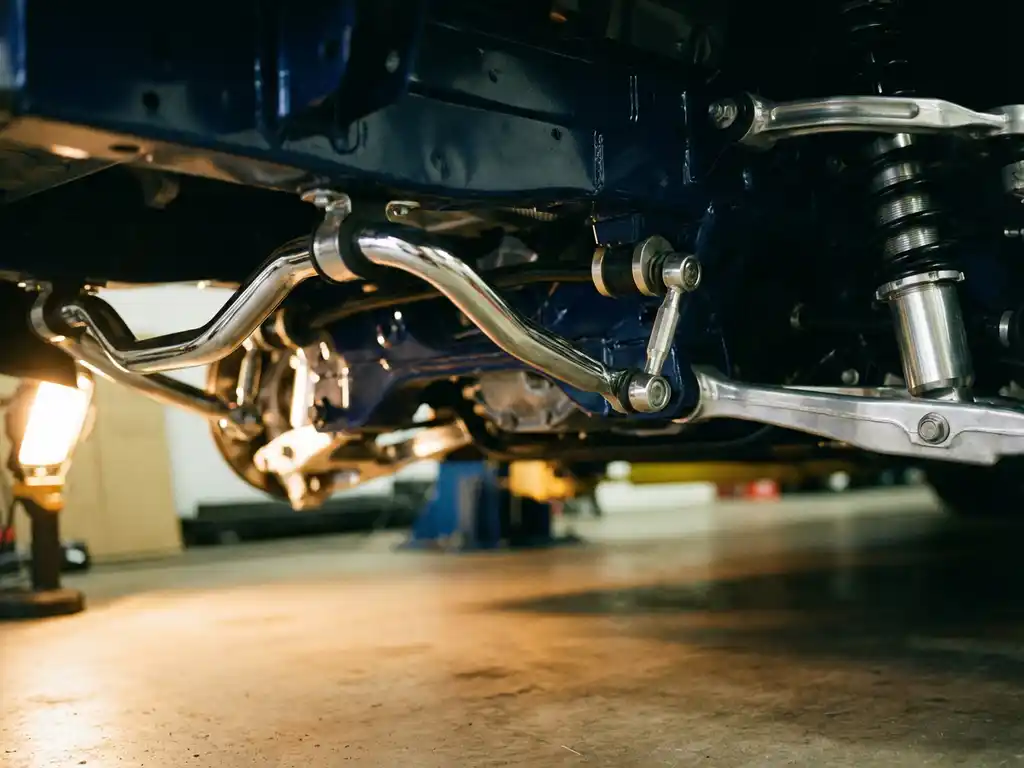
Anti-roll bars, also known as sway bars or stabilizer bars, are among the most misunderstood components in a vehicle’s suspension system. While many drivers focus on upgrading shocks and springs, the anti-roll bar plays a crucial role in how your car handles corners and maintains stability during dynamic driving situations.
Understanding when and why to upgrade your anti-roll bar can significantly improve your vehicle’s performance, whether you’re looking for better daily driving comfort or enhanced track-day capabilities. Let’s explore everything you need to know about these essential suspension components.
What is an anti-roll bar and how does it work?
An anti-roll bar is a metal bar that connects the left and right wheels on an axle to reduce body roll during cornering. When your vehicle turns, the anti-roll bar transfers force from the outside wheel (which is being compressed) to the inside wheel (which is extending), helping keep the car level and maintaining better tire contact with the road surface.
The anti-roll bar works through torsional resistance. As one side of the suspension compresses more than the other during cornering, the bar twists and creates a force that tries to level the vehicle. This mechanical action happens automatically without any driver input, making it a passive but highly effective suspension component.
Most vehicles come equipped with at least a front anti-roll bar from the factory, as this is where most steering and handling forces are generated. The bar is typically mounted to the chassis through bushings and connected to the suspension arms or struts via drop links, creating a complete system that responds instantly to changes in vehicle dynamics.
What’s the difference between front and rear anti-roll bars?
Front anti-roll bars primarily influence understeer and steering response, while rear anti-roll bars affect oversteer and overall vehicle balance. The front bar is typically thicker and stiffer because it handles steering forces and weight transfer during braking, whereas the rear bar focuses on maintaining rear-axle stability during acceleration and cornering.
Front anti-roll bars have the most immediate impact on how your vehicle feels when turning into corners. A stiffer front bar can reduce understeer by limiting how much the outside front wheel compresses, maintaining better tire contact and steering precision. However, too much front roll stiffness can make the car feel nervous or twitchy, especially on uneven road surfaces.
Rear anti-roll bars work differently, primarily affecting how the back of the vehicle behaves during cornering. Adding or stiffening a rear bar can reduce understeer in front-wheel-drive vehicles by preventing excessive rear body roll. In rear-wheel-drive cars, the rear bar helps maintain traction during acceleration out of corners by keeping the rear wheels more evenly loaded.
How do you know if your anti-roll bar needs upgrading?
Your anti-roll bar may need upgrading if you experience excessive body roll during cornering, uneven tire wear patterns, or if your vehicle feels unstable when changing direction quickly. Other signs include feeling like the car “wallows” through corners or having modified other suspension components without addressing the anti-roll bars.
Excessive body roll is the most obvious indicator that your anti-roll bars may need attention. If your vehicle leans significantly when cornering at moderate speeds, or if passengers comment that they feel as though they’re being thrown around during normal driving, your current anti-roll bar setup may be insufficient for your driving style or vehicle modifications.
Uneven tire wear can also indicate anti-roll bar issues, particularly if you notice more wear on the outside edges of your tires. This suggests that your vehicle is rolling too much during cornering, causing the tires to operate at suboptimal angles. Additionally, if you’ve upgraded your springs or shock absorbers, your original anti-roll bars may no longer provide the proper balance for your suspension system.
Browse Products
Shock absorbers, springs, camber plates, air jacks and more. Explore the full range.
Custom Suspension
Every shock absorber built to your exact car, discipline and driving style. Nothing off the shelf.
Get in Touch
Have a question or a specific project? Our engineers are ready to help, no obligation.
What are the benefits of upgrading your anti-roll bar?
Upgrading your anti-roll bar improves cornering stability, reduces body roll, enhances steering response, and provides better overall vehicle balance. The upgrade also helps maintain more consistent tire contact with the road surface, leading to improved grip and more predictable handling characteristics during dynamic driving situations.
The most immediate benefit you’ll notice is significantly reduced body roll during cornering. This creates a more confident driving experience, as the vehicle feels more planted and stable when changing direction. Your passengers will also appreciate the reduced sensation of being thrown around during normal driving maneuvers.
Improved steering response is another major advantage of anti-roll bar upgrades. With less body roll, the suspension geometry remains more consistent throughout the corner, allowing for more precise steering inputs and better feedback through the steering wheel. This enhanced communication between driver and vehicle is particularly valuable for enthusiastic driving or track-day activities.
Better tire contact with the road surface translates directly into improved grip and shorter braking distances. When your vehicle maintains a more level body attitude during cornering, all four tires can work more effectively, providing better traction for acceleration, braking, and cornering forces.
Should you upgrade anti-roll bars before other suspension components?
Anti-roll bars should typically be upgraded after addressing shock absorbers and springs, as these primary suspension components have the greatest impact on ride quality and handling. However, anti-roll bars offer excellent value for money and can provide noticeable improvements even with stock suspension, making them a worthwhile early upgrade for many drivers.
The ideal suspension upgrade sequence usually starts with shock absorbers and springs, as these components control the fundamental aspects of how your vehicle rides and handles. Quality shock absorbers provide proper damping control, while appropriate springs set the foundation for vehicle height and basic handling characteristics. Understanding suspension terminology can help you make more informed decisions about upgrade priorities.
However, anti-roll bars can be an excellent first upgrade if you’re primarily concerned with reducing body roll and improving cornering stability without significantly altering ride quality. They’re also less expensive than comprehensive shock and spring upgrades, making them accessible for drivers who want to improve handling on a budget.
For the best results, suspension components should work together as a complete system. When shock absorbers, springs, and anti-roll bars are properly matched, you can achieve improved handling while maintaining or even enhancing ride comfort, rather than forcing a compromise between performance and comfort.
How Intrax Racing helps with anti-roll bar optimization
We understand that anti-roll bars are just one piece of a complete suspension puzzle. At Intrax, we approach suspension tuning holistically, ensuring that anti-roll bars work in harmony with your shock absorbers and springs for optimal performance. Our expertise helps you avoid the common mistake of upgrading components in isolation, which can create handling imbalances.
Our custom-made suspension solutions take anti-roll bar requirements into account from the design phase, ensuring that your entire suspension system works together seamlessly. Key benefits of our approach include:
- Complete suspension analysis to determine optimal anti-roll bar specifications for your specific vehicle and driving requirements
- Custom shock absorber tuning that complements your anti-roll bar setup, maintaining the perfect balance between handling and comfort
- Expert guidance on upgrade sequences to maximize performance improvements while staying within your budget
- Ongoing support to fine-tune your suspension system as your driving needs evolve
Ready to optimize your vehicle’s handling with a properly engineered suspension system? Contact our suspension experts to discuss how we can create the perfect suspension setup for your specific needs and driving style.
Browse Products
Shock absorbers, springs, camber plates, air jacks and more. Explore the full range.
Custom Suspension
Every shock absorber built to your exact car, discipline and driving style. Nothing off the shelf.
Get in Touch
Have a question or a specific project? Our engineers are ready to help, no obligation.