Browse Products
Shock absorbers, springs, camber plates, air jacks and more. Explore the full range.
Custom Suspension
Every shock absorber built to your exact car, discipline and driving style. Nothing off the shelf.
Get in Touch
Have a question or a specific project? Our engineers are ready to help, no obligation.
Which tread patterns work best for different driving conditions?
Directional tread patterns with V-shaped grooves excel in wet conditions by efficiently channeling water away from the contact patch, while asymmetrical patterns optimize both wet and dry performance through specialized inner and outer tread zones. Symmetrical patterns provide the longest wear and quietest ride for everyday street driving.
Directional treads feature arrow-like patterns pointing forward, designed specifically for water evacuation. The angled grooves create a pumping action that forces water outward, reducing hydroplaning risk. These patterns work exceptionally well in heavy rain but must be mounted in the correct rotational direction and cannot be cross-rotated during tire rotations.
Asymmetrical designs divide the tread into distinct zones optimized for different functions. The outer shoulder typically features larger, more rigid tread blocks for dry cornering grip, while the inner portion incorporates more grooves for wet weather performance. This design allows a single tire to excel in multiple conditions without significant compromises.
Symmetrical patterns offer the most versatility for street driving. The uniform tread design provides even wear characteristics, lower road noise, and the ability to rotate tires in any pattern for maximum longevity. While they may not excel in any single performance category, they deliver consistent, predictable behavior across all driving conditions.
Performance-oriented patterns often feature reduced groove depth and larger solid contact patches. These designs maximize dry grip but sacrifice wet weather capability and tread life. Semi-slick patterns with minimal grooves represent the extreme end, suitable only for dry track conditions where maximum contact area is paramount.
Should you change tire sizes for performance driving?
Upgrading to larger wheel diameters with lower-profile tires typically improves handling precision and steering response but reduces ride comfort and increases susceptibility to wheel damage from road impacts. The optimal tire size depends on your performance goals, driving conditions, and comfort preferences.
Plus sizing involves increasing wheel diameter while decreasing sidewall height to maintain overall diameter. This modification provides several performance benefits. Lower sidewalls reduce flex during cornering, improving steering precision and feedback. The increased contact patch width enhances grip potential, while the shorter, stiffer sidewalls provide more predictable handling characteristics.
However, these benefits come with trade-offs. Reduced sidewall height means less cushioning from road impacts, resulting in a harsher ride quality. The larger wheels and lower-profile tires are more expensive to replace and more vulnerable to damage from potholes or curb contact. Road noise may also increase due to reduced sidewall damping.
The ideal sizing strategy considers your vehicle’s suspension characteristics. Cars with adaptive or performance-tuned suspension systems benefit more from plus sizing because they can better manage the reduced tire compliance. Vehicles with standard suspension may become uncomfortably harsh with aggressive tire sizing changes.
Width increases must be balanced carefully. Wider tires provide more grip but also increase rolling resistance, unsprung weight, and susceptibility to hydroplaning. The additional width may also cause rubbing issues with wheel wells or suspension components, particularly when combined with lowered ride heights from performance suspension modifications.
How do you maintain optimal tire pressure for different driving styles?
Street driving requires tire pressures at or slightly above manufacturer specifications for optimal fuel economy and even wear, while performance driving benefits from pressures 2-4 PSI higher when cold to account for heat buildup and maintain proper contact patch shape under aggressive cornering loads.
Manufacturer-recommended pressures are optimized for average driving conditions, comfort, and fuel efficiency. These pressures, typically found on the driver’s door placard, provide the best balance for daily commuting, highway cruising, and normal weather conditions. Maintaining these pressures ensures even tread wear and maximum tire longevity.
Performance driving generates significantly more heat, causing tire pressures to increase substantially. Track driving can raise pressures by 6-10 PSI above cold settings. Starting with slightly elevated cold pressures compensates for this thermal expansion, preventing over-inflation that reduces the contact patch size and compromises grip.
Temperature effects require regular monitoring. Tire pressure drops approximately 1 PSI for every 10°F temperature decrease. Cold weather driving may require pressure adjustments to maintain optimal performance, while summer heat can cause dangerous over-inflation if not monitored regularly.
Load conditions also influence optimal pressures. Heavy loads require higher pressures to prevent excessive sidewall flex and heat buildup. Conversely, reduced loads may benefit from slightly lower pressures to maintain proper contact patch shape and grip characteristics.
Pressure monitoring frequency should increase with performance driving intensity. Street drivers can check monthly, while track enthusiasts should verify pressures before each session and monitor temperatures using infrared thermometers to ensure even heat distribution across the tread surface.
How Intrax Racing helps with tire and suspension optimization
At Intrax Racing, we understand that tire selection is only part of the performance equation. Our custom suspension solutions work synergistically with your tire choice to maximize both performance and comfort, ensuring your vehicle delivers the driving experience you’re seeking.
Our approach to tire and suspension optimization includes:
- Custom shock absorber calculations based on your specific tire specifications, vehicle weight, and driving style preferences
- Precise spring rate recommendations that complement your chosen tire compound and size for optimal contact patch management
- Ride height adjustments that work with your tire selection to achieve proper suspension geometry and handling balance
- Performance-oriented setups that maintain street comfort while maximizing your tire’s grip potential during spirited driving
With nearly 50 years of motorsport experience, we’ve learned that the best suspension systems adapt to work with your tire choices rather than fighting against them. Whether you’re running street tires for daily comfort or performance tires for weekend track days, our custom-built solutions ensure every component works together harmoniously.
Ready to optimize your vehicle’s tire and suspension combination? Contact our engineering team to discuss how we can create a custom suspension solution tailored to your specific tire choice and driving requirements.
Browse Products
Shock absorbers, springs, camber plates, air jacks and more. Explore the full range.
Custom Suspension
Every shock absorber built to your exact car, discipline and driving style. Nothing off the shelf.
Get in Touch
Have a question or a specific project? Our engineers are ready to help, no obligation.
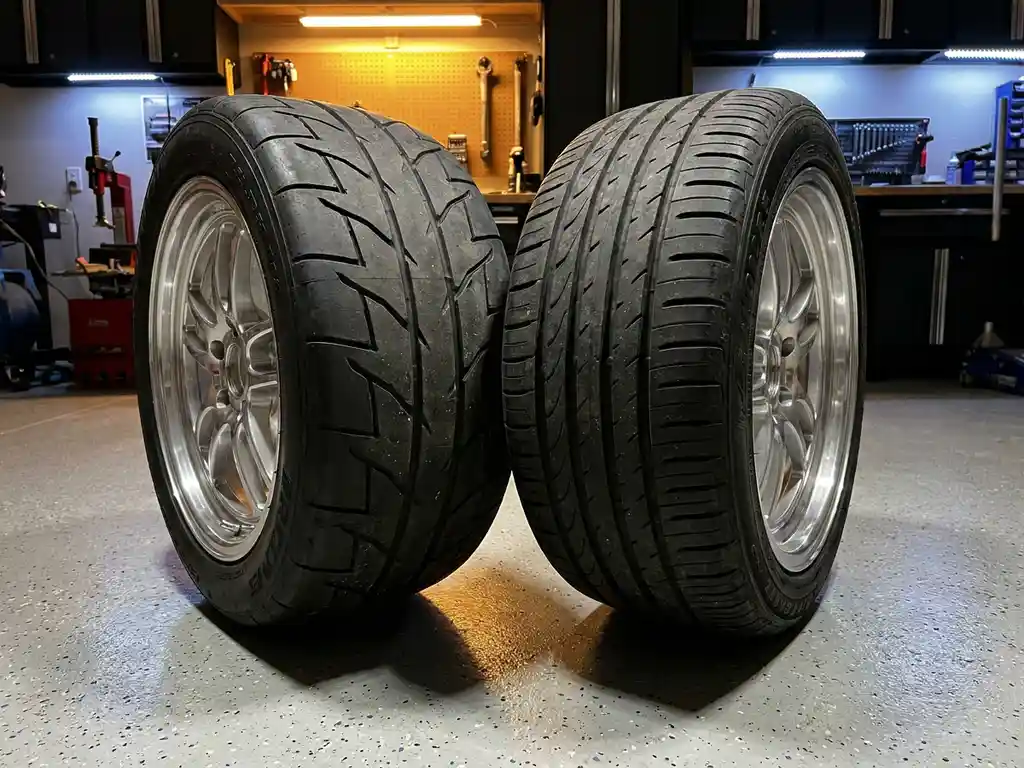
Choosing car tires depends on your driving priorities: street tires prioritize comfort, longevity, and all-weather capability, while performance tires maximize grip and handling at the expense of tread life and ride quality. The key differences lie in tire compound, tread pattern, and construction, with performance tires using softer compounds and more aggressive designs for enhanced road contact.
Your driving style, climate conditions, and vehicle usage determine which tire type serves you best. Understanding these fundamental differences helps you make an informed decision that balances performance, safety, and value for your specific needs.
What’s the main difference between street and performance tires?
Street tires are designed for everyday driving with an emphasis on comfort, fuel efficiency, and long tread life, while performance tires prioritize maximum grip and precise handling through softer compounds and specialized tread designs. Street tires typically last 40,000-80,000 miles compared to performance tires’ 15,000-30,000 mile lifespan.
The fundamental distinction lies in engineering priorities. Street tires must excel across diverse conditions including wet weather, temperature variations, and extended highway cruising. They feature harder rubber compounds that resist wear, deeper tread depths for water evacuation, and construction optimized for ride comfort and low road noise.
Performance tires sacrifice longevity for enhanced capabilities. Their softer compounds provide superior road contact and heat resistance during aggressive driving. The tread patterns feature larger contact patches, stiffer sidewalls for reduced flex, and specialized rubber formulations that maintain grip at higher temperatures. This design philosophy makes them ideal for spirited driving, track days, and vehicles with custom suspension setups that demand precise tire response.
Weather capability also differs significantly. Street tires often provide all-season versatility, while many performance tires are summer-only designs that become dangerous in cold temperatures below 45°F due to compound hardening.
How do tire compounds affect grip and longevity?
Tire compounds directly determine the trade-off between grip and longevity through rubber hardness and chemical formulation. Softer compounds provide superior grip by conforming better to road surfaces but wear faster, while harder compounds last longer but offer reduced traction, especially in performance driving situations.
The rubber compound’s Shore hardness rating indicates its flexibility. Performance tires typically use compounds in the 40-60 Shore A range, allowing them to deform and create larger contact patches with road irregularities. This increased surface contact translates to better grip during cornering, braking, and acceleration.
Chemical additives further influence performance characteristics. Silica-enhanced compounds improve wet weather traction while maintaining reasonable wear rates. Carbon black reinforcement increases durability and heat resistance. Advanced performance compounds may include specialized polymers that maintain flexibility across temperature ranges while providing consistent grip levels.
Heat generation affects compound behavior significantly. During aggressive driving, tire temperatures can exceed 200°F. Performance compounds are formulated to maintain their optimal hardness at these elevated temperatures, while standard compounds may become too soft and wear rapidly or too hard and lose grip.
The molecular structure also impacts longevity. Harder compounds resist abrasion and chunking but may develop irregular wear patterns if used beyond their intended performance envelope. Softer compounds wear more evenly under performance driving but deteriorate quickly during extended highway cruising due to excessive heat buildup and mechanical stress.
Browse Products
Shock absorbers, springs, camber plates, air jacks and more. Explore the full range.
Custom Suspension
Every shock absorber built to your exact car, discipline and driving style. Nothing off the shelf.
Get in Touch
Have a question or a specific project? Our engineers are ready to help, no obligation.
Which tread patterns work best for different driving conditions?
Directional tread patterns with V-shaped grooves excel in wet conditions by efficiently channeling water away from the contact patch, while asymmetrical patterns optimize both wet and dry performance through specialized inner and outer tread zones. Symmetrical patterns provide the longest wear and quietest ride for everyday street driving.
Directional treads feature arrow-like patterns pointing forward, designed specifically for water evacuation. The angled grooves create a pumping action that forces water outward, reducing hydroplaning risk. These patterns work exceptionally well in heavy rain but must be mounted in the correct rotational direction and cannot be cross-rotated during tire rotations.
Asymmetrical designs divide the tread into distinct zones optimized for different functions. The outer shoulder typically features larger, more rigid tread blocks for dry cornering grip, while the inner portion incorporates more grooves for wet weather performance. This design allows a single tire to excel in multiple conditions without significant compromises.
Symmetrical patterns offer the most versatility for street driving. The uniform tread design provides even wear characteristics, lower road noise, and the ability to rotate tires in any pattern for maximum longevity. While they may not excel in any single performance category, they deliver consistent, predictable behavior across all driving conditions.
Performance-oriented patterns often feature reduced groove depth and larger solid contact patches. These designs maximize dry grip but sacrifice wet weather capability and tread life. Semi-slick patterns with minimal grooves represent the extreme end, suitable only for dry track conditions where maximum contact area is paramount.
Should you change tire sizes for performance driving?
Upgrading to larger wheel diameters with lower-profile tires typically improves handling precision and steering response but reduces ride comfort and increases susceptibility to wheel damage from road impacts. The optimal tire size depends on your performance goals, driving conditions, and comfort preferences.
Plus sizing involves increasing wheel diameter while decreasing sidewall height to maintain overall diameter. This modification provides several performance benefits. Lower sidewalls reduce flex during cornering, improving steering precision and feedback. The increased contact patch width enhances grip potential, while the shorter, stiffer sidewalls provide more predictable handling characteristics.
However, these benefits come with trade-offs. Reduced sidewall height means less cushioning from road impacts, resulting in a harsher ride quality. The larger wheels and lower-profile tires are more expensive to replace and more vulnerable to damage from potholes or curb contact. Road noise may also increase due to reduced sidewall damping.
The ideal sizing strategy considers your vehicle’s suspension characteristics. Cars with adaptive or performance-tuned suspension systems benefit more from plus sizing because they can better manage the reduced tire compliance. Vehicles with standard suspension may become uncomfortably harsh with aggressive tire sizing changes.
Width increases must be balanced carefully. Wider tires provide more grip but also increase rolling resistance, unsprung weight, and susceptibility to hydroplaning. The additional width may also cause rubbing issues with wheel wells or suspension components, particularly when combined with lowered ride heights from performance suspension modifications.
How do you maintain optimal tire pressure for different driving styles?
Street driving requires tire pressures at or slightly above manufacturer specifications for optimal fuel economy and even wear, while performance driving benefits from pressures 2-4 PSI higher when cold to account for heat buildup and maintain proper contact patch shape under aggressive cornering loads.
Manufacturer-recommended pressures are optimized for average driving conditions, comfort, and fuel efficiency. These pressures, typically found on the driver’s door placard, provide the best balance for daily commuting, highway cruising, and normal weather conditions. Maintaining these pressures ensures even tread wear and maximum tire longevity.
Performance driving generates significantly more heat, causing tire pressures to increase substantially. Track driving can raise pressures by 6-10 PSI above cold settings. Starting with slightly elevated cold pressures compensates for this thermal expansion, preventing over-inflation that reduces the contact patch size and compromises grip.
Temperature effects require regular monitoring. Tire pressure drops approximately 1 PSI for every 10°F temperature decrease. Cold weather driving may require pressure adjustments to maintain optimal performance, while summer heat can cause dangerous over-inflation if not monitored regularly.
Load conditions also influence optimal pressures. Heavy loads require higher pressures to prevent excessive sidewall flex and heat buildup. Conversely, reduced loads may benefit from slightly lower pressures to maintain proper contact patch shape and grip characteristics.
Pressure monitoring frequency should increase with performance driving intensity. Street drivers can check monthly, while track enthusiasts should verify pressures before each session and monitor temperatures using infrared thermometers to ensure even heat distribution across the tread surface.
How Intrax Racing helps with tire and suspension optimization
At Intrax Racing, we understand that tire selection is only part of the performance equation. Our custom suspension solutions work synergistically with your tire choice to maximize both performance and comfort, ensuring your vehicle delivers the driving experience you’re seeking.
Our approach to tire and suspension optimization includes:
- Custom shock absorber calculations based on your specific tire specifications, vehicle weight, and driving style preferences
- Precise spring rate recommendations that complement your chosen tire compound and size for optimal contact patch management
- Ride height adjustments that work with your tire selection to achieve proper suspension geometry and handling balance
- Performance-oriented setups that maintain street comfort while maximizing your tire’s grip potential during spirited driving
With nearly 50 years of motorsport experience, we’ve learned that the best suspension systems adapt to work with your tire choices rather than fighting against them. Whether you’re running street tires for daily comfort or performance tires for weekend track days, our custom-built solutions ensure every component works together harmoniously.
Ready to optimize your vehicle’s tire and suspension combination? Contact our engineering team to discuss how we can create a custom suspension solution tailored to your specific tire choice and driving requirements.
Browse Products
Shock absorbers, springs, camber plates, air jacks and more. Explore the full range.
Custom Suspension
Every shock absorber built to your exact car, discipline and driving style. Nothing off the shelf.
Get in Touch
Have a question or a specific project? Our engineers are ready to help, no obligation.