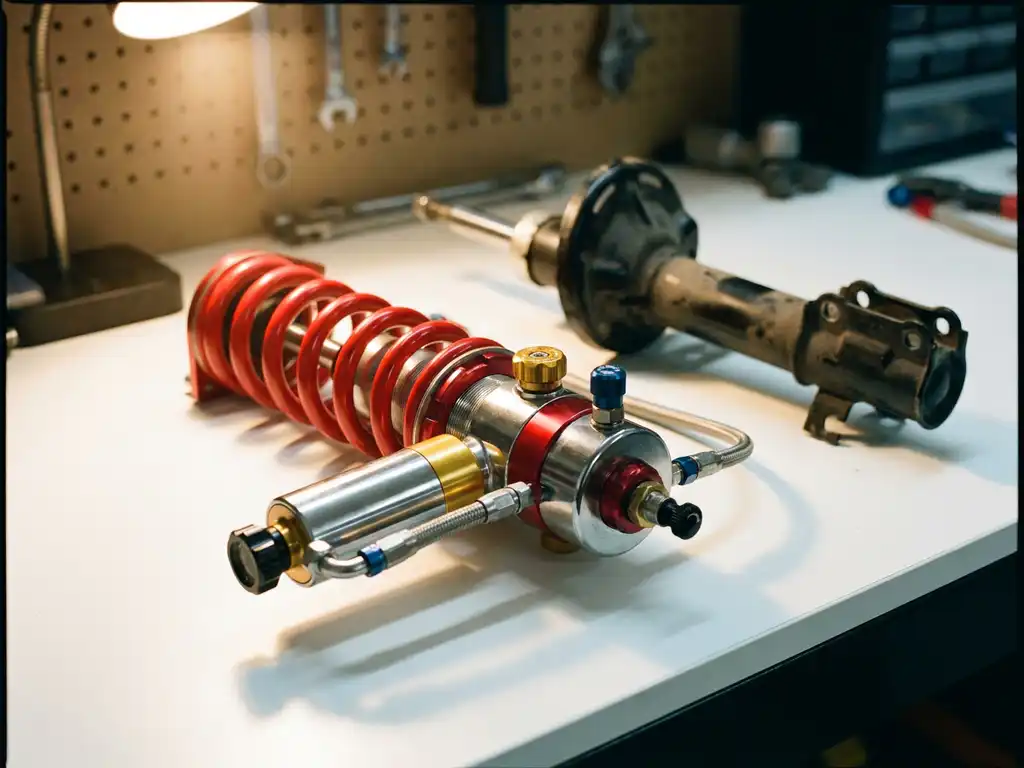
Performance car suspension differs from regular car suspension primarily through specialized components, adjustable tuning capabilities, and motorsport-derived technologies designed to optimize handling and responsiveness. While standard suspension systems prioritize comfort and cost-effectiveness with fixed settings that accommodate various driving conditions, performance suspension features adjustable dampers, stiffer springs, and precision-engineered components that can be fine-tuned for specific driving styles and track conditions.
The fundamental distinction lies in the engineering philosophy: standard suspension systems must work adequately across extreme temperature variations, diverse driving styles, and varying vehicle loads, resulting in compromised performance. Performance suspension eliminates these compromises through custom-tailored solutions that optimize every component for the owner’s specific requirements and driving preferences.
What makes performance suspension components different from standard ones?
Performance suspension components feature superior materials, precision manufacturing, and adjustable characteristics that standard components lack. High-grade steel, aluminum alloys, and specialized coatings provide enhanced durability and consistent performance under demanding conditions, while adjustable valving allows fine-tuning of compression and rebound damping forces.
The key differences extend beyond materials to fundamental design principles. Performance shock absorbers incorporate multiple adjustment points for compression, rebound, and sometimes ride height, enabling drivers to optimize suspension behavior for different driving scenarios. Standard shock absorbers use fixed valving designed to provide acceptable performance across all conditions, which inherently limits their effectiveness in any specific situation.
Manufacturing tolerances represent another critical distinction. Performance components undergo precision machining and quality control processes that ensure consistent operation and longevity. The internal components, including pistons, valves, and seals, are manufactured to tighter specifications, resulting in more predictable and reliable performance characteristics throughout the component’s lifespan.
How does suspension tuning affect driving performance?
Suspension tuning directly influences vehicle dynamics by controlling how weight transfers during acceleration, braking, and cornering, ultimately determining grip levels, stability, and driver confidence. Proper tuning optimizes tire contact with the road surface, maximizes available traction, and provides predictable vehicle behavior that allows drivers to exploit the car’s performance potential safely.
The relationship between suspension settings and performance manifests through several key areas. Damping adjustments control how quickly the suspension responds to road inputs and weight transfer, affecting both comfort and handling precision. Stiffer damping reduces body roll and improves cornering response but may compromise ride quality on rough surfaces. Conversely, softer settings enhance comfort but can lead to excessive body movement that reduces handling precision.
Spring rates work in conjunction with damping to establish the vehicle’s fundamental character. Higher spring rates reduce suspension travel and body movement, improving handling responsiveness and cornering capability. However, the relationship between spring and damper must be carefully balanced to achieve optimal performance without sacrificing ride quality or tire contact.
Ride height adjustment affects aerodynamics, center of gravity, and suspension geometry. Lowering the vehicle typically improves handling by reducing the center of gravity and minimizing aerodynamic lift, but excessive lowering can compromise suspension travel and create handling imbalances. As outlined in professional suspension setup procedures, ride height adjustments using spring preload must be carefully measured and balanced between the front and rear axles to maintain proper vehicle dynamics.
Browse Products
Shock absorbers, springs, camber plates, air jacks and more. Explore the full range.
Custom Suspension
Every shock absorber built to your exact car, discipline and driving style. Nothing off the shelf.
Get in Touch
Have a question or a specific project? Our engineers are ready to help, no obligation.
Why do performance cars use adjustable dampers?
Performance cars utilize adjustable dampers because different driving conditions and personal preferences require varying suspension characteristics that fixed dampers cannot accommodate effectively. Adjustable dampers allow drivers to optimize compression and rebound forces for specific scenarios, whether prioritizing comfort for daily driving or maximizing grip for track use.
The versatility of adjustable dampers becomes particularly valuable when considering the diverse demands placed on performance vehicles. Street driving requires compliance over road irregularities and comfort during extended journeys, while track driving demands precise control over weight transfer and minimal body movement during aggressive cornering and braking. Fixed dampers represent a compromise that cannot excel in either scenario.
Modern adjustable dampers offer multiple adjustment ranges, from simple compression and rebound controls to sophisticated systems with separate high-speed and low-speed circuits. This granular control allows experienced drivers and suspension specialists to fine-tune vehicle behavior for specific tracks, driving styles, or road conditions. The ability to adjust damping forces enables optimization of tire contact patch consistency, which directly translates to improved grip and performance.
The adjustment capability also accommodates vehicle modifications and changing requirements over time. As drivers add aerodynamic components, change tire specifications, or modify their driving style, adjustable dampers can be retuned to maintain optimal performance without requiring component replacement.
What’s the difference between coilovers and standard struts?
Coilovers integrate the spring and shock absorber into a single adjustable unit with threaded collars for ride height adjustment, while standard struts use separate, non-adjustable springs and dampers designed for fixed ride height and predetermined spring rates. This integration allows coilovers to offer comprehensive adjustability for ride height, spring preload, and often damping characteristics.
The structural advantages of coilovers extend beyond mere adjustability. The integrated design provides more precise control over suspension geometry and allows for optimized spring and damper pairing. Coilover systems typically feature higher-quality components throughout, including precision-wound springs with consistent rates and shock absorbers with superior internal construction and materials.
Installation and maintenance differences are equally significant. Coilovers often require more involved installation procedures but provide greater tuning flexibility once installed. The threaded collar system allows for precise ride height adjustments without disassembly, while standard struts require spring compressor tools and complete disassembly for any modifications.
Cost considerations reflect the enhanced capabilities and construction quality. While coilovers represent a higher initial investment, they offer superior longevity, rebuild capability, and performance potential. The ability to adjust and fine-tune the suspension system provides ongoing value that fixed systems cannot match, particularly for enthusiasts who track their vehicles or modify them over time.
How do motorsport-derived technologies benefit street performance cars?
Motorsport-derived suspension technologies enhance street performance cars through proven engineering solutions that improve handling precision, durability, and driver confidence under demanding conditions. Technologies developed for racing environments, where reliability and performance are paramount, translate directly to improved street car capabilities when properly adapted for road use.
The development process in motorsport creates innovations that address real-world performance challenges. Racing environments subject suspension components to extreme loads, temperature variations, and continuous operation that far exceed typical street conditions. Components that survive and perform in these environments inherently possess superior design characteristics and material properties that benefit street applications.
Specific technologies that have successfully transitioned from motorsport include advanced damper valving systems, lightweight materials, and precision manufacturing techniques. These innovations provide street cars with more responsive handling, improved feedback, and enhanced durability compared to conventional suspension systems designed purely for cost optimization.
The adaptation process ensures that motorsport technologies remain practical for street use. While racing suspension prioritizes pure performance, street applications require balancing performance with comfort, noise levels, and maintenance requirements. This adaptation process results in suspension systems that deliver genuine performance improvements while maintaining daily usability.
How Intrax Racing helps with performance suspension solutions
We provide comprehensive performance suspension solutions through our custom-made approach that eliminates the compromises inherent in standard suspension systems. Drawing from nearly 50 years of motorsport experience, including Formula 1 development, we engineer suspension systems specifically calculated for your vehicle, driving style, and performance requirements.
Our expertise delivers tangible benefits through:
- Custom shock absorber calculations based on your specific vehicle data, tire specifications, and intended use
- Motorsport-proven technologies adapted for street performance applications
- Comprehensive suspension packages that optimize both spring and damper characteristics together
- Ongoing support and rebuild capabilities to maintain peak performance over time
- Engineering consultation to achieve your specific performance and comfort objectives
Each custom suspension system receives a unique identification number with complete specifications stored for future service and upgrades. This approach ensures your investment remains adaptable as your requirements evolve, whether you’re seeking improved daily driving comfort, occasional track day capability, or dedicated racing performance. Contact us to discuss how our custom suspension solutions can transform your vehicle’s performance and driving experience.
Browse Products
Shock absorbers, springs, camber plates, air jacks and more. Explore the full range.
Custom Suspension
Every shock absorber built to your exact car, discipline and driving style. Nothing off the shelf.
Get in Touch
Have a question or a specific project? Our engineers are ready to help, no obligation.