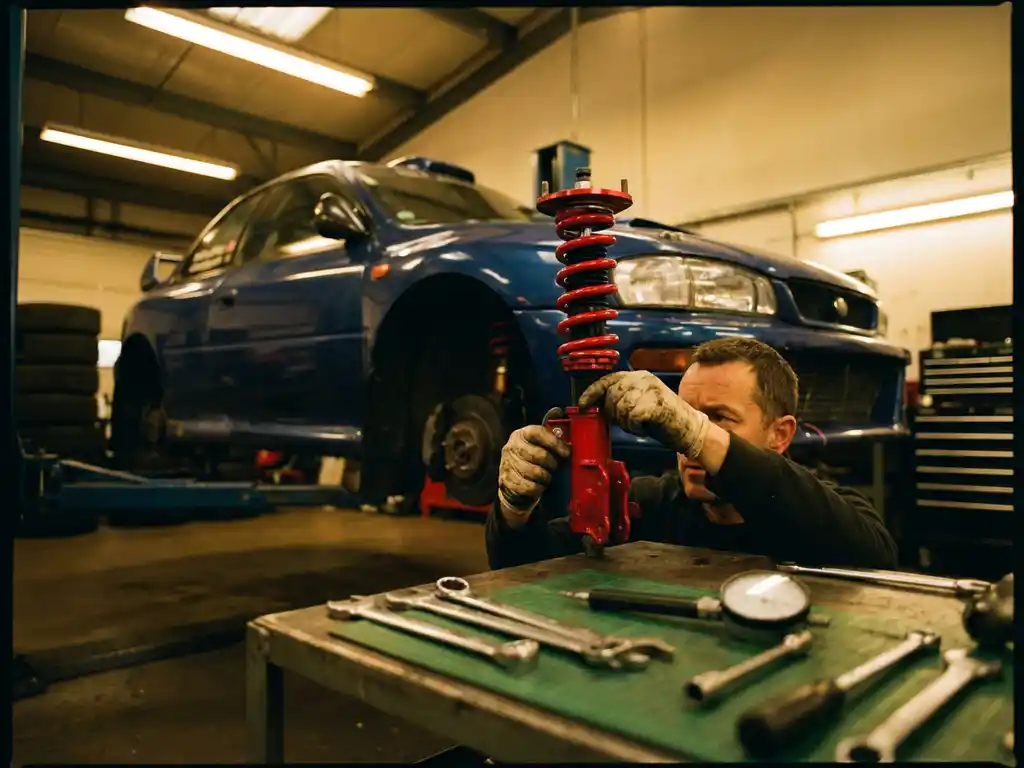
A suspension specialist customises your car’s shock absorbers and springs through detailed analysis of your vehicle, driving style, and performance goals. They measure weight distribution, assess intended use, and calculate optimal settings to create a perfectly balanced setup. This process involves technical measurements, driver consultation, and precise adjustments that transform how your car handles and feels on the road.
What exactly does a suspension specialist do during setup?
A suspension specialist conducts a comprehensive vehicle assessment that includes measuring corner weights, analysing current suspension components, and evaluating your car’s geometry. They examine how weight transfers during acceleration, braking, and cornering to understand the specific demands your vehicle faces.
The process begins with a detailed consultation about your driving habits, performance expectations, and comfort preferences. The specialist needs to understand whether you prioritise track performance, daily comfort, or a balance between both. They will ask about typical road surfaces, driving frequency, and any specific handling characteristics you want to improve or maintain.
Technical measurements form the core of professional suspension setup. The specialist measures your car’s weight distribution across all four corners, checks ride height, and assesses the current spring rates and damper settings. They also evaluate tyre wear patterns, which reveal how forces currently affect your vehicle’s contact with the road.
During the setup process, the specialist calculates optimal spring rates based on your car’s weight, intended use, and performance goals. They determine compression and rebound damping settings that complement the springs, ensuring the suspension system works as a cohesive unit rather than individual components fighting each other.
How does a specialist determine the right suspension settings for your car?
Specialists use precise calculations combining vehicle weight distribution, intended usage patterns, and driver preferences to determine optimal suspension settings. They consider factors like sprung versus unsprung weight, centre of gravity, and how different spring rates affect handling balance and ride quality.
The technical analysis starts with understanding your car’s weight distribution front to rear and side to side. This affects how much support each corner needs and influences spring rate selection. A front-heavy car requires different considerations than one with near-perfect weight distribution, and the specialist adjusts recommendations accordingly.
Driving style assessment plays a crucial role in determining appropriate settings. Aggressive drivers who enjoy spirited cornering need different damper characteristics than those prioritising comfort for daily commuting. The specialist evaluates your acceleration patterns, braking habits, and cornering preferences to match the suspension’s personality to your driving style.
Vehicle dynamics principles guide the specialist’s calculations for optimal spring rates and damper settings. They consider how changes to one corner affect the entire vehicle’s behaviour, ensuring modifications improve overall balance rather than creating new handling quirks. The specialist also factors in tyre characteristics, as different tyres interact differently with suspension settings.
Browse Products
Shock absorbers, springs, camber plates, air jacks and more. Explore the full range.
Custom Suspension
Every shock absorber built to your exact car, discipline and driving style. Nothing off the shelf.
Get in Touch
Have a question or a specific project? Our engineers are ready to help, no obligation.
What information do you need to provide to a suspension specialist?
You should provide complete vehicle specifications, including year, make, model, engine type, and any existing modifications. The specialist also needs details about your typical driving patterns, performance goals, comfort preferences, and how you use your car most frequently.
Vehicle specifications help the specialist understand your car’s baseline characteristics and any unique requirements. Information about engine swaps, weight-reduction modifications, or aerodynamic changes affects suspension calculations significantly. Even seemingly minor modifications like different wheels or tyres influence optimal suspension settings.
Driving habits information should include typical journey types, the road surfaces you encounter, and driving frequency. Whether you primarily use motorways, country roads, or urban streets affects the ideal suspension balance. The specialist needs to know if you participate in track days, autocross events, or other performance driving activities.
Performance goals and comfort expectations require an honest discussion about your priorities. Some drivers want maximum performance regardless of comfort impact, while others need a setup that works well for daily use with occasional spirited driving. Budget considerations also matter, as different approaches require varying levels of investment in components and setup time.
Why can’t you just use standard suspension settings for every car?
Standard suspension settings represent compromises designed to work acceptably across wide ranges of conditions, vehicles, and drivers. They cannot account for individual vehicle variations, specific driving styles, or particular performance requirements that make each setup unique and suboptimal for most applications.
Vehicle variations occur even within identical models due to manufacturing tolerances, different option packages, and varying states of wear. Two seemingly identical cars can have different weight distributions, slightly different suspension geometry, or varying component conditions that affect optimal settings. Standard settings ignore these individual characteristics.
Driver differences significantly impact ideal suspension characteristics. Some drivers prefer responsive, firm setups that provide immediate feedback, while others want more forgiving characteristics that smooth out road imperfections. Driving experience levels, physical considerations, and personal preferences all influence what constitutes optimal suspension behaviour.
Usage requirements vary dramatically between different applications. A car used primarily for motorway commuting needs different suspension characteristics than one used for weekend canyon runs or track days. Standard settings cannot optimise for these specific use cases, resulting in compromised performance in the areas that matter most to individual owners.
When shock absorbers and springs work together through custom setup, the suspension system transforms from a collection of compromises into a cohesive unit that enhances both handling precision and ride quality. This synergy only occurs when components are specifically matched to work together in your particular vehicle and usage scenario.
How Intrax Racing helps with suspension setup
We provide comprehensive suspension analysis and custom setup services that transform your car’s handling characteristics while maintaining comfort. Our approach combines decades of motorsport experience with detailed technical analysis to create suspension systems perfectly matched to your vehicle and driving requirements.
Our suspension setup process includes:
- Detailed vehicle assessment, including weight distribution analysis and geometry evaluation
- Comprehensive driver consultation to understand your specific needs and performance goals
- Custom component calculation for optimal spring rates and damper settings
- Professional installation and testing to ensure perfect system integration
- Follow-up support for fine-tuning and adjustments as needed
Every suspension system we create is built specifically for your car and requirements, ensuring you receive optimal performance rather than generic compromises. Contact us to discuss how professional suspension setup can transform your driving experience.
Browse Products
Shock absorbers, springs, camber plates, air jacks and more. Explore the full range.
Custom Suspension
Every shock absorber built to your exact car, discipline and driving style. Nothing off the shelf.
Get in Touch
Have a question or a specific project? Our engineers are ready to help, no obligation.