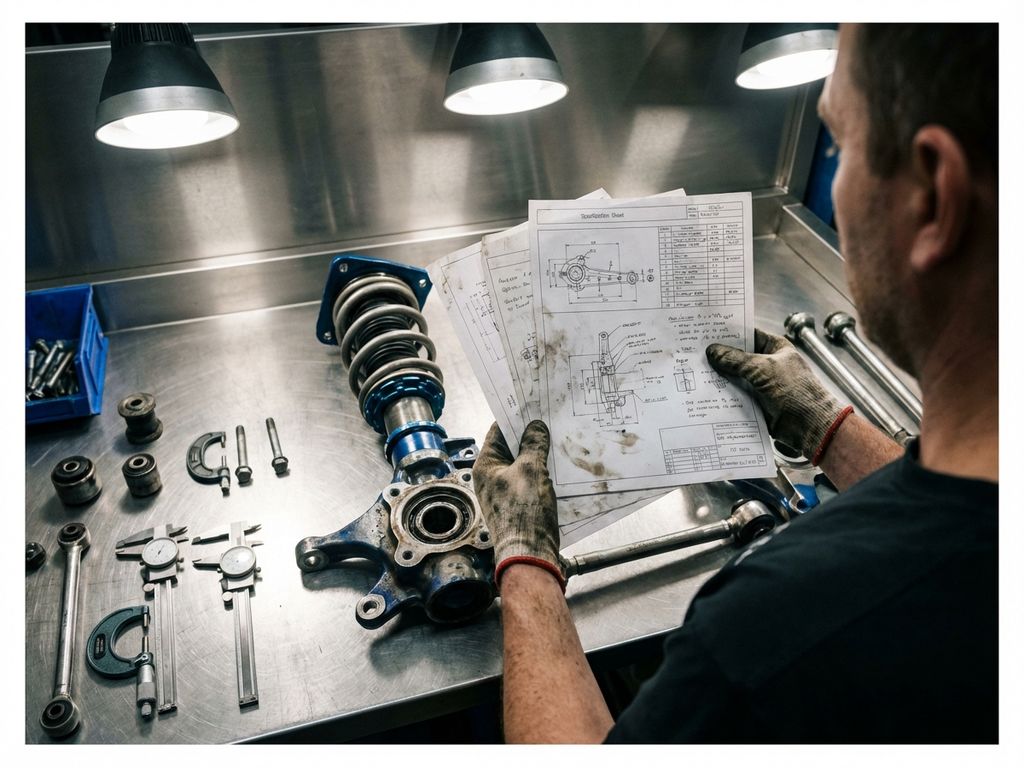
When planning a custom suspension project, suspension builders need comprehensive information about your vehicle, driving requirements, and project parameters to create the perfect setup. This includes vehicle specifications, performance goals, technical measurements, and budget considerations. The more detailed information you provide, the better your suspension engineer can optimize the system for your specific needs and applications.
What basic vehicle information do suspension builders need before starting?
Suspension builders require fundamental vehicle details, including make, model, year, engine type, transmission, and current weight distribution, to begin any custom project. This information determines mounting points, space constraints, and load requirements that directly influence design decisions.
Your vehicle’s specifications form the foundation of any suspension system consultation. Engineers need to understand the platform they’re working with, including any modifications that might affect weight, balance, or structural integrity. Current suspension components provide insight into existing performance characteristics and potential upgrade paths.
The intended use case significantly impacts design requirements. Track focused setups prioritize different characteristics compared to street applications or off road scenarios. Rally cars need different damping characteristics than circuit racers, while classic car restorations often balance modern performance with period appropriate aesthetics.
Vehicle weight distribution affects spring rates and damping requirements. Front to rear weight bias, unsprung weight, and any ballast requirements influence how suspension engineers calculate optimal specifications for balanced handling characteristics.
Why do suspension builders ask about your driving style and performance goals?
Driving preferences and performance objectives directly influence suspension tuning decisions because different driving styles require vastly different damping characteristics and setup parameters. Aggressive track drivers need different suspension behavior compared to comfort focused road users.
Your driving environment shapes suspension requirements significantly. Smooth racetracks allow for stiffer setups that would be uncomfortable on rough roads. Street driving requires compliance for comfort and tire contact over varied surfaces. Understanding where and how you drive helps engineers balance performance with practicality.
Factory suspensions are engineered as a compromise one setup designed to work for all drivers in all conditions worldwide, but optimized for none. This broad approach means standard suspension is always a compromise that cannot deliver the specific performance characteristics individual drivers need. Custom suspension can ensure that you adapt the car to the driver’s preference. Performance goals determine component selection and tuning approach that eliminates these compromises. Maximum lap times require different considerations than consistent performance over long stints. Some drivers prioritize ultimate grip, while others value predictable handling characteristics that build confidence.
Track conditions and typical driving scenarios influence suspension system consultation requirements. Wet weather performance, curb usage, and surface variations all affect how suspension should be configured. Engineers use this information to recommend appropriate damping ranges and adjustment capabilities.
Browse Products
Shock absorbers, springs, camber plates, air jacks and more. Explore the full range.
Custom Suspension
Every shock absorber built to your exact car, discipline and driving style. Nothing off the shelf.
Get in Touch
Have a question or a specific project? Our engineers are ready to help, no obligation.
What technical measurements and data points are crucial for custom suspension design?
Critical measurements include mounting point dimensions, available clearances, wheel travel requirements, and existing geometry specifications that ensure proper fitment and optimal performance. These technical specifications prevent interference issues and maximize suspension effectiveness.
Accurate mounting point measurements are essential for custom shock absorber specifications. Center to center distances, mounting hardware requirements, and available adjustment ranges determine what configurations are possible. Engineers need precise dimensions to ensure components fit properly without modification.
Clearance measurements prevent interference problems during suspension travel. Tire clearances, chassis clearances, and component spacing requirements must be documented to avoid binding or contact issues. This includes both static and dynamic clearances throughout the full range of motion.
Existing geometry data helps engineers understand current suspension behavior and identify improvement opportunities. Camber curves, roll center locations, and motion ratios influence how new components should be specified. Understanding current suspension terminology and geometry helps communicate requirements effectively.
How do your budget and timeline affect the suspension building process?
Budget parameters influence component selection, manufacturing approach, and project scope by determining which technologies and materials are viable for your specific application. Timeline requirements affect production scheduling and may influence design complexity.
Available budget determines component sophistication and adjustment capabilities. Higher budgets allow for advanced features like electronic control systems, exotic materials, or extensive adjustment ranges. Understanding financial constraints helps engineers recommend the most effective solutions within your parameters.
Timeline considerations affect manufacturing scheduling and design complexity. Rush projects may require simpler solutions or off the shelf components, while longer timelines allow for more sophisticated custom engineering. Lead times vary based on component complexity and current production schedules.
Project scope affects both cost and timeline significantly. Complete suspension systems require more engineering time than individual components, but springs and shock absorbers must work together as a matched system for optimal results. Changing one component without properly matching the other limits performance potential and can actually reduce overall effectiveness. Additional features like remote reservoirs, electronic control, or extensive testing add complexity but may provide significant performance benefits.
How Intrax Racing helps with suspension system consultation
We provide comprehensive consultation services to gather all necessary information for your custom suspension project, ensuring optimal results through detailed analysis and expert engineering guidance. Our motorsport derived expertise helps translate your requirements into precisely engineered solutions.
- Detailed vehicle assessment, including technical measurements and current setup evaluation
- Performance goal analysis to understand your driving requirements and application needs
- Custom engineering consultation that balances performance, comfort, and budget considerations
- Technical specification development with precise component recommendations and setup parameters
- Ongoing support throughout the project development and installation process
Ready to discuss your custom suspension requirements? Contact our engineering team to begin your consultation and discover how our decades of motorsport experience can optimize your vehicle’s performance with complete, matched custom setups.
Browse Products
Shock absorbers, springs, camber plates, air jacks and more. Explore the full range.
Custom Suspension
Every shock absorber built to your exact car, discipline and driving style. Nothing off the shelf.
Get in Touch
Have a question or a specific project? Our engineers are ready to help, no obligation.