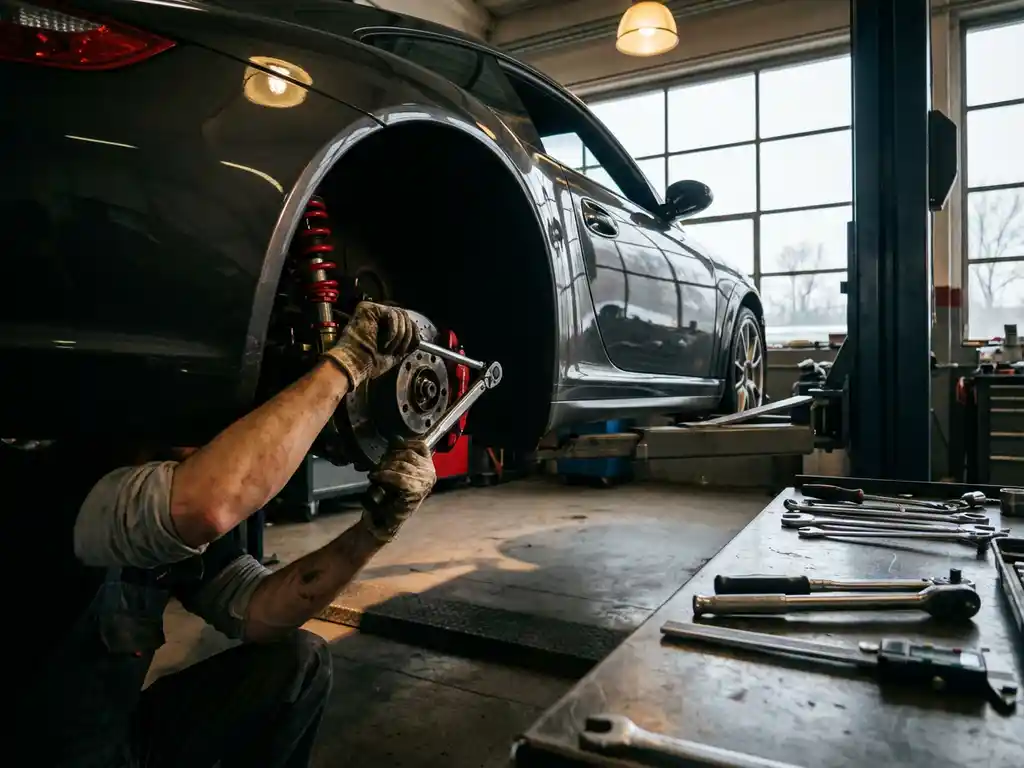
Getting your suspension ready for a track day can make the difference between an exhilarating experience and a disappointing one. While your street setup might feel perfectly comfortable during daily commutes, the intense demands of track driving require specific preparation to ensure optimal performance, safety, and enjoyment. Proper track day preparation involves checking your current setup, adjusting damper settings, and understanding how track conditions differ from street driving.
Whether you’re a first-time track day participant or a seasoned enthusiast, taking the time to prepare your suspension system will help you extract maximum performance from your vehicle while maintaining control and confidence on the circuit.
What Should You Check on Your Suspension Before a Track Day?
Before any track day, inspect your shock absorbers for leaks, check tire wear patterns for alignment issues, and measure your current ride height at all four corners. These basic checks ensure your suspension system is functioning properly and ready for the increased demands of track driving.
Start by examining each shock absorber for oil leaks around the seals and body. Even small leaks can indicate internal wear that will worsen under track conditions. Next, inspect your tires for uneven wear patterns, which often reveal suspension geometry problems that become magnified at higher speeds and under higher lateral forces.
Measure your ride height by taking vertical measurements from the bottom edge of each wheel rim to the bottom of the wheel arch. Record these measurements separately for the left and right sides on both the front and rear axles. This baseline helps you track any changes and ensures your vehicle sits level before heading to the track.
Check that all suspension components are properly tightened and that adjustment collars move freely. Clean and lightly lubricate the threads on adjustable components to prevent binding during trackside adjustments.
How Do You Adjust Damper Settings for Track Use?
Track day damper settings typically require increased compression and rebound damping compared to street settings to handle higher speeds, aggressive braking, and sustained cornering forces. Start with small adjustments from your baseline street setup rather than making dramatic changes.
Begin by increasing both compression and rebound damping by 2–3 clicks from your street settings. This provides better body control during hard braking and acceleration while maintaining stability through high-speed corners. The goal is to reduce body roll and pitch without making the suspension so stiff that it loses contact with the track surface.
For vehicles with adjustable ride height, consider raising the car slightly from an extremely low street setup. While lower can mean better aerodynamics, track surfaces often have more aggressive curbing and elevation changes that require additional ground clearance. A slightly higher ride height also helps maintain proper suspension geometry under the increased loads of track driving.
If your suspension allows separate adjustment of high- and low-speed damping, focus on increasing low-speed compression to control body movement while keeping high-speed compression moderate to handle bumps and kerbs effectively.
Browse Products
Shock absorbers, springs, camber plates, air jacks and more. Explore the full range.
Custom Suspension
Every shock absorber built to your exact car, discipline and driving style. Nothing off the shelf.
Get in Touch
Have a question or a specific project? Our engineers are ready to help, no obligation.
What’s the Difference Between Street and Track Suspension Setup?
Street suspension setups prioritize comfort, compliance over imperfect road surfaces, and stability at moderate speeds, while track setups emphasize precise handling, reduced body movement, and performance under extreme lateral and longitudinal forces.
Street-oriented suspension must handle a wide variety of conditions: cold morning starts, highway cruising, parking lot maneuvers, and occasional spirited driving. This requires softer damping settings that absorb road imperfections and provide a comfortable ride quality over long distances. The setup accommodates different passenger loads and varying driving styles.
A track suspension setup focuses on maximizing tire contact with the pavement during aggressive driving. This means firmer damping to control body roll in corners, reduced pitch under braking, and minimal squat during acceleration. The suspension works harder but over shorter periods, with consistently high loads rather than the varied demands of street driving.
The key difference lies in compromise: street setups balance multiple requirements, while track setups can be optimized specifically for performance. However, when suspension components are properly matched and adjusted together, it’s possible to improve track performance while maintaining acceptable street comfort.
Should You Change Your Suspension Settings During the Track Day?
Making suspension adjustments during a track day can be beneficial, but make only small, methodical changes, and give each adjustment several sessions to evaluate properly. Focus on one adjustment at a time and keep detailed notes on what you change and how it affects the car’s behavior.
Start your first session with conservative settings to establish a baseline feel for how your car behaves on that specific track. After 15–20 minutes of driving, you’ll have enough experience to identify the most significant handling issues. Common adjustments include fine-tuning damper settings to address understeer, oversteer, or excessive body movement.
When making adjustments, change only one parameter at a time. If you’re experiencing understeer in fast corners, try reducing front compression damping or increasing rear compression damping by 1–2 clicks. Test this change for at least two sessions before making additional modifications.
Avoid making adjustments when you’re tired or frustrated with lap times. The most productive changes come from systematic evaluation of how the car responds to different inputs, not from chasing tenths of a second. Remember that driver development often provides more improvement than suspension changes.
How Do You Know if Your Suspension Setup Is Working?
A well-sorted suspension setup provides predictable handling, allows you to feel what the tires are doing, and gives you confidence to push harder without sudden surprises. The car should respond consistently to your inputs and maintain good tire contact through corners, braking zones, and acceleration zones.
Pay attention to how the car feels during different phases of cornering. On entry, the suspension should allow smooth weight transfer without excessive nose dive. Through the middle of the corner, you should feel connected to the track surface with minimal body roll. On exit, the car should maintain traction without excessive rear squat or wheelspin.
A good suspension setup also means the car remains stable over track irregularities. Bumps and kerbs shouldn’t upset the vehicle’s balance or cause it to skip across the surface. You should be able to use more of the track width confidently, knowing the suspension will keep the tires in contact with the pavement.
Monitor your tire temperatures and wear patterns throughout the day. Even temperatures across the tire face indicate good suspension geometry and appropriate alignment settings. Excessive heat buildup or uneven wear suggests the suspension isn’t optimizing use of the tire’s contact patch.
How Intrax Racing Helps with Track Day Preparation
We specialize in creating custom suspension solutions that excel both on track and on the street, eliminating the compromise between performance and comfort. Our track day preparation service includes comprehensive setup consultation and precise adjustment recommendations based on your specific vehicle, driving style, and track requirements.
- Custom damper valving calculated specifically for your car’s weight distribution, intended use, and performance goals
- Matched spring rates that work in harmony with damper settings for optimal body control and tire contact
- Detailed setup sheets with recommended adjustments for different track conditions and driving scenarios
- Technical support to help you understand how each adjustment affects your car’s behavior
- Rebuild and upgrade services to keep your suspension performing at peak levels
Our nearly 50 years of motorsport experience, from Formula 1 to club racing, ensures your suspension setup benefits from proven track technology. Every shock absorber we build receives a unique identification number and a complete setup history, making future adjustments and service seamless. Ready to optimize your track day experience? Contact us to discuss your specific requirements and discover how proper suspension preparation can transform your track driving.
Browse Products
Shock absorbers, springs, camber plates, air jacks and more. Explore the full range.
Custom Suspension
Every shock absorber built to your exact car, discipline and driving style. Nothing off the shelf.
Get in Touch
Have a question or a specific project? Our engineers are ready to help, no obligation.