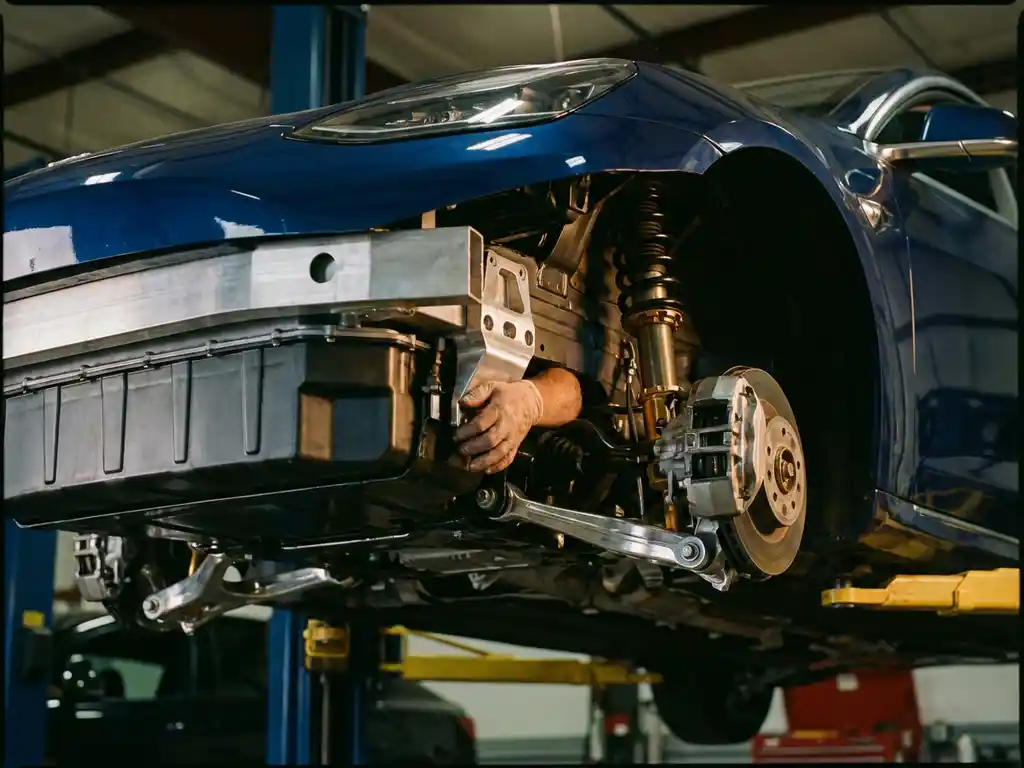
Electric vehicles have revolutionized the automotive industry, but their significantly heavier weight presents unique challenges for suspension systems. With battery packs adding hundreds of kilograms to a vehicle’s mass, the suspension must work harder to maintain ride quality, handling precision, and safety. Understanding how this extra weight affects suspension choice is crucial for both manufacturers and owners looking to optimize their electric vehicle’s performance.
The transition from internal combustion engines to electric powertrains has fundamentally changed vehicle dynamics, requiring careful consideration of suspension components and tuning to accommodate the increased mass while preserving the driving experience drivers expect.
How does electric car weight differ from conventional vehicles?
Electric cars typically weigh 200–500 kilograms more than comparable conventional vehicles due to their battery packs, which can weigh between 300 and 700 kilograms depending on capacity. This represents a 15–30% increase in total vehicle weight compared to petrol or diesel equivalents.
The weight difference stems primarily from the lithium-ion battery pack, which is the heaviest single component in an electric vehicle. While electric motors are often lighter than internal combustion engines, the battery pack more than offsets this weight saving. Additionally, electric vehicles often include reinforced chassis structures to support and protect the battery pack, adding further weight.
This extra mass affects every aspect of vehicle dynamics, from acceleration and braking distances to cornering capability and suspension loading. The increased weight means suspension components experience higher forces during normal driving, requiring more robust designs and careful tuning to maintain performance and comfort standards.
What suspension challenges do electric cars face?
Electric vehicles face increased suspension loading, altered weight distribution, and higher unsprung mass, which affects ride quality, handling precision, and component longevity. The additional weight creates greater forces on springs, shock absorbers, and mounting points during acceleration, braking, and cornering.
The primary challenge is managing the increased static load while maintaining dynamic performance. Heavier vehicles generate more momentum during direction changes, requiring suspension systems to work harder to control body movement and maintain tyre contact with the road surface. This increased workload can lead to faster component wear and reduced effectiveness over time.
Another significant challenge is heat management within shock absorbers. The additional weight generates more heat during compression and rebound cycles, potentially leading to fluid breakdown and reduced damping performance. Standard suspension components designed for lighter vehicles may struggle to cope with the thermal demands of heavier electric vehicles.
Noise, vibration, and harshness (NVH) characteristics also change with increased weight. The suspension must work harder to isolate the cabin from road irregularities while preventing the heavier mass from overwhelming the damping system during transient events.
How does battery placement affect suspension design?
Battery placement fundamentally alters vehicle weight distribution and the centre of gravity, requiring suspension geometry adjustments and component tuning to maintain proper balance and handling characteristics. Most electric vehicles mount batteries low in the chassis, lowering the centre of gravity but concentrating mass in the vehicle floor.
The low-mounted battery pack creates a lower centre of gravity compared to conventional vehicles, which can improve handling stability and reduce body roll during cornering. However, this benefit comes with the challenge of supporting the concentrated mass and managing how it affects suspension kinematics in various driving scenarios.
Front-to-rear weight distribution often changes significantly in electric vehicles. Many EVs have a more rearward weight bias due to battery placement, affecting how the suspension must be tuned between the front and rear axles. This altered distribution requires different spring rates and damping characteristics to maintain balanced handling and prevent unwanted traits such as understeer or oversteer.
The concentrated mass of the battery pack also affects how the vehicle responds to suspension inputs. The large, heavy battery acts like a pendulum during body movement, requiring carefully tuned damping to control these motions effectively without compromising ride comfort.
Browse Products
Shock absorbers, springs, camber plates, air jacks and more. Explore the full range.
Custom Suspension
Every shock absorber built to your exact car, discipline and driving style. Nothing off the shelf.
Get in Touch
Have a question or a specific project? Our engineers are ready to help, no obligation.
What suspension modifications do electric cars need?
Electric vehicles require stiffer springs, upgraded shock absorbers with higher load capacity, and reinforced mounting points to handle the increased weight while maintaining ride quality and handling performance. These modifications ensure the suspension can cope with the additional mass without compromising safety or comfort.
Spring rates must be increased to support the additional weight and maintain proper ride height. However, simply installing stiffer springs without corresponding shock absorber upgrades can result in a harsh, uncontrolled ride. The spring selection must be carefully matched to the vehicle’s new weight distribution and intended use.
Shock absorbers require upgraded valving and potentially greater fluid capacity to handle the increased forces and heat generation. Standard dampers may bottom out more frequently or fade under the thermal stress of controlling a heavier mass. Proper damper tuning ensures the suspension can control body movement effectively while maintaining ride comfort.
Mounting points and bushings often need reinforcement or replacement with heavy-duty alternatives. The increased forces transmitted through the suspension system can cause premature wear or failure of standard mounting hardware. Anti-roll bars may also require upgrading to maintain body control during cornering with the increased mass.
Should you upgrade your electric car’s suspension?
Upgrading your electric car’s suspension is worthwhile if you experience poor ride quality, excessive body roll, or want to optimize performance for your specific driving needs. Factory suspension systems are compromises designed to work across various conditions, while custom solutions can be tailored to your exact requirements.
Many electric vehicle owners find that factory suspension settings prioritize comfort over performance, resulting in excessive body movement during spirited driving or inadequate control when carrying additional loads. An upgraded suspension system can address these limitations while maintaining or improving ride comfort through proper engineering.
The decision should consider your driving style, vehicle use, and performance expectations. If you primarily use your electric vehicle for commuting with occasional highway driving, the factory suspension may be adequate. However, if you enjoy spirited driving, track days, or frequently carry heavy loads, upgraded suspension components can significantly improve the driving experience.
Custom suspension solutions offer the advantage of being specifically engineered for your vehicle’s weight, your driving preferences, and intended use. This targeted approach ensures optimal performance without the compromises inherent in mass-produced components designed to satisfy diverse requirements.
How Intrax Racing helps with electric vehicle suspension
We specialize in developing custom suspension solutions specifically engineered for electric vehicles’ unique weight and balance characteristics. Our nearly 50 years of motorsport experience enables us to create suspension systems that handle the increased mass while maintaining exceptional ride quality and performance.
Our custom approach for electric vehicles includes:
- Precise weight analysis and distribution calculations for your specific EV model
- Custom spring rates and damper valving designed for increased vehicle mass
- Heat-resistant shock absorber construction to handle thermal demands
- Geometry optimization to work with the altered centre of gravity and weight distribution
- Complete integration testing to ensure an optimal balance between comfort and performance
Every suspension system we build receives a unique identification number, with a complete history stored under your name, ensuring future service and upgrade options. Our custom solutions transform your electric vehicle’s handling and ride quality while accommodating its unique characteristics. Contact us to discuss how we can optimize your electric vehicle’s suspension for your specific needs and driving style.
Browse Products
Shock absorbers, springs, camber plates, air jacks and more. Explore the full range.
Custom Suspension
Every shock absorber built to your exact car, discipline and driving style. Nothing off the shelf.
Get in Touch
Have a question or a specific project? Our engineers are ready to help, no obligation.