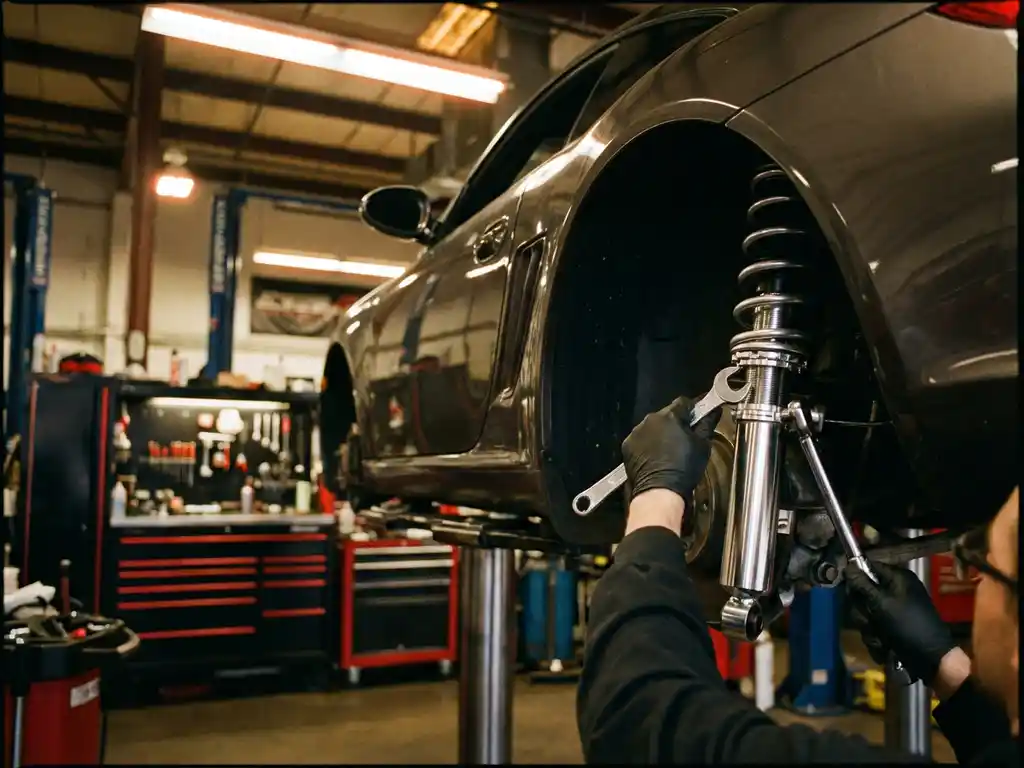
Installing new coilovers is an exciting upgrade that can transform your vehicle’s handling and appearance. However, many enthusiasts are eager to push their new suspension to its limits immediately after installation. Understanding the proper break-in process for new coilovers is crucial for optimal performance, longevity, and safety.
The break-in period allows internal components to settle, seals to seat properly, and oil to distribute evenly throughout the shock absorber. This process ensures your coilovers deliver their intended performance characteristics and maximum service life.
What does it mean to break in new coilovers?
Breaking in new coilovers means allowing the internal components to gradually settle and adapt through controlled driving during the first few hundred miles. This process allows seals to seat properly, internal parts to wear in smoothly, and damping fluid to circulate effectively throughout the shock absorber.
During manufacturing, coilover components are assembled to precise tolerances, but they need real-world operation to reach their optimal state. The break-in process involves the gradual bedding-in of seals against cylinder walls, the settling of valve components, and the proper distribution of damping oil. Internal friction between moving parts decreases as surfaces polish through normal operation.
New coilovers may initially feel slightly different from their final characteristics. Some drivers notice that the damping feels firmer or less refined during the first few drives. This is completely normal and typically resolves as the suspension components work together. The break-in process is essential for achieving the smooth, controlled damping that quality coilovers are designed to provide.
How long is the break-in period for new coilovers?
The break-in period for new coilovers typically lasts 200 to 500 miles of normal driving, depending on the specific design and manufacturer recommendations. Most coilovers reach their optimal performance characteristics within the first 300 miles under varied driving conditions.
The exact duration depends on several factors, including the type of damping technology, seal materials, and internal valve design. High-performance racing coilovers may require a shorter break-in period due to their precision manufacturing, while street-oriented systems might need the full 500 miles to settle completely.
During this period, focus on accumulating miles through normal driving rather than tracking specific time intervals. City driving, highway cruising, and gentle cornering all contribute to the break-in process. The key is exposing the coilovers to varied loads and movements that allow all internal components to work together properly.
What’s the proper way to drive during coilover break-in?
Drive normally and avoid extreme conditions during the break-in period. Focus on smooth inputs, gradual acceleration and braking, and gentle cornering, while avoiding aggressive driving, track sessions, or harsh impacts from potholes and speed bumps.
Start with gentle driving for the first 50 miles, gradually increasing the intensity as the suspension settles. Vary your driving conditions to include city streets, highways, and gentle curves. This approach ensures all aspects of the coilover’s operation are properly exercised during the break-in process.
Avoid sudden jolts or impacts that could stress the seals before they’re properly seated. Take speed bumps slowly, navigate around large potholes when possible, and avoid parking-lot curb strikes. Similarly, resist the temptation to test maximum cornering limits or perform aggressive maneuvers until the break-in period is complete.
Pay attention to how the suspension feels during this period. You may notice gradual improvements in smoothness and control as the miles accumulate. This feedback helps you gauge when your coilovers have reached their optimal performance.
Should you adjust coilovers during the break-in period?
Avoid making damping adjustments during the break-in period, but ride-height adjustments are acceptable if necessary for safety or clearance. Wait until after the break-in period to fine-tune damping settings, as the suspension characteristics will change as components settle.
If you must adjust ride height during break-in, do so carefully and minimally. The knowledge base emphasizes that ride height affects balance, handling, appearance, and driving comfort, so major changes should wait until after break-in, when you can properly evaluate the suspension’s behavior.
Damping adjustments made too early can mask the natural settling process and make it difficult to establish proper baseline settings later. Once the break-in period is complete, you’ll have a better understanding of the coilover’s true characteristics and can make informed adjustments based on your driving preferences and requirements.
Document your initial settings so you can return to them if needed. This baseline becomes valuable reference information for future adjustments and maintenance.
What happens if you don’t properly break in coilovers?
Skipping the proper break-in process can lead to premature seal wear, inconsistent damping performance, and reduced coilover lifespan. Aggressive driving before components have properly settled may cause internal damage that affects long-term reliability and performance.
Without proper break-in, seals may not seat correctly against cylinder walls, leading to potential leakage or inconsistent damping. Internal components that haven’t been gradually worked in may experience accelerated wear or develop rough operation that persists throughout the coilover’s life.
The damping characteristics may never reach their intended smoothness and control if the break-in process is rushed or ignored. This can result in a harsh, unrefined feel that doesn’t represent the coilover’s true capabilities. Additionally, warranty coverage may be affected if manufacturer break-in procedures aren’t followed.
Proper break-in ensures you get the full performance and longevity that quality coilovers are designed to provide. The relatively small time investment during the break-in period pays dividends in terms of performance, comfort, and reliability over the coilover’s service life.
How Intrax Racing helps with coilover break-in and setup
We provide comprehensive guidance and support throughout your coilover break-in process and beyond. Our nearly 50 years of motorsport experience means we understand exactly how suspension components behave during their initial settling period and throughout their service life.
Our support includes:
- Detailed break-in instructions specific to your custom-built coilovers
- Technical guidance on proper adjustment procedures after break-in
- Ongoing support for fine-tuning and optimization based on your driving style
- Complete documentation of your specific setup for future reference and service
Every custom shock absorber we build receives a unique number, with its complete history stored under your name, ensuring we can provide specific guidance for your exact setup. Whether you need break-in advice, adjustment help, or future service support, our team of suspension specialists is ready to help you get the most from your investment.
Ready to experience the difference that properly broken-in, custom-tuned coilovers can make? Contact our suspension experts to discuss your specific requirements and learn more about our comprehensive support services.