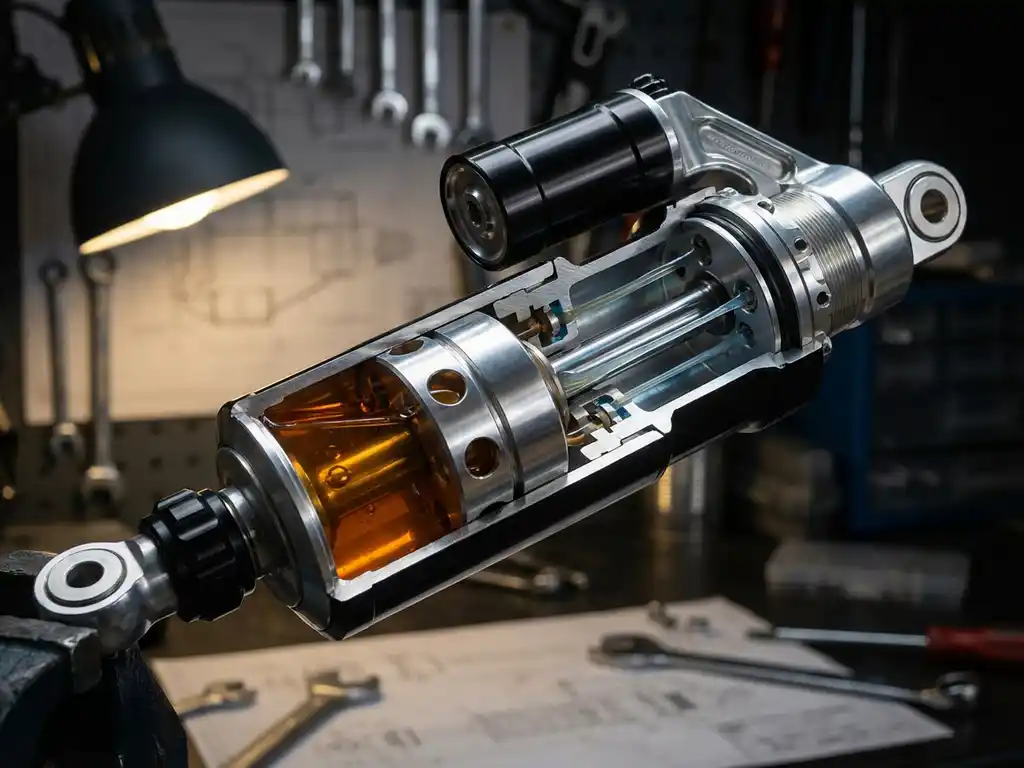
Understanding suspension damping is crucial for anyone looking to optimize their vehicle’s performance and comfort. High-speed and low-speed damping represent two distinct aspects of shock absorber control that work together to manage how your suspension responds to different road conditions and driving scenarios.
These damping characteristics determine how your shock absorbers handle everything from small road imperfections to major bumps, influencing both your vehicle’s handling precision and ride quality. Let’s explore the key differences between these damping types and how they affect your driving experience.
What is the difference between high-speed and low-speed damping?
High-speed damping controls the shock absorber’s response to rapid suspension movements, while low-speed damping manages slower, more gradual suspension motions. The terms refer to the velocity of the piston moving inside the shock absorber, not the vehicle’s speed.
High-speed damping engages when your suspension encounters sudden impacts, such as hitting a pothole, speed bump, or kerb. During these events, the shock absorber piston moves rapidly through the oil, requiring different flow characteristics to manage the energy effectively. This damping circuit typically uses smaller orifices and different valve arrangements to control high-velocity oil flow.
Low-speed damping activates during gentler suspension movements, such as body roll during cornering, weight transfer under braking, or gradual compression over rolling terrain. These movements involve slower piston velocities and require precise control to maintain vehicle stability and comfort. The low-speed circuit uses larger passages and different valve configurations optimized for these conditions.
Modern adjustable shock absorbers often feature separate adjustment knobs for high-speed and low-speed damping, allowing fine-tuning for specific driving conditions and preferences. This separation enables suspension engineers to optimize each circuit independently, achieving better overall performance across the full range of driving scenarios.
How does high-speed damping affect your vehicle’s handling?
High-speed damping primarily controls impact absorption and prevents harsh shock transmission to the chassis during sudden suspension movements. Proper high-speed damping settings ensure your vehicle maintains composure over rough surfaces while protecting both occupants and vehicle components.
When high-speed damping is set too firm, your vehicle will feel harsh over bumps and may actually lose traction as the wheels struggle to follow surface irregularities. The suspension becomes unable to absorb impacts effectively, causing the energy to transfer directly to the chassis and creating an uncomfortable, jarring ride.
Conversely, insufficient high-speed damping allows excessive suspension movement during impacts. This can cause the suspension to bottom out more frequently, create unpredictable handling characteristics, and reduce the shock absorber’s ability to control wheel movement. The result is often a bouncy, unstable feeling that compromises both comfort and safety.
Optimal high-speed damping strikes a balance that absorbs impacts efficiently while maintaining wheel contact with the road surface. This ensures consistent handling characteristics even when encountering unexpected road irregularities, making your vehicle more predictable and safer to drive in varying conditions.
What does low-speed damping control in your suspension?
Low-speed damping manages body movement during cornering, braking, and acceleration by controlling gradual weight transfer and maintaining proper vehicle attitude. This damping characteristic is crucial for handling precision and overall driving dynamics.
During cornering, low-speed damping controls how quickly your vehicle’s body rolls and how much it ultimately leans. Insufficient low-speed damping allows excessive body roll, making the vehicle feel loose and imprecise through corners. The delayed response can make it difficult to judge the vehicle’s limits and reduces driver confidence.
Under braking and acceleration, low-speed damping manages pitch control. Proper settings prevent excessive nose-diving under braking and rear squatting during acceleration, maintaining optimal suspension geometry for maximum tyre contact and braking efficiency. This control is essential for consistent performance and safety.
Low-speed damping also affects ride quality over gentle road undulations and highway surfaces. Well-tuned low-speed settings provide a controlled, composed feel without the harshness associated with high-speed impacts. This makes low-speed damping particularly important for vehicles that need to balance performance with daily driving comfort.
How do you adjust high-speed vs. low-speed damping settings?
Adjusting damping settings requires systematic testing and gradual changes, starting with baseline settings and making small increments while evaluating the effects on handling and comfort. Most adjustable shock absorbers provide separate controls for each damping circuit.
Begin by establishing your current settings and documenting them for reference. Make adjustments in small increments, typically one or two clicks at a time, and test the changes over familiar roads or in controlled conditions. This methodical approach prevents overadjustment and helps you understand each setting’s impact on vehicle behavior.
For high-speed damping adjustment, focus on how the vehicle responds to impacts and rough surfaces. If the ride feels harsh or the wheels seem to skip over bumps, reduce high-speed damping. If the suspension feels uncontrolled or bottoms out frequently, increase the setting gradually until impacts are well controlled without excessive harshness.
Low-speed damping adjustments should focus on body control and handling precision. Increase low-speed damping if the vehicle feels loose in corners or exhibits excessive body movement. Reduce it if the suspension feels too rigid during gentle manoeuvres or if the vehicle responds too abruptly to steering inputs.
How Intrax Racing helps with suspension damping optimization
We specialize in creating custom shock absorbers with precisely calculated high-speed and low-speed damping characteristics tailored to your specific vehicle and driving requirements. Our engineers analyze your vehicle data, intended use, and personal preferences to design optimal damping curves that eliminate the compromises found in standard shock absorbers.
Our custom damping solutions offer several key advantages:
- Individually calculated high-speed and low-speed damping circuits based on your vehicle’s weight, spring rates, and intended use
- Adjustable settings that allow fine-tuning for different driving conditions
- Professional consultation to determine optimal baseline settings for your specific requirements
- Comprehensive suspension terminology guidance to help you understand and communicate your preferences effectively
Whether you need precise damping control for track use, comfortable settings for daily driving, or a versatile setup that performs well in both scenarios, our custom approach ensures your suspension delivers exactly the characteristics you want. Contact us to discuss how we can optimize your vehicle’s damping characteristics for your specific driving style and requirements.
Related Articles
- Can you still drive over speed bumps with a lowered car?
- Can you install coilovers yourself or do you need a mechanic?
- How to lower your BMW without ruining comfort?
- Why does my car ride so bad after lowering?
- What suspension maintenance does a Porsche require?
- How much does it cost to convert your MacPherson to an upside-down setup?