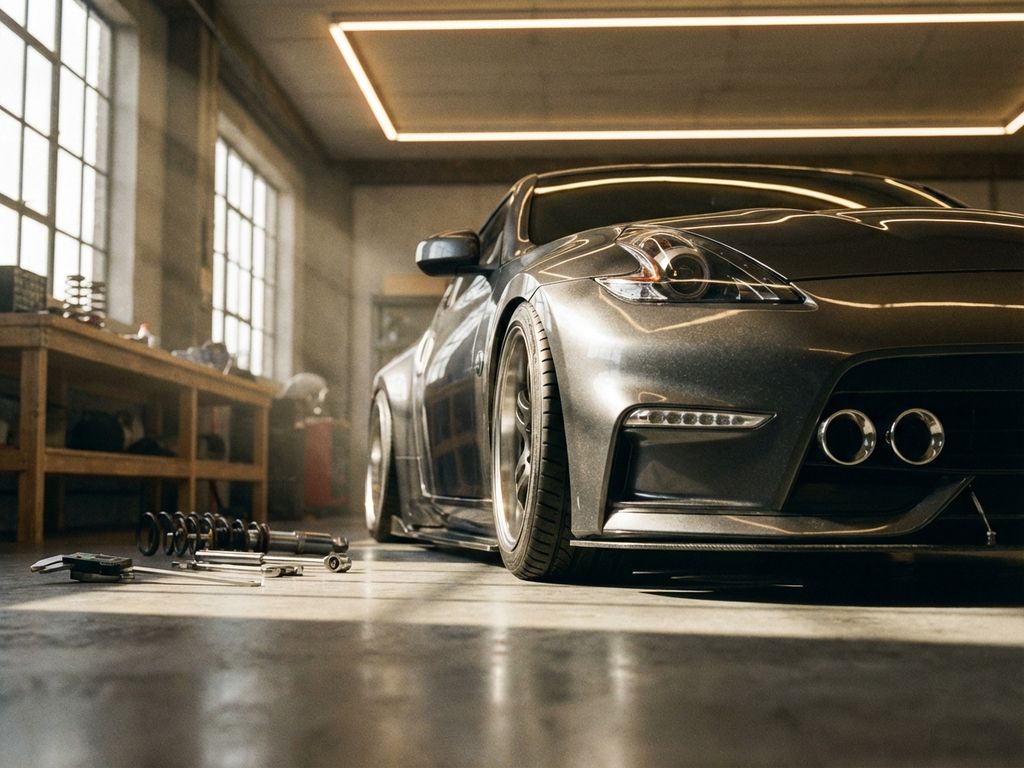
You can safely lower most cars by 25–50 mm (1–2 inches) without significant issues, though the exact limit depends on your vehicle type, suspension design, and intended use. Lowering beyond 60 mm typically creates problems with ride quality, component wear, and ground clearance. The key is choosing the right method and staying within your vehicle’s safe parameters while considering factors like suspension travel, wheel arch clearance, and daily driving requirements.
What does lowering your car actually mean for safety and performance?
Lowering your car reduces the distance between your vehicle’s chassis and the ground, which fundamentally alters how your car handles and performs. A lower centre of gravity improves cornering stability and reduces body roll during turns, making the car feel more planted and responsive. This change enhances the connection between driver and road, particularly noticeable during spirited driving or track use.
The relationship between ride height and vehicle dynamics is significant. When you lower your car, you’re essentially changing the suspension geometry, which affects how the wheels contact the road surface. This modification typically improves aerodynamics by reducing the air flowing underneath the vehicle, though the effect varies depending on how much you lower the car and your driving speeds.
However, lowering also brings safety considerations. Ground clearance is reduced, making speed bumps, steep driveways, and road debris potential hazards. The suspension travel decreases, which can lead to bottoming out over larger bumps or dips. Modern safety systems like ABS and stability control may also be affected if the lowering is extreme, as these systems are calibrated for the original ride height.
Performance benefits include improved handling characteristics and potentially better braking due to reduced weight transfer. The trade off comes in ride comfort, as lowering springs are typically stiffer than standard springs to maintain proper suspension function at the reduced height. However, lowering springs alone can actually reduce ride quality despite improving cornering, as they reduce shock absorber stroke. For best results, lowering springs should be paired with properly matched shock absorbers, as springs and dampers work as a system and changing one without matching the other limits results.
How much can you lower a car without causing damage?
Most passenger cars can safely accommodate a 25–40 mm drop without major modifications or damage to suspension components. Sports cars and performance vehicles often handle up to 50 mm of lowering, while SUVs and trucks should generally stay within 25 mm to maintain proper suspension geometry and avoid drivetrain stress.
Several factors determine your vehicle’s maximum safe lowering distance. Suspension travel is crucial – you need sufficient compression and extension to handle road irregularities without bottoming out or losing wheel contact. Component clearance becomes critical as exhaust systems, oil pans, and other undercarriage elements sit closer to the ground.
Manufacturer specifications provide important guidance, though these are conservative estimates. Remember that factory suspension is always a compromise, designed to work for all drivers, climates, and conditions, but optimized for none. Wheel arch clearance must accommodate suspension compression without tyres contacting bodywork. The steering geometry changes as you lower the car, potentially affecting tyre wear patterns and handling characteristics if taken too far.
To avoid damage, consider your daily driving conditions. If you regularly encounter speed bumps, steep driveways, or poor road surfaces, stay towards the conservative end of lowering limits. Check for adequate clearance around exhaust components, brake lines, and suspension arms throughout the full range of suspension movement.
Browse Products
Shock absorbers, springs, camber plates, air jacks and more. Explore the full range.
Custom Suspension
Every shock absorber built to your exact car, discipline and driving style. Nothing off the shelf.
Get in Touch
Have a question or a specific project? Our engineers are ready to help, no obligation.
What are the main risks of lowering your car too much?
Excessive lowering creates several significant problems that affect both vehicle reliability and daily usability. Suspension damage occurs when components operate outside their designed range, leading to premature wear of bushings, shock absorbers, and springs. The suspension geometry becomes compromised, causing uneven tyre wear and unpredictable handling characteristics.
Ride quality deteriorates substantially when lowering exceeds safe limits. The car becomes harsh and uncomfortable over even minor road imperfections, as the suspension lacks sufficient travel to absorb impacts properly. Bottoming out becomes frequent, causing jarring impacts that can damage suspension components and affect vehicle control.
Clearance problems extend beyond simple ground scraping. Exhaust systems may contact the road surface, brake lines can be stressed or damaged, and oil pans risk puncture from road debris or steep angles. These issues create safety hazards and expensive repair bills that far exceed the cost of proper suspension modification.
Daily drivability suffers significantly with extreme lowering. Car parks become challenging to navigate, speed bumps require careful approach angles, and loading passengers or cargo may cause the car to scrape. The constant concern about clearance makes driving stressful rather than enjoyable, defeating the purpose of the modification.
Which lowering method is safest for your specific vehicle?
The safest lowering method depends on your vehicle type, budget, and performance goals, with coilover systems generally offering the best balance of safety and adjustability. Unlike simple spring replacements, coilovers maintain proper damping characteristics while allowing fine tuning of ride height and handling characteristics.
Lowering springs represent the most affordable option but require careful selection to match your vehicle’s weight and intended use. Quality springs maintain reasonable ride comfort while providing the desired drop, though they work with your existing shock absorbers, which may not be optimally matched to the new spring rates. Since springs and shock absorbers function as a system, upgrading one without the other can limit results and create new problems. While lowering springs improve cornering, they also reduce shock absorber stroke, which can hurt ride quality unless properly matched dampers are used.
Air suspension systems provide the ultimate flexibility, allowing you to adjust ride height for different driving conditions. You can lower the car for performance driving or car shows, then raise it for daily driving or poor road conditions. However, air systems are complex and require more maintenance than traditional setups.
Custom suspension solutions offer the safest approach for significant modifications. Rather than adapting off the shelf components, custom systems are engineered specifically for your vehicle and requirements. This approach ensures proper geometry, appropriate spring rates, and optimal damping characteristics for your specific application. Understanding suspension terminology helps you make informed decisions about which modifications suit your needs.
How Intrax Racing helps with safe car lowering
We specialise in creating custom suspension solutions that safely lower your vehicle while maintaining optimal performance and reliability. Our approach ensures proper suspension geometry and component compatibility for your specific car and driving requirements. Factory suspension is a compromise, designed to work for all drivers, climates, and conditions, optimized for none. Custom suspension allows you to tailor the car precisely to the driver’s preference.
Our comprehensive lowering services include:
- Custom suspension design tailored to your vehicle’s specifications and intended use
- Professional assessment of safe lowering limits for your specific car
- High quality components engineered for long term reliability and performance
- Complete suspension systems that maintain proper damping characteristics
- Technical support throughout the selection and installation process
Whether you’re looking to improve handling for track use or achieve the perfect stance for your show car, our motorsport derived expertise ensures your lowering modification enhances rather than compromises your vehicle’s capabilities. Intrax delivers complete, matched custom setups where springs and shock absorbers work together as an optimized system. Get in touch to discuss how we can safely achieve your suspension goals while maintaining the reliability and performance you need for your driving style.
Browse Products
Shock absorbers, springs, camber plates, air jacks and more. Explore the full range.
Custom Suspension
Every shock absorber built to your exact car, discipline and driving style. Nothing off the shelf.
Get in Touch
Have a question or a specific project? Our engineers are ready to help, no obligation.