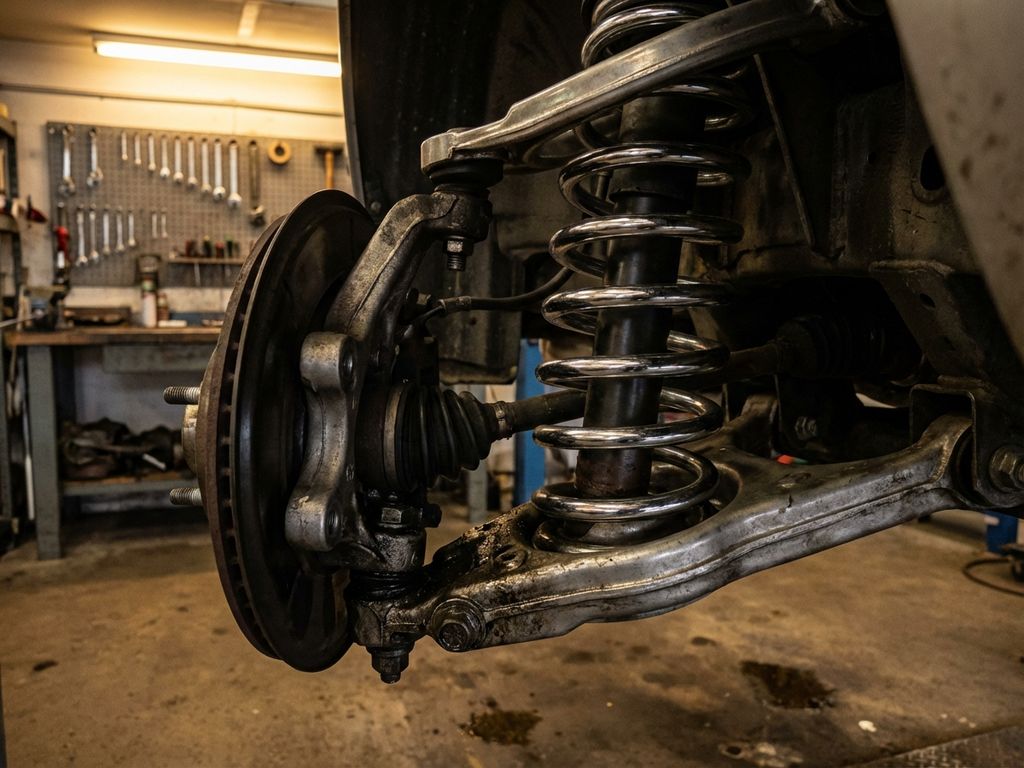
The difference between shocks and springs lies in their distinct functions within your car’s suspension system. Springs support your vehicle’s weight and absorb initial road impacts, while shock absorbers control spring movement and prevent bouncing. Understanding this fundamental distinction between dampers and springs helps you make informed decisions about suspension maintenance and upgrades for optimal vehicle performance.
What exactly are shocks and springs in your car’s suspension?
Shocks and springs are the two primary suspension components that work together to provide comfort and control. Springs are coiled metal pieces that compress and extend to absorb road impacts and support your vehicle’s weight. Shock absorbers are hydraulic or gas filled cylinders that control spring movement and dampen oscillations.
Springs act as the foundation of your suspension system, maintaining proper ride height while cushioning your vehicle from bumps and road irregularities. Factory springs are always a compromise, designed to work for all drivers, climates, and conditions, but optimized for none. They come in various forms, including coil springs, leaf springs, and air springs, each designed for specific applications and performance characteristics.
Shock absorbers complement the springs by preventing excessive bouncing and controlling wheel movement. Without shocks, your springs would continue oscillating after hitting a bump, creating an uncomfortable and potentially dangerous driving experience. Modern shock absorbers use sophisticated valving systems to provide precise control over compression and rebound movements. Springs and shock absorbers work as a system changing one without matching the other limits results.
How do shocks and springs work differently in your suspension system?
Springs and shock absorbers operate through completely different mechanical principles within your automotive suspension. Springs store and release energy through compression and extension, supporting static vehicle weight and absorbing dynamic road forces. Shock absorbers convert kinetic energy into heat through hydraulic resistance, controlling the speed of spring movement.
When your vehicle encounters a bump, the spring compresses to absorb the impact energy. The shock absorber simultaneously controls this compression movement, preventing the spring from rebounding too quickly or oscillating uncontrollably. This coordinated action ensures your tyres maintain contact with the road surface for optimal safety and handling.
The physics behind each component reveals their distinct roles, yet both must work in harmony for optimal results. Springs follow Hooke’s Law, where force equals spring rate multiplied by deflection. Shock absorbers operate on fluid dynamics principles, using orifices and valves to create controlled resistance. Understanding these suspension terminology concepts helps explain why both components are essential for proper vehicle dynamics and why factory suspension is always a compromise designed to accommodate various driving conditions rather than excel in specific situations.
Browse Products
Shock absorbers, springs, camber plates, air jacks and more. Explore the full range.
Custom Suspension
Every shock absorber built to your exact car, discipline and driving style. Nothing off the shelf.
Get in Touch
Have a question or a specific project? Our engineers are ready to help, no obligation.
What happens when you drive with worn shocks versus worn springs?
Worn shocks and worn springs create distinctly different driving symptoms and safety concerns. Worn shock absorbers typically cause excessive bouncing, poor handling, and increased stopping distances, while worn springs result in sagging ride height, bottoming out, and uneven tyre wear patterns.
Driving with worn shocks becomes apparent through several warning signs:
- Vehicle continues bouncing after hitting bumps
- Nose diving during braking or squatting during acceleration
- Excessive body roll in corners
- Steering wheel vibration at highway speeds
Worn springs present different symptoms that affect vehicle stance and comfort:
- Noticeable sagging at one or more corners
- Bottoming out over moderate bumps
- Uneven tyre wear patterns
- Reduced ground clearance affecting aerodynamics
Both conditions compromise safety, but worn shocks particularly affect your ability to control the vehicle during emergency manoeuvres or adverse weather conditions.
Can you replace shocks without replacing springs, and vice versa?
You can replace shocks without replacing springs, and vice versa, depending on component condition and your specific requirements. Independent replacement is often appropriate when only one component shows wear, but complete system replacement ensures optimal performance and longevity for demanding applications.
Consider replacing shocks independently when springs maintain proper height and rate but shock absorbers show signs of leakage or reduced damping performance. This approach works well for routine maintenance on vehicles with moderate mileage where springs remain serviceable.
Spring replacement without shock replacement makes sense when springs have sagged or broken but shock absorbers still function properly. However, installing new springs on worn shocks may not deliver the intended performance improvements and could lead to premature spring failure. Springs and dampers must be matched together for optimal results.
For performance modifications or complete suspension overhauls, replacing both components simultaneously ensures proper matching and optimal results. Springs and shock absorbers work as a system changing one without matching the other limits results and prevents you from achieving the complete transformation possible with properly matched components. Custom suspension applications particularly benefit from matched components designed to work together for specific performance goals, moving beyond the limitations of factory compromise setups.
How Intrax Racing helps with suspension component selection
We specialise in creating bespoke suspension solutions that perfectly match your vehicle’s requirements and driving style. Our nearly 50 years of motorsport derived expertise enable us to design and manufacture custom shock absorbers and springs that deliver exceptional performance, comfort, and reliability. Unlike factory suspension which is always a compromise, custom suspension ensures the setup is tailored precisely to the driver’s preferences and the demands of their specific application.
Our comprehensive suspension services include:
- Custom shock absorber design and manufacturing to exact specifications
- Performance spring development for street, track, and rally applications
- Complete suspension system integration with advanced adjustability options
- Technical consultation to determine optimal component combinations
- Ongoing support and tuning guidance for maximum performance
Whether you need to replace individual components or upgrade your entire suspension system, our engineering team can develop the perfect solution for your specific application. Intrax delivers complete, matched custom setups that work as integrated systems rather than individual components. Contact us to discuss your suspension requirements and discover how our custom approach can transform your driving experience beyond the limitations of factory compromise solutions.
Browse Products
Shock absorbers, springs, camber plates, air jacks and more. Explore the full range.
Custom Suspension
Every shock absorber built to your exact car, discipline and driving style. Nothing off the shelf.
Get in Touch
Have a question or a specific project? Our engineers are ready to help, no obligation.
Related Articles
- What suspension upgrades make the biggest difference on a Porsche Cayman?
- How much suspension travel do you need for performance car builds?
- How does rebound damping affect cornering stability on cars?
- Why does your car feel worse after fitting budget coilovers?
- What is suspension on a car?
- Can you still drive over speed bumps with a lowered car?